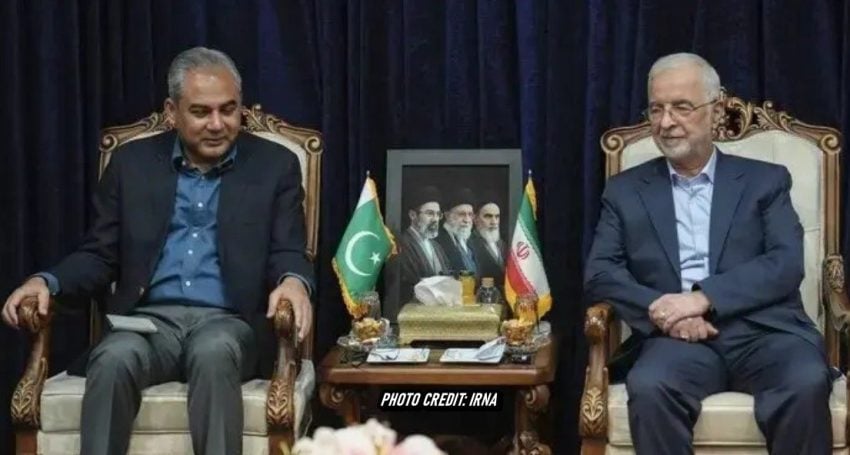
TEHRAN – A major diplomatic and economic shift is underway between Pakistan and Iran after Interior Minister Mohsin Naqvi’s visit to neighboring country. The country’s security czar met Iranian Interior Minister Sikandar Momani and border trade dominated recent high-level talks between the two sides to boost regional connectivity and transit cooperation.
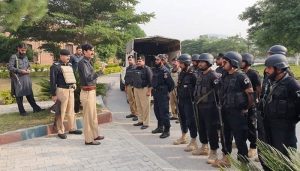
The development follows unexpected and unscheduled visit by Pakistan’s Interior Minister Mohsin Naqvi to Tehran. According to Iran’s IRNA news agency, the surprise trip immediately drew attention in diplomatic circles. During the visit, Naqvi held in-depth meetings with his Iranian counterpart, focusing on bilateral relations, border security coordination, and trade facilitation mechanisms.
Momani confirmed that both sides placed strong strategic importance on boosting cross-border trade, describing it as one of the most critical themes of the discussions.
Two sides, he said, reached shared understanding on the urgent need for practical reforms to accelerate trade flows. These include simplifying procedures, removing bureaucratic bottlenecks, and streamlining transit operations that have long slowed economic exchange between Pakistan and Iran.
Talks also explored establishment of new border crossing points, a move that could dramatically reshape official trade gateways and increase legal cross-border movement of goods.
The discussions align closely with Pakistan’s rapidly evolving regional trade vision. Earlier this month, Islamabad unveiled a new transit framework allowing Iranian goods to move through Pakistan’s major seaports, including Gwadar and Karachi, opening access to international shipping routes.
Under the Ministry of Commerce’s ambitious “Transit of Goods Through Pakistan 2026” policy, six dedicated trade corridors have been activated specifically for Iran. These routes are designed to enable Iranian exports to reach global markets via Pakistani ports, imports to flow into Iran through streamlined transit pathways and more structured cargo movement across borders.
The move is widely seen as a strategic economic opening for Iran, which continues to face major restrictions on maritime trade due to ongoing US sanctions and international pressure.
Beyond trade, Pakistan’s role in regional diplomacy appears to be expanding rapidly. Islamabad is reportedly engaged in mediatory efforts linked to Iran–US tensions, further elevating its position in regional geopolitical discussions.
In recent months, following reported Israeli and US strikes on Iranian targets, Pakistan has intensified diplomatic outreach. High-profile visits to Tehran have included senior figures like Deputy Prime Minister Ishaq Dar, Army Chief Field Marshal Asim Munir, and Interior Minister Mohsin Naqvi.
These developments could mark a turning point in Pakistan–Iran relations, with both countries moving toward deeper integration in trade, transit, and strategic cooperation.
Amid shifting regional alliances, sanctions pressure on Iran, and changing geopolitical realities, Pakistan and Iran appear to be entering a fast-evolving phase of closer economic alignment and strategic coordination, with border trade emerging as the central driving force.
Naqvi in Tehran in Pakistan’s push to revive stalled US-Iran Talks