WASHINGTON — A US federal judge blocked Trump administration’s suspension affecting Pakistan and 74 other countries, ruling that the sweeping move exceeded the State Department’s legal authority.
The ruling by Manhattan US District Judge Jeannette A. Vargas found that the State Department’s policy exceeded the legal authority of Secretary of State Marco Rubio and conflicted with procedures established under federal immigration law. The case, Catholic Legal Immigration Network, Inc. (CLINIC) et al. v. Marco Rubio et al., No. 26-CV-00858 (JAV), challenged the administration’s decision to impose a blanket suspension on immigrant visas for nationals of the affected countries.
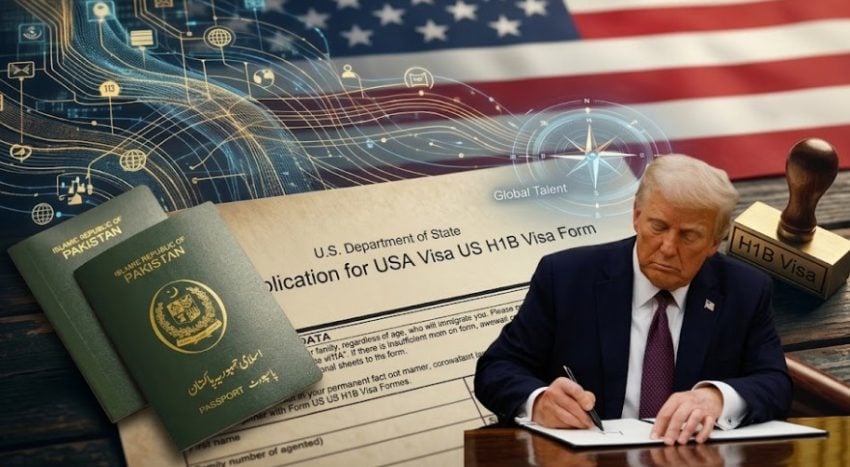
US Department of State announced the policy on January 14, 2026, saying the suspension would take effect on January 21. The administration argued that immigrants from the 75 countries presented a heightened risk of becoming dependent on government-funded welfare or being deemed a “public charge.”
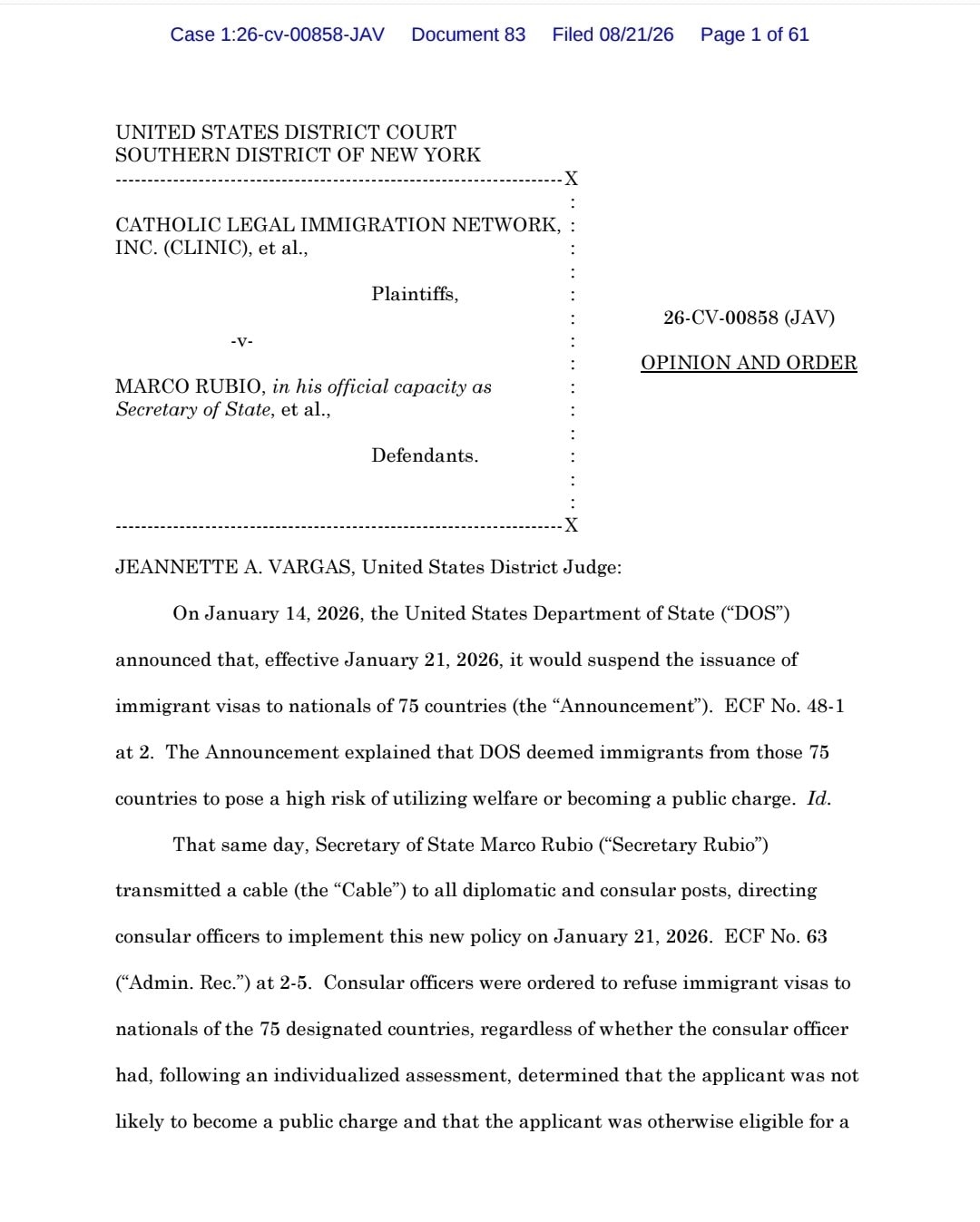
Rubio subsequently sent instructions to US diplomatic and consular posts, ordering officers to implement the policy.
Under those instructions, consular officers were directed to refuse immigrant visas to nationals of the designated countries even where an individual applicant had already been determined unlikely to become a public charge and otherwise qualified for an immigrant visa.
Judge Vargas rejected the government’s interpretation of its authority, finding that federal immigration law does not empower the Secretary of State to stop immigrant visa processing across entire nationalities. The court held that Congress had established a legal framework requiring immigration cases to be assessed according to individual applicants’ circumstances.
In effect, the ruling found that the administration could not replace that individualized process with a blanket nationality-based suspension.
Pakistan was one of the countries affected by the suspension, along with Bangladesh and other South Asian nations.
The restrictions also covered countries including Pakistan, Bangladesh, Brazil, Colombia, Uruguay Balkans Bosnia, Albania, Africa, the Middle East and Caribbean.
The policy therefore had implications for prospective immigrants from a broad range of regions seeking to enter the United States through the immigrant visa system.
The legal challenge was brought by immigrant rights organizations, visa applicants and US citizens attempting to sponsor family members for immigration to America. The plaintiffs argued that the administration had unlawfully disrupted the established visa process and denied applicants the individualized assessment required by federal law.
The administration defended its broader immigration crackdown as necessary to strengthen national security and immigration enforcement. Immigrant and civil rights organizations, however, have repeatedly raised concerns that tougher immigration measures could undermine due process, freedom of expression and protections for minority communities.