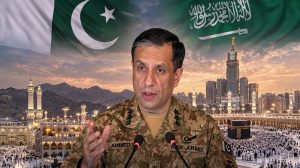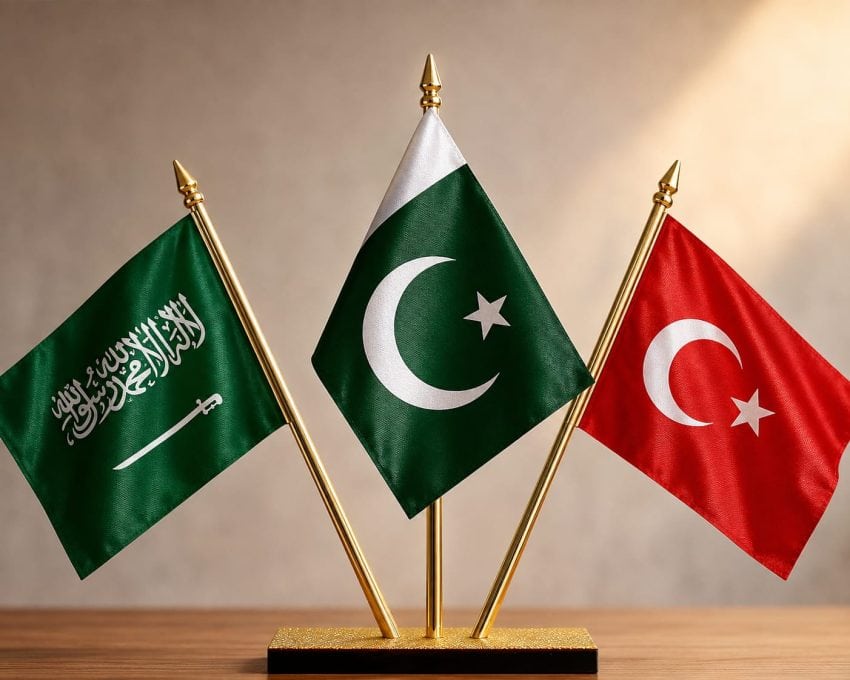
The Makkah defence agreement was signed on 7 August. The agreement spells out that an armed attack against one of the three countries will be regarded as an attack against all three. The agreement does not name any enemy, although all three countries know they share one; ironically, they cannot spell it out.
Remaining optimistic, operational commitments are otherwise not publicly spelt out in any security agreement. The agreement is likely to establish high-level political and military mechanisms, joint exercises, and defence-industry cooperation, including unmanned systems, electronic warfare, and AI. It may also be open to additional countries, although Saudi Arabia has reservations about Egypt expanding the agreement, while Turkey is in favour. A similar equation might exist between Pakistan and Saudi Arabia once it comes to Iran.
Leaving aside expansion, the desire for peace, security, and regional stability spelt out in this agreement has to be a source of concern for the USA, Israel and India. International think tanks and defence circles are chattering about it as a perilous and mysterious triangle of nations, even naming it the Bermuda Triangle. After 10 days of its announcement, President Trump has endorsed the triangular defence agreement by declaring it as a positive development for strategic stability and security in the region, though there is no public statement. Three days after this acknowledgement, Trump has imposed severe economic sanctions on Iran. Countries doing trade at present with Iran include UAE, Turkey and Pakistan in addition to China and Russia.
Two of the three nations in this agreement will have to bear the cost. On the positive side, Saudi Arabia is the financial engine of the Islamic world, with immense regional diplomatic weight and energy reserves, which give it tremendous geopolitical reach. Turkey is not only a geographic bridge to Europe, but it also has a cutting edge in defence technology and advanced drone warfare capability. Pakistan is not the strongest player in this triangular system, but all systems interconnect with Pakistan. We emerged as a geopolitical fulcrum between South Asia and the Middle East. With nuclear capability and missile power, Pakistan has become a Bridge Power capable of connecting countries and regions.
We are not dominating the board, but our value comes from our position between regional networks and our relationships with all. Pakistan has proven its significance and strategic reach through conventional military credibility demonstrated against India in May 2025, coupled with its geopolitical reach and ability to connect with the USA, China, and all Gulf nations, including Iran, as demonstrated recently, which made the Makkah agreement possible. Geopolitical influence does not always come from controlling the system; it also comes from becoming difficult to ignore. Pakistan cannot be bypassed and our connections have become a leverage.
Pakistan has created a new layer of strategic coordination between South Asia and the Gulf. The efficacy of the defence agreement hinges on the pattern and strength of US presence inside Gulf states after the war ends on all fronts. The space for manoeuvring under this agreement will expand and contract accordingly. It is difficult to predict when a complete ceasefire on all fronts will happen. Fear leads to either negotiations or retaliation. Iran had a fear of a combined America-Israel attack, so it was negotiating.
That same fear is now over, resulting in retaliation and the dragging of the conflict. The time has come when the US and Israeli populations have stopped asking Can we win and are asking How much longer can we sustain it. The strategic equation has begun to change. World has seen in the last over 5 months wherepublic anxiety within the US has led to political pressure which then led to irregular and even harder military responses but now this is a battle beyond missiles, and defense systems. For how long can Iran sustain the cost and for how long the USA can sustain the public pressure shall decide the termination time of this war.
The main issue now is which side has more psychological endurance. In today’s interconnected world, psychological pressure matters more than military or even economic pressure, and this is what is happening in the Gulf region. The Mecca agreement has boosted this psychological pressure, especially on the USA and Israel. The Makkah defence agreement has practically buried the Gulf Cooperation Council, although that agreement still exists on paper. On the other hand, geo political reality presents a serious vacuum in the Gulf region after a long drawn war which has turned into an economic strangle rather than a military war.
Under such an uncertain environment, the role and power potential of this defence agreement cannot be defined till its military structure is put on the ground. In my view, it will emerge in the foreseeable future, shaped by the final outcome of the US-Iran war and the region’s geopolitical and military situation. Alliances have historically reshaped boundaries and geopolitical realities in political, military and even economic domains. Conceptually, the Makkah peace agreement between three great nations aims to reshape at least the region’s security landscape. For now, it’s an emerging security alliance, and whether it will change the region’s security paradigm, only time will tell.