
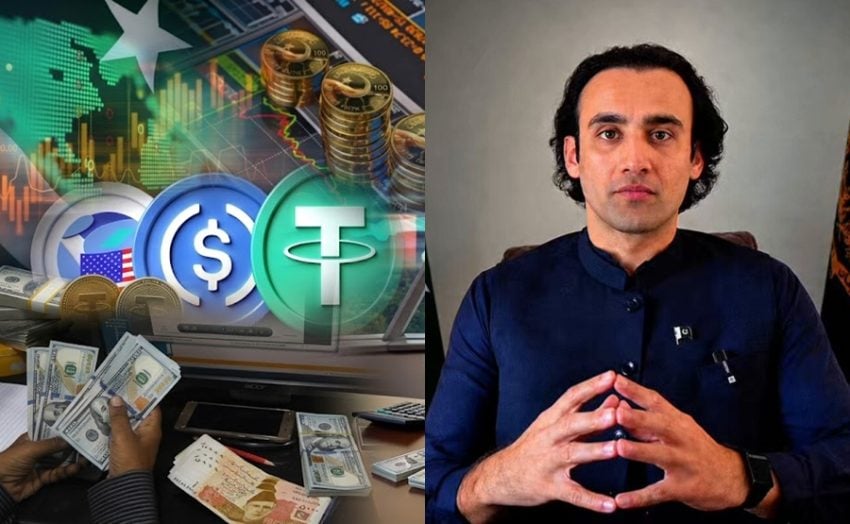
Every year billions of dollars flow into Pakistan through remittances but a big chunk goes to transfer costs, and Pakistan is exploring regulated stablecoins as a cheaper alternative with PVARA Chairman Bilal bin Saqib saying the country could potentially save $400 million annually if transaction costs fall by just one percentage point.
Pakistan Virtual Assets Regulatory Authority (PVARA) chief Bilal bin Saqib said Pakistan receives roughly $40 billion in annual remittances, much of which still moves through traditional international banking channels. He said shifting part of these flows onto regulated blockchain-based payment rails could significantly reduce costs and improve the speed of cross-border transfers.
The potential savings become more important against backdrop of high international transfer costs. Saqib cited World Bank data showing that average global cost of sending $200 is around 6%. If regulated stablecoins can bring those costs down, even marginally, a substantial amount of money could remain with Pakistani families rather than being absorbed by transaction fees.
The remittance proposal is only one part of a much broader government strategy to find economic applications for virtual assets. Officials are examining blockchain-based solutions for cross-border payments, digital exports, trade finance, private credit and tokenised financial assets.
Pakistan has already taken a major step toward formalising the digital-asset sector by opening the licensing process for Virtual Asset Service Providers (VASPs). Under Section 70 of the Virtual Assets Act, 2026, existing virtual-asset service providers must apply for a No-Objection Certificate by September 5, 2026.
Those failing to submit their applications by the deadline will be required to stop operating, as authorities move to bring previously informal activity under regulatory oversight. Saqib described the licensing process as part of a three-stage transformation: first establishing the legal framework, then licensing credible operators and strengthening anti-money-laundering controls, followed by developing use cases that deliver measurable economic benefits.
The proposed transformation is not limited to overseas Pakistani families sending money home. Pakistan’s expanding digital workforce, including freelancers, software developers, designers, creators and other online professionals, is another major target.
PVARA chairman questioned how Pakistan’s digital workers will receive international payments in the coming years and whether the existing financial system can provide sufficiently fast and affordable settlement.
With Pakistan’s IT exports already worth billions of dollars, blockchain-based payment infrastructure could potentially make it easier for digital workers to receive overseas earnings and bring those revenues into the formal economy.
Tokenisation could also open a new front in Pakistan’s struggle to finance businesses and development projects. Bilal said SMEs account for approximately 90% of businesses in Pakistan and 40% of GDP, yet SME financing stood at only Rs850 billion in March. He added that tokenised trade receivables and private-credit instruments could potentially connect Pakistani businesses with international pools of capital.
The same technology could also be explored for agriculture, exporters, energy and infrastructure, while tokenised investment products could provide the Pakistani diaspora with broader access to domestic investment opportunities.
According to figures cited by Saqib, the global stablecoin market has already exceeded $300 billion. He added that more than $35 billion worth of real-world assets, excluding stablecoins, have already moved onto blockchain infrastructure.
The participation of major financial institutions such as BlackRock and Goldman Sachs, alongside financial centres including Hong Kong and Singapore, was cited as evidence that the technology is moving beyond the experimental stage.
Pakistan moves to regulate Crypto Sector with Proper Licensing, Reserve and AML Requirements