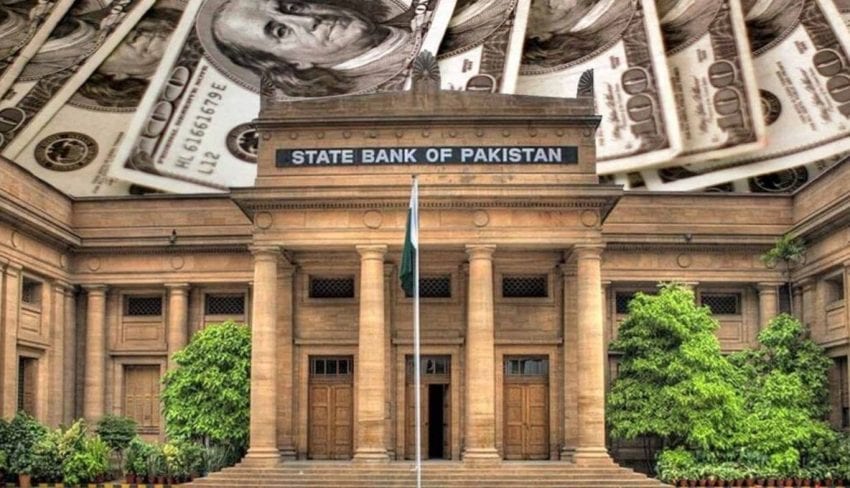
KARACHI – State Bank of Pakistan (SBP) will announce next policy rate on September 14, 2026, and despite alot of expectations, policy rate likely to remain unchanged.
A fresh survey by AHL hintes toward a status quo, with 87.5 percent of respondents predicting that the central bank will keep rates unchanged. However, the remaining 12.5 percent are betting on a 50-basis-point hike, signalling that inflation remains a serious concern for policymakers.
The decision comes as Pakistan’s economic picture sends mixed signals: inflation is accelerating sharply, while the external account, fiscal position and industrial activity are showing signs of strength.
The biggest cloud hanging over the September decision is inflation. Average consumer-price inflation climbed to 10.18 percent in the first two months of FY27, dramatically higher than the 3.56 percent recorded during the corresponding period a year earlier.
The sharp acceleration could put pressure on the SBP to reassess its monetary stance. However, policymakers are likely to focus on whether the latest inflation spike is becoming broad-based and persistent rather than reacting to a short-lived increase. That assessment could prove decisive for the direction of interest rates in the months ahead.
Pakistan’s current account deficit fell 38 percent year-on-year to $328 million in July, suggesting some improvement in the country’s external balance. Remittances provided another boost, rising 13 percent to $3.6 billion during the month. The stronger inflow of overseas workers’ funds could help ease pressure on Pakistan’s external financing position and support foreign-exchange liquidity.
The government also enters the monetary-policy decision with a stronger fiscal number to point to. Pakistan recorded a primary fiscal surplus of 2.9 percent of GDP in FY26, surpassing the target set under the country’s agreement with the International Monetary Fund (IMF).
Economic activity is offering another reason for caution against an immediate rate cut. Large-scale manufacturing (LSM) expanded by approximately 5 percent in FY26, marking its strongest performance in around four years. The industrial recovery suggests that economic momentum is gaining traction, even as higher inflation threatens to complicate the outlook.
With inflation moving sharply higher but the external and fiscal positions improving, the SBP faces a delicate balancing act. For now, the market consensus heavily favours no change at 11.5 percent. But the 12.5 percent minority expecting a 50-basis-point increase highlights the uncertainty surrounding the inflation outlook.
The central bank scheduled series of monetary-policy meetings extending into 2027. Following the September 14 meeting, the next MPC decisions are scheduled for October 26, December 14, 2026, January 25, March 8, April 26 and June 17, 2027.
This meeting will be followed by analyst briefing on September 15. The minutes are scheduled for October 9. For the October meeting, the policy statement and compendium are scheduled for October 26, with the analyst briefing on October 27 and MPC minutes due on November 20.
December meeting is scheduled for December 14, followed by the analyst briefing on December 15 and minutes on January 8, 2027. Further meetings are scheduled for January 25, March 8, April 26 and June 17, 2027, with their respective analyst briefings, minutes and monetary-policy publications spread across the following weeks.
The previous MPC meeting took place on July 27, 2026, followed by the analyst briefing on July 28. The July 27 monetary policy statement, August 21 MPC minutes and August 10 Monetary Policy Report form the backdrop to the upcoming decision.