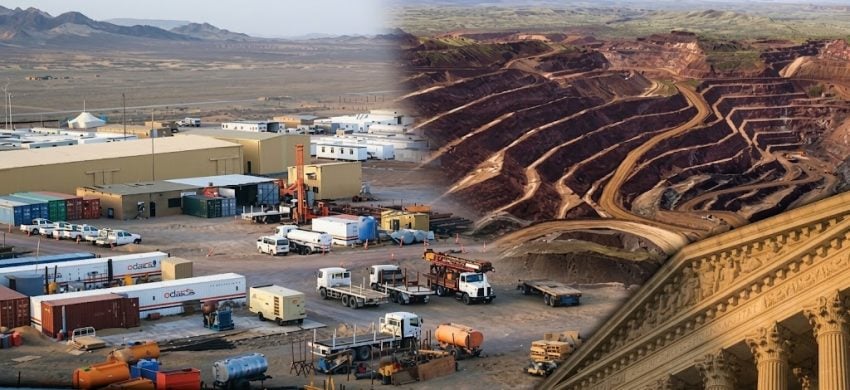
ISLAMABAD — Pakistan moved to unlock world’s major undeveloped copper-gold deposits with Barrick, but militant violence and growing regional tensions forced the mining giant to slow development and extend its review of the nearly $9 billion project.
The project, located in Chagai district near the borders with Iran and Afghanistan, has been affected by surge in militant activity. Coordinated attacks attributed to the Baloch Liberation Army in January 2026 killed civilians and security personnel, while continuing instability has raised concerns over construction, logistics, personnel movement and supply chains.
Barrick launched review around February 2026 covering security arrangements, capital spending, project scope and the development timetable. The review has since been extended into mid-2027, with development activity and spending scaled back.
Barrick continues to view Reko Diq as a major long-term copper asset, but has indicated that full-scale construction will depend on sustained improvements in security. First production, previously targeted for late 2028, could now move into 2029 or later.
Under earlier development plan, Phase 1 was designed to process about 45 million tonnes of ore annually, producing roughly 200,000–240,000 tonnes of copper a year, alongside gold. Phase 1 was previously estimated to require $5.6–$6 billion, while a second expansion to around 90 million tonnes of annual processing capacity was expected to require another $3.3–$3.6 billion. Total development capital had therefore been estimated at roughly $8.8–$9 billion, before sustaining costs.
Reko Diq’s reserve-based mine plan envisages around 37 years of production, with previous estimates pointing to approximately 13.1 million tonnes of copper and 17.9 million ounces of gold over its life.
Barrick owns 50% of the project and operates the mine. Government of Balochistan holds 25%, while another 25% is held through Pakistani state-owned entities linked to OGDCL, PPL and GHPL. If developed, Reko Diq could generate substantial royalties, taxes and dividends for Pakistan while supporting thousands of jobs. Earlier plans projected peak construction employment of about 7,500 workers and approximately 4,000 long-term operational jobs.
Pakistan intensified security operations in Balochistan, while government-linked stakeholders have discussed stronger protection arrangements for Reko Diq.
Barrick stressed that it needs tangible and sustained security improvements before committing to full-scale construction. The company has also highlighted community programs and international security and human-rights principles.
Pakistan turns to US EXIM Bank for PIA Fleet, Reko Diq and $5 Billion Refinery Upgrade