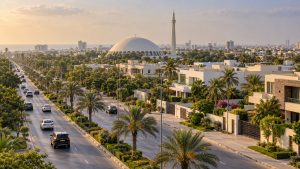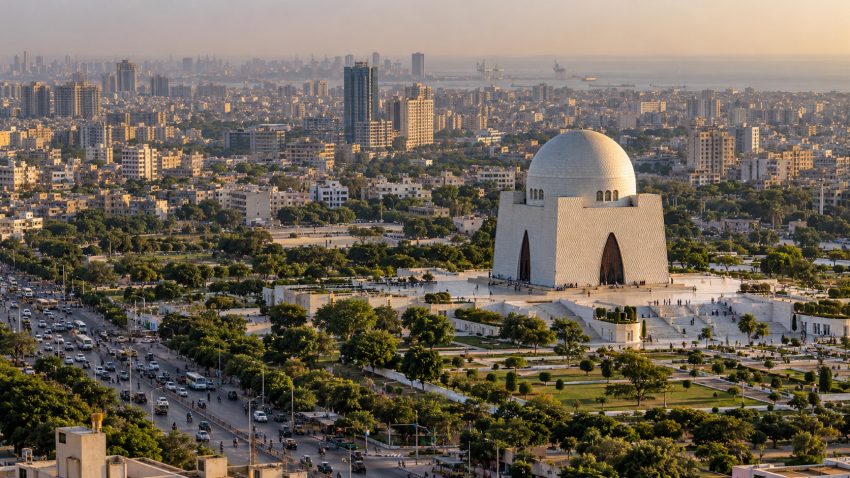
I recently came across a SUPARCO note saying Karachi’s built-up area has grown by about 32 per cent since 2010 and now covers more than 1,400 square kilometres. By my rough arithmetic, that’s about 340 square kilometres of new city in fifteen years. I wasn’t shocked. You don’t need a satellite to notice that the farmland and empty plots on the city’s edges have been turning into housing and roads for years. It’s still odd to see it written down as a number.
We talk about heat here the way we talk about traffic, as something to grumble about and get through. But in June 2015, temperatures touched 45°C and well over a thousand people died in Karachi in about a week. Power cuts made it worse, knocking out the pumps that bring water to our homes. Concrete and asphalt soak up warmth all day and release it slowly at night, so the city never properly cools. Trees and open soil used to help, and there’s less of both now. Add the humidity, which makes sweating far less effective, and a day can turn dangerous long before anyone announces a heatwave.
M Toheed, an urban planner linked with IBA, says Karachi has lost around 40 per cent of its green cover in about fifteen years. I’d be careful with that figure, since it still needs checking against proper land-cover data. But I haven’t heard anyone claim the city has become greener.
Hard surfaces don’t just hold heat; they also shed water. In August 2020, a record 230.5 millimetres of rain fell in a single day, beating a record that had stood since 1967. By the Sindh chief minister’s count, 47 people died in the city. Our drains were overwhelmed, and SUPARCO warns that building over natural ground makes a repeat more likely. We called it a freak event and carried on pouring concrete.
What bothers me most is who pays for all this. Toheed estimates that 62 to 70 per cent of Karachi lives in informal settlements, often in homes with tin or steel roofs and eight or more people inside. Picture that room at three in the afternoon, then take away the electricity. He named North Karachi, Ajmer Nagri, Pahar Ganj and Lyari as places where long outages are routine, with 10 to 14 hours a day in some neighbourhoods and up to 18 on Baba Bhit Island. In those homes, a working fan is not a small thing.
And it isn’t over. Earlier this month, K-Electric began cutting power in previously exempt areas, including Clifton and DHA, blaming an LNG shortage. Even the neighbourhoods that usually escape are now learning what the rest of the city already knew.
Women, children and the elderly get it worst. A man can step outside and sit somewhere breezy. His wife, his mother or a small child usually can’t.
Heat costs money too, though we rarely add it up. A labourer who can’t finish a shift earns less. A child worn out by the heat falls behind in school. One hospital visit can wipe out the savings of an already stretched family. None of this makes one dramatic headline, which may be why it gets ignored.
Part of this is a failure of oversight. The Supreme Court has repeatedly criticised the Sindh Building Control Authority for illegal construction and said at one hearing that officials allegedly took bribes. The mayor once told the court he controls only about ten per cent of the city. When nobody owns the problem, everybody can point elsewhere.
The fixes aren’t mysterious, just hard. Someone in government should be responsible for heat; Toheed notes other cities have appointed heat officers, and we haven’t. The 2017 Heat Wave Management Plan reportedly expects the power company to keep supply going during heatwaves, and he alleges that it doesn’t. That claim deserves a proper answer. Solar could help too, but he estimates only about one in ten households has it, because so many families rent, can’t afford panels, or have no roof to put them on.
And we should stop treating trees and parks as leftover land. A neighbourhood with shade and open ground is simply easier to live in, and cheaper to run, than one that is all rooftops.
None of this will cool Karachi overnight. I’d just like the next satellite report to have better news.