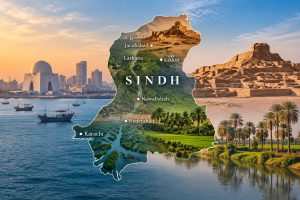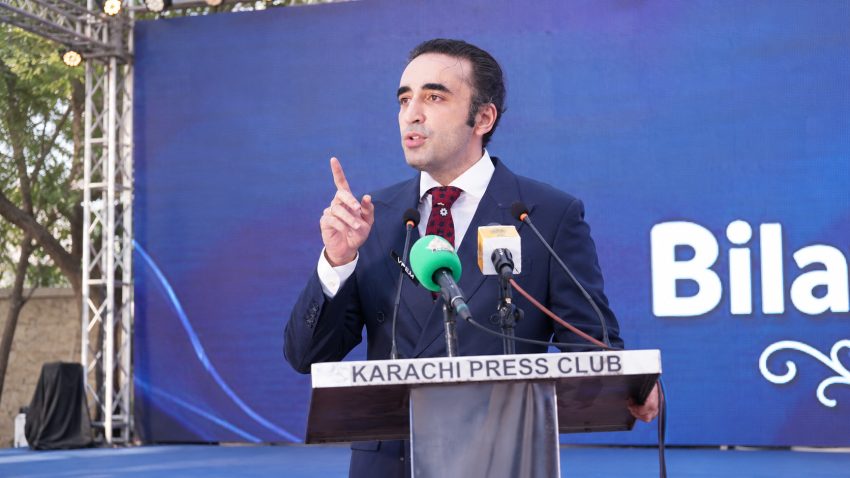
Let me get this straight. The party that has run Sindh for eighteen years now tells us that if anyone redraws the administrative map, there will be bloodshed in Karachi, Hyderabad and other parts of the province. Not a better road. Not a working hospital. Blood. That is what PPP chairman Bilawal Bhutto Zardari put in front of the people of Sindh at the Karachi Press Club on Tuesday, and I think we should stop and ask the one question nobody on that stage wanted to answer: why?
He Says “Forced.” Who Is Forcing Anyone?
To be fair to Bilawal, here is his position. The PPP, he says, backs new provinces only through the constitutional route and with the public’s consent. He rejected a referendum, pointing to the Sindh Assembly’s repeated opposition. He complained that neither he nor the president was consulted, and that the matter has not gone through the federal cabinet or parliament. Fair enough. Those are real procedural points.
But look at the word he keeps leaning on: forced. Nobody in this debate has proposed a baton charge or a tank. The loudest voice for new provinces, Federal Minister Mustafa Kamal, says the demand is administrative, constitutional and not aimed at any ethnic group. You don’t have to like the MQM-P to see that. Every party in this fight has its own agenda, mine included if I had one.
So when the head of Sindh’s ruling party talks about blood before a single constitutional step has even been taken, what are we supposed to hear? A forecast? Or a threat dressed up as one?
Nobody Bleeds Over a Better Hospital
How exactly does a smaller administrative unit kill anyone? Think about what it actually is. One more government office closer to your house. One more budget with your district’s name on it. One more minister you can actually find. The only person who loses from that is the one who likes the distance between citizens and decision-makers.
Here is what smaller units mean for an ordinary family:
Someone reachable to blame. When the water stops, whose fault is it? The city’s? The province’s? The centre’s? Everyone points at everyone else. In a smaller unit, the buck finally has an address.
Money that reaches you. A budget spread across a province of well over fifty million people gets thin by the time it reaches your street. A shorter distance means less of it leaks on the way.
Budgets that fit the place. A megacity needs sewerage, transport, fire services and clean water. A farming district needs irrigation, flood protection and roads to the market. One government rarely has the attention for both, and we all know which one tends to lose out.
Services someone can actually supervise. No chief minister can personally watch every police station, clinic and school across a province this size. A manageable unit can be audited, inspected and fixed.
Comparison. When neighbouring units compete, people can see who builds better roads and runs cleaner hospitals. Today a failing government can always say someone else is worse. Comparison takes that excuse away.
New local leaders. Smaller units bring up people who are known in their own neighbourhoods and cannot hide behind one distant power centre.
Yes, there are real questions about cost and design. Argue about them in parliament and in the assemblies. That is what they are for. But don’t threaten the streets.
Eighteen Years. Eighteen.
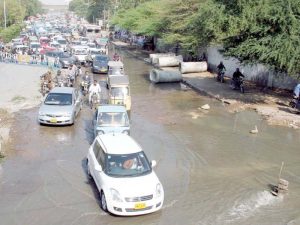
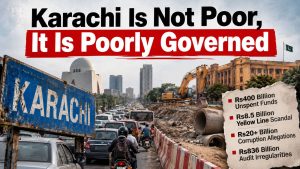
The PPP has governed Sindh since 2008. A baby born the year this government began is now an adult. So let us ask the questions that eighteen years should have answered by now. Where is the lasting fix for street crime and law and order? Where are the empowered local governments that people were promised? Why is water still a daily fight for ordinary families? Why do garbage, broken roads and unsafe buildings feel like permanent features of life? Mustafa Kamal has also attacked the government’s slow response to the Gul Plaza fire, which killed at least 80 people.
In fairness, Bilawal has a point when he says the centre has not given provinces their due share of resources, and he has called for the federal and provincial governments to work together. But a government that has been in power for eighteen years doesn’t get to say it is still early.
Kamal put the obvious question: if the PPP believes it has governed Sindh well, why is it so afraid of a change in structure? So far, we have heard rhetoric, not an answer.
And then there is the inconsistency. Years ago, Bilawal promised the people of southern Punjab a province of their own if his party came to power. As recently as December 2025, he backed another province in Punjab while sidestepping every question about Sindh. So a new province is a wonderful idea in someone else’s backyard, and a recipe for bloodshed in yours?
You Say Only the People of Sindh Can Decide. Good. Ask Them.
Bilawal says nobody outside Sindh can decide the future of this province; only its people can. I agree with him completely. So let them decide. Hold a referendum.
He has rejected that, saying the Sindh Assembly has already spoken. But the assembly is controlled by the same party whose record is the subject of the debate. That is a judge hearing his own case. A referendum is not an insult to Sindh. It is the one test that nobody can claim was rigged by Islamabad or by Bilawal House.
I suspect that after eighteen years, many people would say enough. I could be wrong. But I don’t know the answer, and neither does he, and that is exactly why we should ask.
No, Sindh Will Not Bleed
The people of Sindh, Sindhi and Urdu-speaking, Baloch, Pashtun, Punjabi and everyone else, are neighbours, shopkeepers, classmates and in-laws. They don’t kill each other over a line on a map. They stand with the law, the Constitution and the institutions of this country, and they will keep standing there. Anyone who tries to spill blood will answer to the state, not to a party press conference.
Sindh is not a jagir. It belongs to the people who live in it, not to whoever happens to be governing it this decade.
Enough, Bilawal Sahib. Don’t scare us. Ask us.