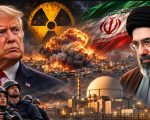
US-Iran War – Dilemmas and Leverages. Nine months into the US-Iran war, it looks as if superpowers never learn from history, whether it be Vietnam, Iraq or Afghanistan. Ever since the Second World War, America’s military capabilities have been used to invade countries, dismantle governments and regimes by dominating the battlefields.
However, a fundamental contradiction in American strategic thinking was exposed in Iraq and Afghanistan. A military victory may not translate into a political one. The US withdrawal from Kabul symbolised the limits of military intervention, and a similar situation now exists in Iran. The Taliban needed to survive in Afghanistan until American political will was diminished. It happened similarly.
Iran is also playing the same card. The world is now watching a reality where one side has a bundle of dilemmas in its basket, while the other side has leverage in its kitty. America’s worst dilemma is that it possesses overwhelming military power, superior intelligence, air and naval supremacy and cutting-edge technology, but the challenge posed by Iran is fundamentally different. The question with the USA is not how to defeat Iran’s military but how to negotiate peace with Iran. US has to first find a solution to the Strait of Hormuz for the rest of the world before finding an exit from the war. Crucial question is ability of the US to keep the strait open without prolonged military commitment.
The larger political objective in the Gulf cannot be achieved without settling the Hormuz issue. If the USA shows restraint, it may be interpreted as weakness. If it escalates, Iran is likely to retaliate against regional partners or maritime infrastructure. If the USA launches a larger attack, it may be difficult to identify a credible point to end it. It’s a classic escalation trap for the superpower. Dilemma with USA is that conflict has become a domestic political burden.
Rising energy prices, casualties, war expenditures and uncertainty about the ultimate objective have seriously weakened public support. The cost of maintaining this superiority over Iran is fast outmatching the acceptable cost-benefit analysis. It’s also a security dilemma being faced by US where defensive preparations are being interpreted as offensive measures.
Can America force Iran to surrender its strategic leverage before the economic and political costs of the war become unacceptable to Washington? The alliance dilemma is another issue: America’s regional partners want protection but do not necessarily want to become battlefields. Iran’s strategic leverage, derived from the Strait of Hormuz, is particularly powerful and unique.
Iran’s leverage does not only lie in claiming ownership of the waterway. It comes from Iran’s ability to disrupt and make commercial shipping unsafe. The possibility of affecting global oil and gas flows creates leverage far beyond Iran’s economic size. USA does not have the ability, and more importantly, the environment, to eliminate the threat to commercial shipping, and Hormuz has become a strategic trap for the USA. This instrument of strategic leverage which is world’s most critical energy choke point has direct impact on global economy.
This gives Iran leverage to transform regional military confrontation into an international economic crisis. Iran is posing a continuous threat of disruption by hitting oil tankers passing through the strait. At least 12 have been hit in the last 15 days, affecting the region’s and the world’s economic stability. A real settlement will come only if freedom of navigation through Hormuz is fully restored. Strategic endurance is another leverage point, as Iran’s political and military institutions have developed mechanisms to operate under prolonged sanctions and conflict. Another leverage point with Iran is the existing security void, which is the direct outcome of 9 months’ war. The most important Iranian leverage is not the ability to defeat America militarily.
It is the ability to make the costs of American victory politically and economically unacceptable. The war is no longer simply about who possesses the stronger military. It is about who can sustain pressure longer, tolerate domestic and international costs, and who can negotiate without appearing to surrender. There is a need for a pragmatic understanding of what has changed in the last 9 months. Both sides cannot claim victory without lowering their maximal approach.
The end state of the war will not be determined by battlefield results but by relationships and linkages between national character, military capability, political will and economic endurance. As the conflict got dragged out, military victory lost its relevance. Now the real issue is the US’s ability to achieve its strategic objectives without getting too deeply involved in a prolonged conflict whose economic, political, and strategic costs may outweigh its gains in the foreseeable future.