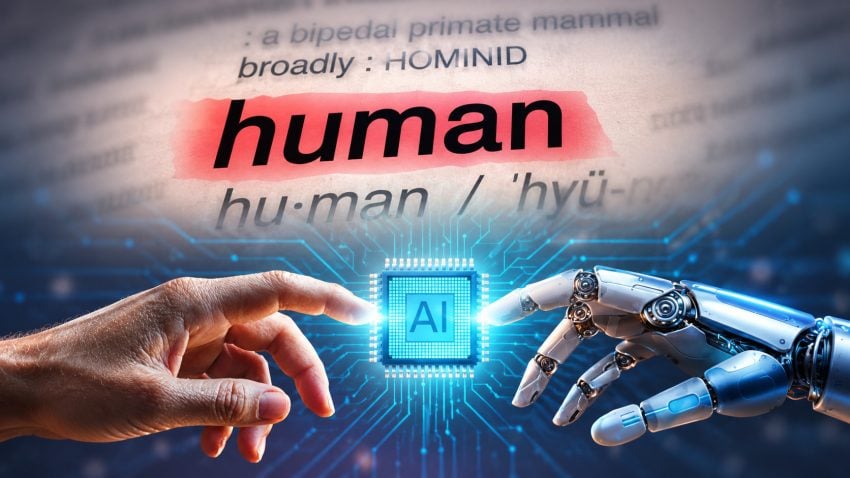
LONDON – As AI continues to change the world, Cambridge Dictionary made surprising choice by naming “Human” its Word of the Year 2026, showing growing concerns about future of human identity, creativity and independence in an increasingly AI-driven world.
At time when intelligent machines are taking over tasks once performed exclusively by people, Cambridge Dictionary has looked centuries into the past to deliver a powerful message about the importance of being human. The selection of “Human” comes amid a growing global debate over how artificial intelligence is blurring the boundaries between human intelligence and machine capabilities. Rather than choosing a futuristic technological term, the dictionary has revived a familiar word whose origins date back to the 15th century.
The decision shows mounting concerns that excessive reliance on artificial intelligence could gradually weaken human creativity, independent thinking and other abilities that define human individuality. Cambridge Dictionary lexicographer Colin McIntosh explained that the rapid expansion of AI changed how people discuss what it means to be human.
He pointed out that while AI offers bulk opportunities, there are also concerns about what people could lose if they become increasingly dependent on machines instead of relying on their own abilities. The word “Human” originates from the Latin term “humanus” and has been part of the English language since the 1450s. Despite its centuries-old history, the word has acquired fresh significance as artificial intelligence continues to reshape modern society.
Experts agree that AI forced people to reconsider the meaning of human existence and the role of technology in everyday life. The success of artificial intelligence should not be measured solely by how advanced or powerful the technology becomes. Instead, its real achievement should be judged by how effectively it improves human lives and contributes to society.
Before making its final decision, Cambridge Dictionary reportedly considered several other words that reflected the changing technological and cultural landscape.
Among contenders was “Agent,” a term increasingly used for autonomous AI systems capable of performing tasks with minimal human involvement. Other words under consideration included “Analog” and “Wholesome.”
However, the dictionary ultimately selected “Human,” showing the growing importance of preserving human identity and creativity as machines become more intelligent and influential.
Last year, Cambridge Dictionary picked “Parasocial” as its Word of the Year, describing one-sided emotional relationships that people may develop with celebrities, online personalities or even AI chatbots.