
ISLAMABAD – Pakistan’s roads will get record number of new buses and trucks after imports of heavy commercial vehicles surged to an unprecedented $262.4 million during the first 11 months of FY26.
The more than fourfold increase from a year earlier shows rising business activity, easier access to financing following lower interest rates, and growing demand from the transport and logistics sectors, according to State Bank of Pakistan data.
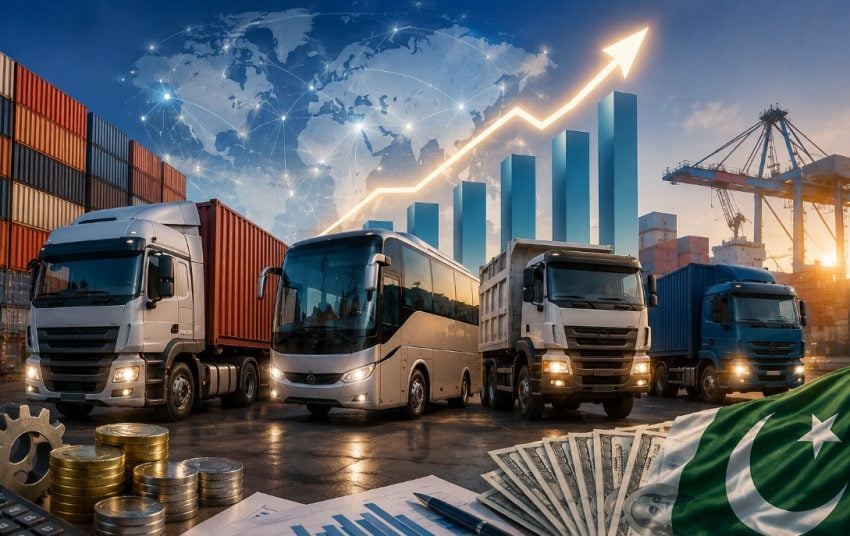
Pakistan’s imports of heavy commercial vehicles soared to unprecedented level, with purchases of buses and trucks crossing $262.4 million during the first eleven months of fiscal year 2025-26, more than four times the value recorded a year earlier, according to the latest data released by the State Bank of Pakistan (SBP).
The record-breaking imports mark the highest level ever recorded in the country’s history, highlighting a sharp rise in demand for commercial transport as economic activity gains momentum.
Official figures show that Pakistan imported $262.4 million worth of buses and trucks during July-May FY26, compared with just $57.8 million in the corresponding period of FY25. The increase represents a jump of more than 350 percent within a single year.
The central bank’s data further revealed that most of these vehicles entered the country as Completely Built Units (CBUs), indicating that transport operators and corporate buyers opted to import fully assembled trucks and buses to expand or modernize their fleets.
The surge comes amid combination of lower borrowing costs and improving business confidence. The sharp decline in interest rates has made bank financing significantly cheaper, encouraging transport companies and logistics firms to invest in new commercial vehicles.
At the same time, government support measures for the transport and logistics sector, along with a gradual recovery in economic activity, have further strengthened demand.
The expansion of industrial production, increased construction activity, rising freight movement, and growing inter-provincial trade have also fueled the need for modern heavy-duty transport. In response, many transport companies have accelerated fleet replacement, retiring older vehicles in favor of newly imported buses and trucks.