ISLAMABAD – Pakistan’s economy braces for huge losses ahead of upcoming strikes, sit-ins, road blockades that can cause prolonged disruptions to business activity.
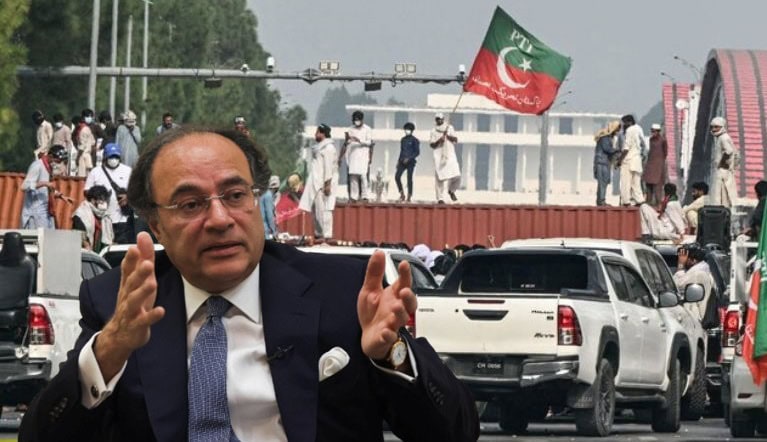
Ahead of planned protests by Imran Khan’s party, Pakistan Tehreek-e-Insaf, Federal Finance Minister Muhammad Aurangzeb has warned economic fallout would extend far beyond closed shops and blocked roads, threatening tax revenues, exports, investment and the country’s growth trajectory at a time when the government is attempting to shift the economy from stabilisation to sustainable growth.
According to estimates prepared in coordination with the Economic Wing of the Planning Commission, the disruption could inflict losses across major sectors of the economy, with the services sector expected to bear the heaviest impact.
The services sector alone could suffer an estimated Rs86 billion loss per day, according to the finance minister. The sector includes financial services, communications, transportation, retail and wholesale trade, hotels and other related activities, areas that depend heavily on the uninterrupted movement of people, goods, payments and communications.
The industrial sector could face another Rs25 billion in daily losses, with construction, manufactured goods, raw materials and supply-chain activities among those exposed to disruption.
Agriculture, meanwhile, could suffer an estimated Rs9 billion per day, particularly through interruptions to transportation, perishable goods, dairy supply chains and agricultural production. Together, the three sectors account for the estimated Rs120 billion daily economic loss cited by the finance minister.
The disruption could also strike directly at government revenues. FinMin said Federal Board of Revenue’s tax collections have risen by around 40 percent over the past two years, while the government continues efforts to expand the tax base. But if economic activity is brought to a standstill, the government could face an estimated Rs17 billion loss in tax revenue, he said.
For a government seeking to strengthen fiscal revenues, prolonged disruptions could therefore create a second economic shock—hitting both private-sector activity and public finances.
Minister said the immediate burden of such disruptions would fall on ordinary Pakistanis, particularly daily-wage workers, day-to-day employees, small shopkeepers and small businesses. For workers dependent on daily earnings, even a short disruption can mean an immediate loss of income, while small businesses may face falling sales, supply problems and higher operating costs.
He argued that avoiding prolonged disruption was therefore not merely an issue of macroeconomic statistics but one directly connected to people’s livelihoods.
The warning comes as Pakistan seeks to move beyond economic stabilisation and accelerate exports, investment and sustainable growth. For the current fiscal year, the government has set a target of $32.9 billion for merchandise exports, with growth of around 6 percent expected.
Aurangzeb said previous episodes of strikes and economic disruption had already demonstrated their potential impact, with normal economic activity sometimes taking weeks to recover.
The finance minister also pointed to the current situation in the Gulf, saying Pakistani exporters and businesses were already confronting various challenges. Against that backdrop, he warned that additional domestic disruptions could place further pressure on exports and economic growth.
He mentioned that Pakistan had already endured difficult economic decisions and had moved toward greater stability. The next challenge, he said, was to convert that stability into sustainable economic growth.
Islamabad’s D-Chowk sealed with containers ahead of PTI Protest