
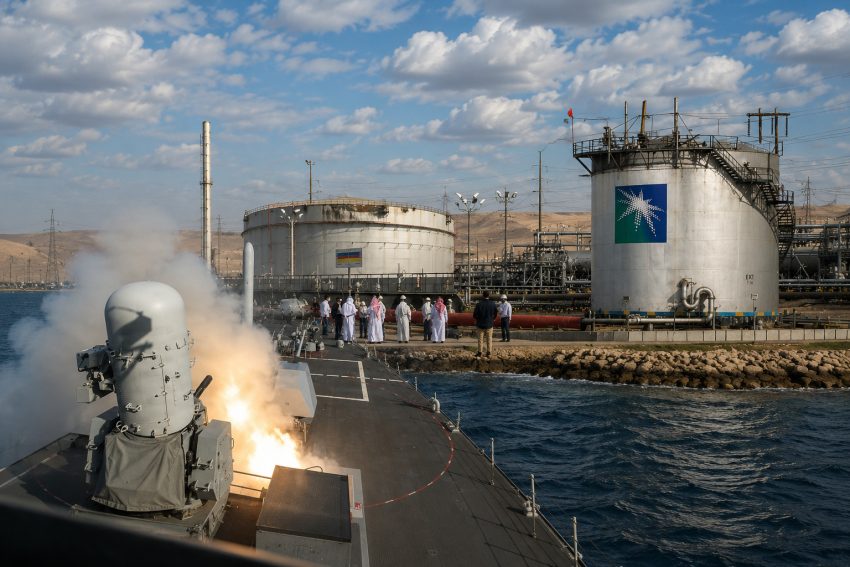
RIYADH – Saudi Arabia’s oil giant Aramco reignited crude exports from the world’s largest oil terminal after a 4-month pause, but the comeback comes under a cloud of uncertainty.
Just as supertankers returned to Ras Tanura, a fresh attack near Hormuz and suspension of maritime security operations renewed fears over the safety of one of the world’s most critical energy routes.
Shipping data reviewed on Friday showed two supertankers loading crude at Ras Tanura, while a third tanker was approaching the terminal and a fourth remained on standby nearby. Each vessel is capable of transporting around two million barrels of crude oil, highlighting the scale of Saudi Arabia’s export operations.
The restart comes just one day after a cargo vessel operated by Taiwan’s Evergreen Marine was reportedly attacked in the Strait of Hormuz, raising fresh concerns over the security of one of the world’s most strategically important maritime chokepoints.
The resumption of exports follows an initial agreement aimed at ending hostilities between the United States and Iran and reopening the Strait of Hormuz. Before the conflict, the waterway carried roughly 20% of global oil and liquefied natural gas (LNG) imports, making any disruption a major concern for international energy markets.
Aramco declined to comment regarding the restart of loading operations. Meanwhile, UK Maritime Trade Operations (UKMTO) has suspended its operations to provide security assistance for commercial vessels transiting the Strait of Hormuz following the reported attack. The move reignited doubts over the durability of the ceasefire arrangements and the safety of commercial shipping in the Gulf.
The reopening of Ras Tanura marks a significant step toward restoring Saudi crude exports, but escalating maritime security risks continue to cast a shadow over one of the world’s most vital energy corridors.
US-Iran Ceasefire under strain as Tehran claims strikes on US-Linked Targets