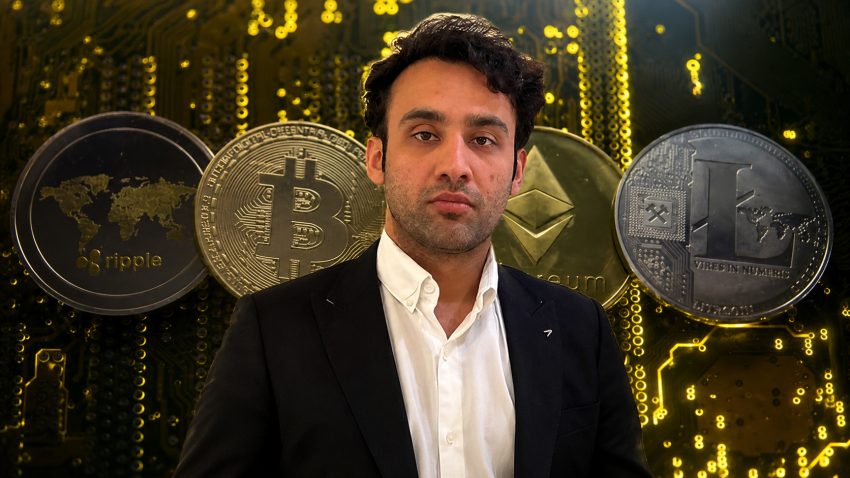
ISLAMABAD – Pakistan signaled its ambition to become key player in the global digital finance landscape, with Minister of State and Chairman of the Pakistan Virtual Assets Regulatory Authority (PVARA) Bilal Bin Saqib making to help shape future of international digital asset regulation.
Speaking at Point Zero Forum in Zurich, where policymakers, central bankers, regulators and financial industry leaders gathered to discuss tokenized money and virtual assets, Bin Saqib said Pakistan is pursuing a “Pakistan-first” approach to digital finance.
He urged developing economies to take an active role in setting global standards for digital assets rather than relying solely on frameworks developed by advanced economies. According to him, governments should prioritize regulating the infrastructure supporting digital assets instead of attempting to restrict their expansion.
Addressing delegates during a panel discussion on tokenized money, stablecoins and central bank digital currencies (CBDCs), Bin Saqib said the international financial system is experiencing a major transformation as digital assets increasingly redefine cross-border payments. “The rules governing money are being rewritten, and Pakistan will help write them,” he said, adding that money is rapidly evolving into software and that traditional financial systems based on national borders are changing.
“Our responsibility is not to resist the future but to regulate it effectively,” he said, noting that countries embracing this transition would be better positioned to benefit from the changing financial landscape. The panel featured Mampho Modise and examined the regulatory challenges associated with CBDCs, stablecoins and tokenized financial systems.
PVARA noted that Pakistan ranked third globally in the 2025 Chainalysis Global Crypto Adoption Index, behind India and the United States. The authority attributed the country’s rapid crypto adoption to its youthful population, expanding freelance workforce, annual remittances exceeding $38 billion and the growing use of stablecoins as protection against inflation.
Pakistan rolled out series of reforms aimed at establishing a comprehensive legal framework for virtual assets. The government established the Pakistan Crypto Council to support the development of cryptocurrency policy and regulation.
Parliament enacted the Virtual Assets Act 2026, building on a 2025 ordinance. The law formally regulates Pakistan’s virtual asset sector and establishes the Pakistan Virtual Assets Regulatory Authority (PVARA) as the country’s dedicated regulator.
Unlicensed operators are subject to regulatory action, including fines and other penalties. The authority has started issuing No Objection Certificates (NOCs) to international cryptocurrency exchanges, including Binance and HTX.
State Bank later lifted banking restrictions that had remained in place for nearly eight years. Banks can now provide services to PVARA-licensed VASPs and their customers, provided they comply with strict Anti-Money Laundering (AML) and Countering the Financing of Terrorism (CFT) requirements. However, banks are still prohibited from directly holding, trading or investing in cryptocurrencies.
The 2026–27 federal budget proposes bringing digital assets more explicitly into the tax framework, with discussions on tax rates ranging from 10% to 30%, subject to amendments to the Income Tax Ordinance.
Pakistan’s crypto market is transitioning from a regulatory gray area to a fully regulated ecosystem.Licensed VASPs now have access to banking services, while regulators continue to emphasize consumer protection, AML/CFT compliance and alignment with international standards, including FATF recommendations.