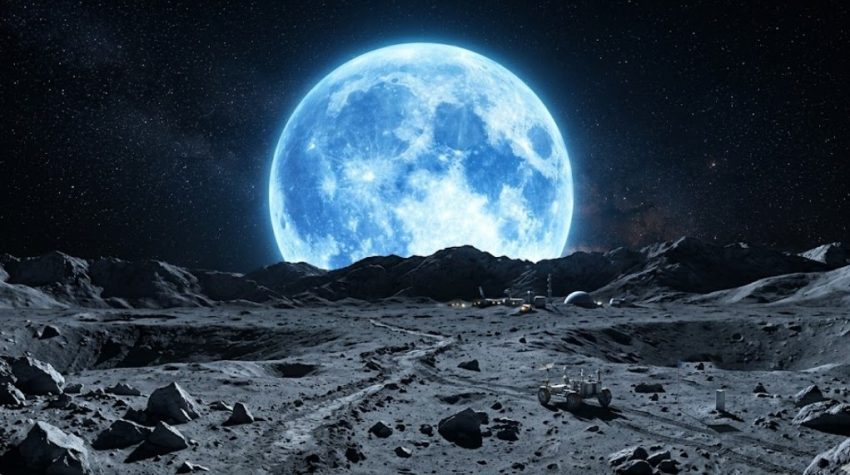
ISLAMABAD – Moon will steal the spotlight in a way it only rarely does. As May 2026 comes to end, skywatchers will notice something unusual, not a dramatic change in appearance, but in timing. A second full Moon will rise within the same month, marking what astronomers call a Blue Moon.
Rare ‘Blue Moon’ will appear in sky on May 31, 2026. Despite its striking name, Moon will not actually change colour. Instead, the term refers to a quirk of the lunar calendar rather than anything visual.
May 2026 brings an unusual double feature, two full Moons. The first lit up the sky on May 1, while the second will reach full phase on May 31. Because it is the second full Moon within the same calendar month, it is classified as a calendar Blue Moon. Events like this don’t come around often. The last one occurred on August 30, 2023, and the next isn’t expected until December 2028.
The more modern explanation is one most people are familiar with: the second full Moon in a single calendar month. It happens because the lunar cycle is about 29.5 days, meaning that occasionally two full Moons can squeeze into one month if the timing lines up just right.
On rare occasions, Moon can take on bluish tint if the atmosphere is filled with unusual particles, such as after volcanic eruptions or large wildfires—but that has nothing to do with this event. Blue Moon comes with another interesting detail: it will also be a micromoon. That means it occurs when the Moon is near the farthest point in its orbit from Earth.
According to EarthSky, it will be the most distant full Moon of 2026, sitting about 406,134 kilometres away. It may appear slightly smaller than usual, although most people won’t notice much difference with the naked eye. Moon will reach peak fullness at 8:45 UTC on May 31, which is 4:45 a.m. ET and 9:45 a.m. UK time.
Blue Moons don’t happen often simply because the lunar cycle doesn’t line up neatly with our calendar. Since a full cycle takes about 29.5 days, a second full Moon in a month only occurs when the first one falls early enough.