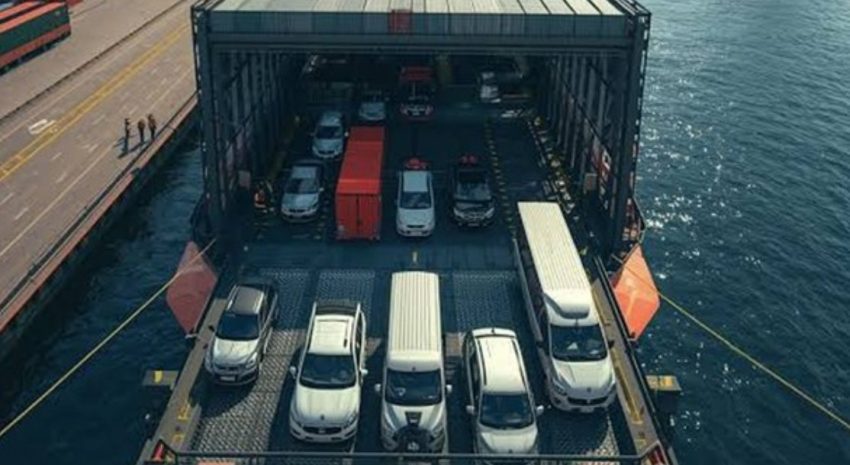
KARACHI – Pakistan’s maritime sector witnessed another milestone with arrival of first Roll-on/Roll-off (RoRo) vessel and it could reshape the way vehicles enter the country and accelerate broader efforts to modernize ports, strengthen trade, and expand electric vehicle (EV) adoption.
The arrival of the M.V. Grande Shanghai, carrying more than 2,000 electric vehicles, is more than just another ship docking at Karachi. It represents a shift toward a faster, safer, and more cost-efficient method of handling vehicle imports, one that has long been standard at major international ports but is only now making its debut in Pakistan.
Unlike conventional cargo ships that rely on cranes to lift vehicles on and off the deck, RoRo vessels allow cars to be driven directly onto and off the ship through built-in ramps. The process cuts unloading time, minimizes the risk of damage during handling, lowers insurance costs, and cuts overall port operating expenses.
Industry experts believe that as RoRo services become more frequent, importers will benefit from reduced logistics costs, savings that could eventually trickle down to consumers. While a single shipment is unlikely to transform the automotive market overnight, it lays the foundation for a more efficient and competitive vehicle import system.
The timing is equally important for Pakistan’s rapidly evolving EV landscape. The arrival of thousands of electric vehicles aligns with the government’s broader strategy to promote clean transportation through reduced import duties, lower Federal Excise Duty (FED) on affordable EVs, incentives for electric bikes and rickshaws, and an ambitious national target of making EVs account for 30% of new vehicle sales by 2030.
It also complements ongoing investments in local EV assembly, battery manufacturing, and charging infrastructure. International automakers, including BYD and Geely, are preparing to expand their presence in Pakistan, while the country’s first lithium-ion battery manufacturing facility is expected to begin operations in the near future. Together, these developments could reduce dependence on imported fuel, lower carbon emissions, and support the transition toward sustainable mobility.
Beyond automotive sector, the successful handling of specialized RoRo vessel strengthens Pakistan’s ambitions to modernize its ports and become a more competitive regional logistics hub. Faster vessel turnaround, improved cargo handling, and greater operational efficiency enhance the attractiveness of Karachi and Port Qasim for international shipping companies. Recent improvements in LNG handling and other maritime operations further reinforce confidence in the country’s expanding port capabilities.
Experts caution against viewing arrival of one RoRo vessel as a complete solution. Persistent challenges, including inadequate road and rail connectivity, limited EV charging infrastructure, and the need for reliable electricity, must still be addressed if the country hopes to fully capitalize on this opportunity.
Pakistan is expected to expand RoRo operations, introduce vehicle transshipment services, and increase its capacity for specialized cargo handling. Planned investments in deeper navigation channels, new port terminals, Gwadar bunkering facilities, waterfront development projects, and the expansion of the Pakistan National Shipping Corporation (PNSC) fleet all point toward a broader maritime transformation.