WASHINGTON/TEHRAN – United States and Iran traded fresh military strikes, escalating tensions across the Gulf and pushing Strait of Hormuz into renewed turmoil and as both sides intensified attacks, fears grew of wider regional conflict and fresh disruptions to global oil supplies.
The escalating hostilities have further undermined last month’s fragile ceasefire, disrupted shipping through the Strait of Hormuz, and heightened fears of a wider regional conflict. The latest escalation ended hopes that last month’s fragile ceasefire could hold, replacing it with an intensifying cycle of military retaliation.
U.S. Central Command (CENTCOM) announced that at 9:40 p.m. ET, U.S. forces completed their latest major wave of strikes against Iran, marking the sixth consecutive night of operations aimed at degrading Tehran's ability to threaten commercial shipping in the region.
According to… https://t.co/vPFAKVhxpt pic.twitter.com/3GErB9lNIH
— OSINTdefender (@sentdefender) July 17, 2026
US said its latest operation targeted key Iranian military assets on Qeshm Island and around Bandar Abbas, a strategic coastal city that hosts Iran’s largest commercial port alongside major naval and Islamic Revolutionary Guard Corps (IRGC) facilities.
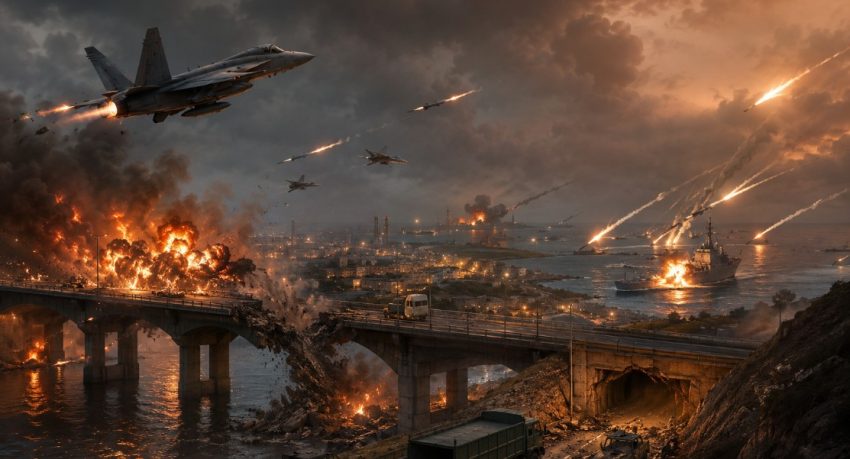
CENTCOM said US fighter jets, drones and warships carried out precision strikes against dozens of military objectives, including coastal surveillance systems, air defence batteries, logistics hubs and maritime capabilities. Washington said the strikes were intended to further degrade Iran’s military capacity and limit its ability to threaten regional shipping.
US strikes caused extensive damage to civilian infrastructure, including five bridges, Bandar Khamir railway station and Iranshahr Airport in southeastern Iran. State news agency IRNA said seven people were killed after bridges in the southern port city of Bandar Khamir were struck.
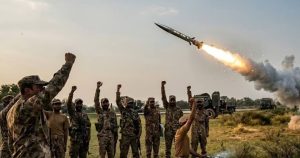
Tehran announced that its forces had launched missiles and drones at US military installations across the Gulf, including facilities in Bahrain and Kuwait. Iranian attacks have also targeted an American air base in Jordan. In Qatar, residents of Doha reported hearing multiple explosions overnight, while authorities confirmed that a child was injured after being struck by shrapnel.
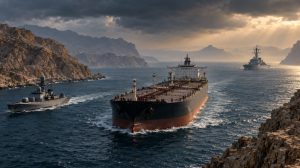
As military operations intensified, commercial shipping through the Strait of Hormuz was once again severely disrupted, raising fears of prolonged instability and pushing global oil and gas prices higher.
Tehran resumed restricting maritime traffic through the strategic waterway, while US tightened its blockade of Iranian ports. Tehran has also warned that it could encourage Yemen’s Houthi movement to target the Bab al-Mandeb Strait, another critical global shipping route linking the Red Sea to the Gulf of Aden, if Washington expands its attacks on Iranian infrastructure.
Iranian forces reportedly targeted ships navigating a designated shipping corridor in the Strait of Hormuz last week, adding to growing concerns over the safety of international trade routes.
White House Press Secretary Karoline Leavitt accused Iran of threatening freedom of navigation and warned that President Donald Trump would not allow attacks on commercial shipping to continue without consequences.
The confrontation has increasingly centred on control of the Strait of Hormuz. Iran insists that all commercial vessels should travel through channels close to its coastline and plans to introduce transit fees after the conclusion of a 60-day negotiation period outlined in a memorandum agreed last month.
Washington has instead advised commercial shipping to use alternative routes closer to Oman’s coast. US officials said recent strikes specifically targeted Iran’s coastal military infrastructure to weaken its ability to dominate the narrow waterway.
Despite the expanding military campaign, Washington says diplomatic channels remain open. Leavitt said discussions with Tehran were continuing even as both countries exchanged strikes, insisting the administration was prepared to negotiate while responding decisively to attacks on US interests and international shipping.
US pounds Iran on Fourth Day as Middle East Crisis expands with Attacks on Jordan, Kuwait