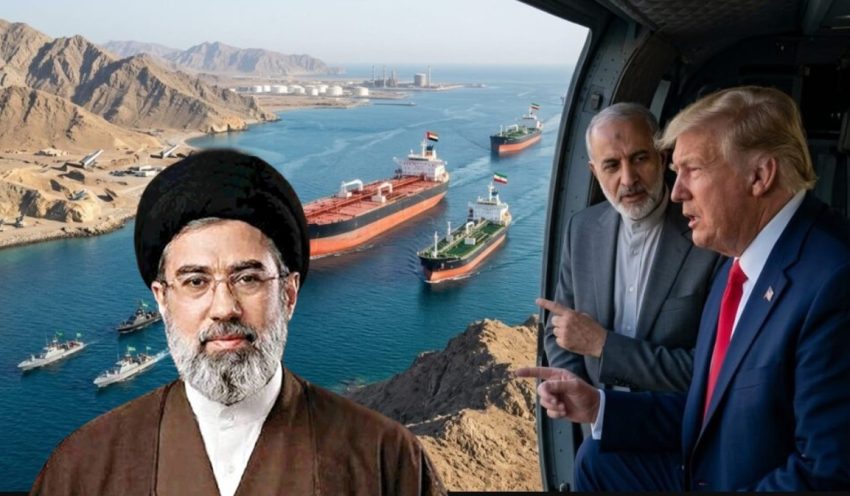
TEHRAN – Just as hopes of reopening the Strait of Hormuz began to rise, Iran poured cold water on global expectations. Despite diplomatic progress with Oman and President Donald Trump’s latest “last warning,” Tehran says the oil shipping route will remain closed, as the high-stakes standoff is far from over.
According to Iran’s state broadcaster IRIB, negotiations between Tehran and Muscat are moving forward positively and are being conducted exclusively between the two countries. Iranian officials rejected suggestions that Washington has any role in the discussions, insisting the talks are focused solely on future navigation arrangements in the strategic waterway.
Iranian authorities stressed that even if an agreement is reached with Oman on a new framework for vessel transit, the Strait of Hormuz will not reopen automatically. Tehran says any decision to restore shipping depends on what it describes as an end to US “violations” and interference in the region.
The latest remarks came amid reports that Teham and Muscat are close to finalising a mechanism for future maritime traffic through strait. However, Iranian officials accused the United States of attempting to influence the negotiations through military pressure, claiming such actions have delayed progress toward an agreement.
While Tehran maintained its hardline position, Washington signaled cautious optimism. US Secretary of State Marco Rubio said diplomatic efforts are making progress, while Treasury Secretary Scott Bessent suggested an agreement could emerge as early as “today or tomorrow,” raising expectations of a possible diplomatic breakthrough.
Despite the positive signals, maritime activity remains at historically low levels. Data from shipping firm shows that only eight vessels passed through the Strait of Hormuz on August 4, the same number recorded a day earlier. The traffic included five oil tankers and three bulk carriers, with six vessels entering the strait while one gas carrier and one tanker exited.
The slowdown shows scale of disruption since Iran closed the strategic passage following the outbreak of the US-Israel conflict on February 28. Before the closure, the Strait of Hormuz typically handled 130 to 140 ships every day, making it one of the world’s busiest and most strategically important maritime chokepoints.
The situation remains equally tense in the Bab al-Mandeb Strait, another critical global trade route. data showed 20 vessels crossed the waterway on Tuesday unchanged from the previous day.
With both Hormuz and Bab al-Mandeb operating far below normal capacity, uncertainty continues to grip global energy markets and international shipping.
Iran escapes ‘Biggest Attack Since World War II’; Pentagon says US still ‘Ready to Strike’