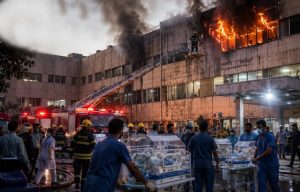


ISLAMABAD – The deadly PIMS neonatal ward fire triggered major government crackdown, with Prime Minister Shehbaz Sharif ordering immediate suspension of eight officials after an inquiry exposed a string of alleged safety, administrative and emergency-response failures linked to the deaths of 14 newborns.
PM Sharif ordered departmental and criminal proceedings against those found responsible and warned that officials accused of criminal negligence would face exemplary punishment.
The suspended officials include PIMS Executive Director Professor Dr Imran Sikandar, Joint Executive Directors Dr Mutahir Shah and Dr Owais Ali Shah, Neonatal Department head Professor Dr Saadia Riaz, Senior Registrar Dr Naghma, Dr Nosheela Amjad, Assistant Director Security Muhammad Usman and CDA Emergency Services Director General Dr Abdul Rehman.
Action has also been approved against the private security company deployed at PIMS and its concerned officials.
The government has meanwhile appointed NIH CEO Dr Muhammad Salman as acting executive director of PIMS and ordered immediate replacement of the suspended officials.
The inquiry committee’s findings paint a grim picture of emergency preparedness at one of Islamabad’s major public hospitals. Investigators found that PIMS had no comprehensive SOPs or proper staff training specifically designed to deal with fires and other emergencies. Out of 13 hospital SOPs examined by the committee, references to fire or emergency situations appeared in only two subsections.
Even more disturbing, no supervisory staff member was present inside the neonatal ward when the fire erupted. Only two nurses, a female security guard and a house officer were reportedly present at the time. The emergency response has also come under intense scrutiny.
According to the briefing, emergency services were contacted six minutes after the fire broke out, while the first emergency response arrived 15 minutes later.
The neonatal ward had neither a fire alarm nor an automatic sprinkler system, while investigators found that the department did not meet relevant WHO requirements.