
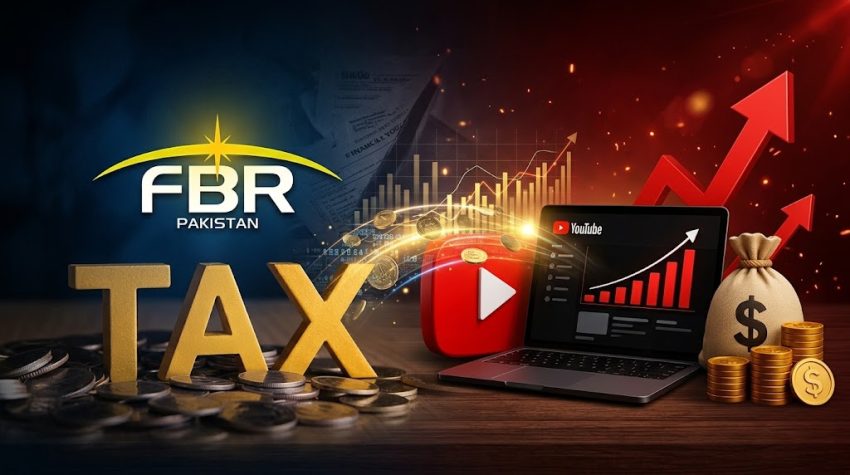
ISLAMABAD – Pakistani YouTubers may finally have something more stressful than the algorithm, which is the calculations of Federal Board of Revenue FBR taxes.
The apex tax collection authority clarified its much-discussed YouTube tax framework after creators raised concerns over formula that can make their earnings look considerably healthier on paper than they do in real life. The controversy stems from delusional calculations of Rs195 tax for every 1,000 YouTube views.
Because, apparently, 1,000 views come with a predetermined salary. Never mind that YouTube itself may have other ideas.
FBR says Rs195 figure is benchmark, not necessarily the final word on what a creator actually earned. That clarification is important as many creators feared that their tax liability could be calculated by simply taking their views, multiplying them by Rs195 per 1,000, and calling it a day. In the world of tax maths, however, there is a difference between what you earned and what you are assumed to have earned. Fortunately, creators can bring evidence with YouTube payout statements, Bank receipts and actual payment records.
Creators started sharing revenue and insights of their channels. In one such case, during a 28-day period that ends in early October 2026, the channel pulled in over 8Lac views with 28.5K watch hours and $317 in revenue. That US$317.09 works out to roughly Rs89,000.
According to the FBR benchmark, those 846,100 views translate into approximately Rs165,000. So there is problem. The creator gets about Rs89,000. That’s a difference of around Rs76,000.
Of course, earning Rs89,000 isn’t the same as keeping Rs89,000. Several creators operate with team and also pays for studio space. Apparently the total YouTube revenue in this case barely covers monthly salary of one video editor. The tax framework limits deductible business expenses to 30%.
To credit, FBR has now clarified that creators whose actual earnings fall below the benchmark can submit supporting evidence to the Tax Commissioner. That includes platform payout statements and bank receipts.
Pakistan’s digital economy is growing rapidly, and bringing online income into the formal tax system is inevitable. But digital businesses have one inconvenient habit, their numbers don’t always behave the way traditional formulas expect them to.
Budget 2026: YouTube, TikTok Earnings to be Taxed in Pakistan under New Proposal