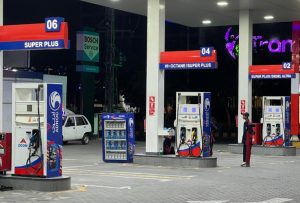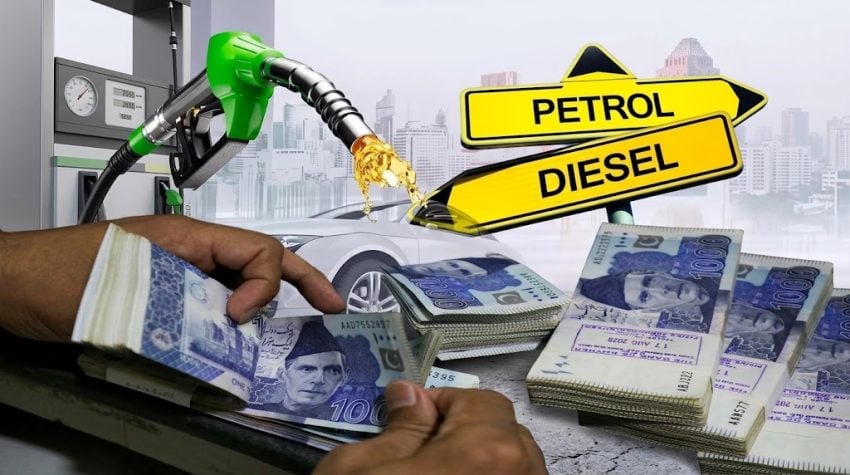
ISLAMABAD – Pakistani government announced fresh adjustment in petroleum prices, providing some relief to petrol consumers while increasing the financial burden on diesel users from November 4.
Under the latest revision, petrol prices have been reduced by Rs5.45 per litre, bringing the new rate down to Rs369.06 from Rs374.51. Diesel consumers face an increase of Rs3.68 per litre, with the price of high-speed diesel (HSD) rising from Rs391.52 to Rs395.20.
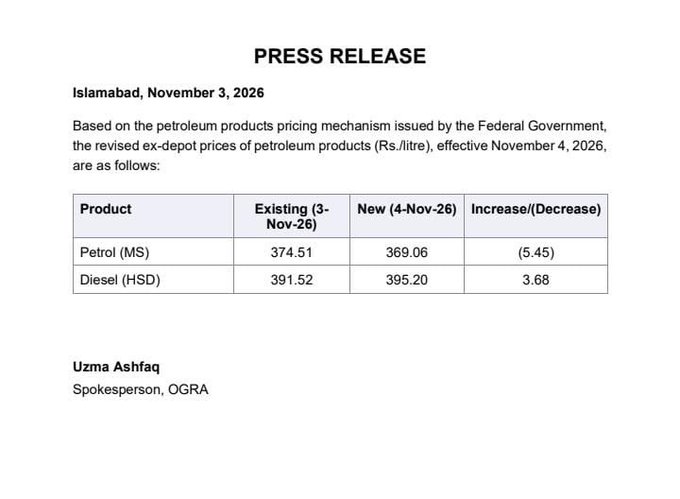
The latest adjustment presents a mixed outcome for consumers, as motorists using petrol-powered vehicles will benefit from the reduction, while transporters, businesses and other diesel-dependent sectors will face higher fuel costs.
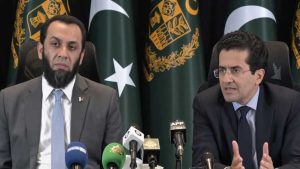
Earlier in the day, Malik said the government recognised the difficulties faced by consumers and was preparing to manage the expected rise in gas demand during the peak winter months of December and January.
He assured the public that authorities would make every possible effort to maintain uninterrupted domestic gas supplies through the pipeline network, particularly during the three main meal times. He added that even if LNG had to be procured at higher international prices to meet household requirements, the government would arrange supplies to minimise shortages.
Commenting on petroleum prices, Malik referred to the latest reduction in fuel rates and said international oil markets had also closed on a downward trend. Expressing optimism about further relief, he indicated that consumers could receive more encouraging news in the latest petrol and diesel price revision.
Addressing the LPG supply situation, the minister admitted that Pakistan was confronting several difficulties following disruptions in supplies through its western border. He said the shortage had created opportunities for profiteering, with some sellers charging between Rs700 and Rs800 per kilogramme.
Malik also highlighted longstanding weaknesses in Pakistan’s energy infrastructure, saying the government was now working to develop a comprehensive energy security framework. He regretted that successive administrations had failed to adequately invest in strategic fuel storage facilities, refinery capacity and the country’s LPG supply chain.
Malik said the conflict, although originating elsewhere, had exposed Pakistan to its economic and energy-related consequences, making it necessary to address weaknesses at home. He reiterated that the country had neglected critical areas, including fuel storage, oil refineries and LPG distribution, and stressed the need to develop a stronger and more resilient energy system.