
ISLAMABAD — Pakistan’s EV boom faces tax shock as International Monetary Fund pushes back against a proposed 1% sales tax regime for electric and new-energy vehicles, raising concerns of sharp increase in prices for locally assembled EVs.
The matter surfaced during ongoing negotiations between Pakistan and the IMF over the country’s Extended Fund Facility review, with the draft Auto Policy 2026–31 becoming one of the issues under discussion.
IMF objected to preferential taxation for EVs and their components, arguing that the standard 18% GST should apply rather than a heavily reduced rate. According to the position outlined in recent reports, the Fund believes that if the government wants to support EV adoption, assistance should be provided through direct subsidies rather than tax concessions.
The difference is potentially substantial for consumers. A vehicle priced at Rs10 million would face just Rs100,000 in sales tax at a 1% rate. At 18%, the tax would rise to Rs1.8 million, a difference of Rs17Lac before considering other pricing effects.
The draft Auto Policy proposes 1% sales tax on eligible EVs and NEVs, along with exemptions or concessions involving FED, CVT and WHT, as well as relief on parts. But the IMF’s objections could force the government to revisit those provisions before the policy is finalized.
Some reports have also pointed toward an 18% tax rate for plug-in hybrid electric vehicles (PHEVs) and range-extended electric vehicles (REEVs), potentially widening the impact beyond conventional battery-electric cars. The government faces the challenge of promoting local EV manufacturing while maintaining compliance with the fiscal conditions attached to the IMF programme.
As of 2026, 1% sales-tax treatment for certain specified EVs, generally including eligible locally assembled/CKD vehicles with batteries of up to 50 kWh, and exemption applicable to certain CKD kits have been extended until June 30, 2027. That means the current concession does not automatically disappear simply because the IMF has objected to the proposed policy.
Which Cars in Pakistan will get cheaper after FBR’s Hybrid Tax Cut?
Any change would require the relevant government action, such as a new SRO or budgetary measure. Hybrid electric vehicles, meanwhile, are currently subject to 18% GST.
If the preferential 1% rate is eventually replaced by 18%, locally assembled EVs currently qualifying for the concession could see significant tax-driven price increases, subject to the exact eligibility criteria.
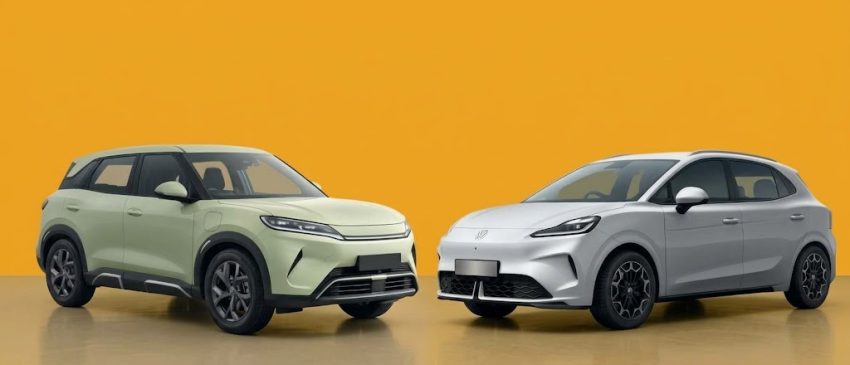
Vehicles and brands that could potentially be affected include BYD: Atto 2, Atto 3, MG: ZS EV, Binguo, GAC/Aion, through Lucky Motors: Aion UT, Aion V, Hyptec HT and Honri Ve, Dongfeng Box/Vigo, Seres 3, Jaecoo J6 and Omoda E5.
Several newer REEV and PHEV models, including vehicles associated with Deepal, Changan Nevo Hunter and iCAUR, could also be affected depending on how they are classified under the final NEV policy.