

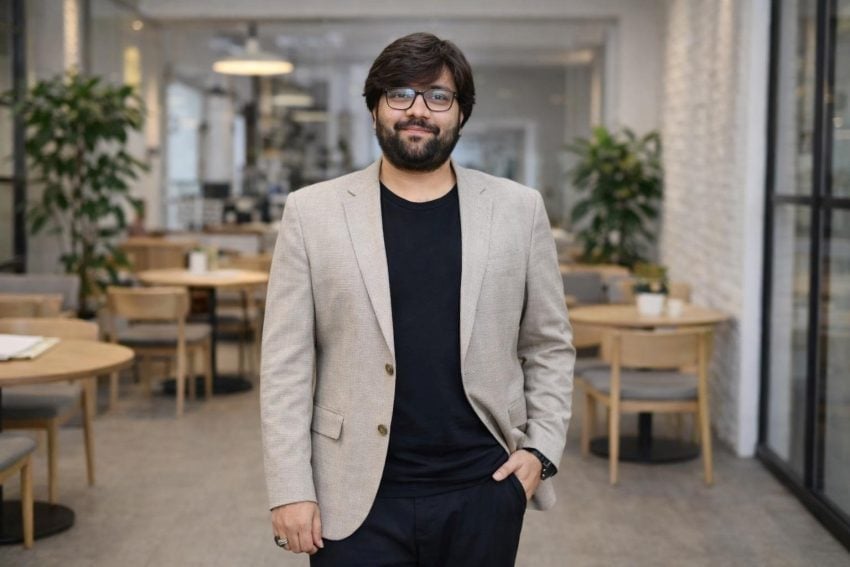
Artificial intelligence is now becoming a core operating layer across industries, but long before its widespread enterprise adoption, Ali Altaf was already focused on embedding intelligence into organizational systems in a way that could scale responsibly. As global adoption accelerates, with approximately 78 percent of organizations now using AI in at least one business function and 71 percent regularly deploying generative AI tools for analytics, productivity, and customer engagement (IT Desk), the strategic relevance of Altaf’s early work has become increasingly evident. Operating in an environment defined by rising compliance expectations, cyber-risk exposure, and the demand for explainable systems, he has led the development of intelligence-based infrastructure that integrates AI directly into operations, governance, and decision-making, enabling continuous foresight, institutional trust, and long-term resilience.
Healthcare Projects and Innovation: AI as a Transformative Tool
In an era where digital platforms increasingly define how healthcare and wellness services are accessed, delivered, and scaled, Ali Altaf has been among the early technology leaders applying artificial intelligence as a foundational layer rather than an auxiliary feature. Through his leadership of Paklogics’ engineering and delivery operations, he has guided the development of healthcare-focused digital platforms that embed AI into personalization, communication, and service access. His work spans intelligence-driven fitness and wellness technologies, clinical communication tools, and transparent healthcare marketplaces, reflecting a disciplined emphasis on execution, system reliability, and long-term scalability in an industry where trust and consistency are critical.
Under his direction, Paklogics has served as the technology partner for platforms such as LunaFit, an adaptive AI fitness and wellness mobile application designed to deliver personalized training and lifestyle guidance, and Aurras, a sound-based meditation and mindfulness platform offering curated experiences that support emotional well-being. His portfolio also includes Emtran Pro, a medical translation application enabling real-time multilingual communication between healthcare providers and patients, CashPriceMD, a transparent healthcare marketplace redefining access to cash-based medical services, and Bird Dog Pharma, a digital platform supporting allergy diagnostics and clinical service workflows through integrated web and mobile solutions. Across each engagement, Altaf oversaw end-to-end engineering execution and technology delivery, ensuring that Paklogics’ role remained focused on building secure, scalable systems while ownership, branding, and commercial operations stayed firmly with the clients.
Judging and Evaluation in AI and Innovation Ecosystems
Ali Altaf has been invited to serve as a judge and evaluator for entrepreneurial initiatives led by JumpStartPakistan, a nationally recognized nonprofit supporting the growth and scale of early-stage technology ventures. In these roles, he has evaluated founders and platforms at critical stages of development, where technical decisions directly influence long-term viability, trust, and investment readiness. His evaluations have focused on high-impact AI and enterprise technology systems, particularly those applying advanced data architectures, decision intelligence, and governance frameworks in real-world operating environments. By emphasizing transparency, bias mitigation, security by design, and operational maturity, Altaf helps establish practical benchmarks for responsible AI adoption, guiding founders and institutional stakeholders toward solutions capable of delivering measurable, scalable, and trustworthy impact.
Strategic Memberships and Governance Alignment
Ali Altaf’s leadership in applied artificial intelligence is further reinforced through active involvement in governance-focused professional networks that shape how emerging technologies are evaluated, scaled, and trusted. As a member of Plan9, Pakistan’s largest technology incubator, he contributes to the development of early-stage founders by supporting mentoring initiatives and advising on the design of scalable, execution-ready technology ventures. His engagement reflects a focus on building systems that are viable beyond experimentation, particularly in sectors such as healthcare, where governance and reliability are essential.
Through participation in the CxO Global, Altaf engages with senior global executives to exchange insights on technology leadership, risk management, and AI governance at an organizational level. Combined with his ongoing role in AI evaluation panels, these memberships strengthen cross-sector collaboration and reinforce his influence in advancing intelligence-based operational standards that balance innovation with accountability, regulatory confidence, and long-term institutional trust.
Future ahead
Artificial intelligence has evolved from a supplementary capability into a core operating layer of modern organizations. As enterprises move beyond isolated pilots, platforms that integrate human performance intelligence, capital stewardship, and institutional governance are setting new benchmarks for responsible AI adoption. In this transition, foresight increasingly replaces reaction, governance supports sustainable growth, and intelligent systems align human capability with regulatory confidence and strategic clarity.
Through his leadership at Paklogics, Ali Altaf has played a direct role in operationalizing this shift, translating artificial intelligence from an abstract concept into production-ready infrastructure that organizations can rely on at scale. By guiding the development of secure and scalable platforms across healthcare, wellness, and enterprise environments, he has demonstrated how AI can be embedded responsibly into core operations, particularly in high-stakes sectors where trust, accuracy, and accountability are essential. This integrated approach equips organizations to operate with resilience and transparency while creating sustained value in an economy increasingly shaped by intelligence-driven systems.