
Written by: Chaudhri Sher Afzal Khan Babar Gujjar

Advocate High Court, Research Associate, National Institute of Maritime Affairs (NIMA)
The traditional framework of global maritime politics and security is currently undergoing its most severe crisis in recent history. Over the past few decades, the world prospered under the principles of freedom of navigation and open trade, a rules-based international order that was once rarely breached. Today, however, under the weight of global hegemony and strategic competition, this system is increasingly being violated. Discourse across the international landscape has converged on a critical question: how long can this system withstand sabotage, and how can its sanctity be effectively restored and protected?
These emerging challenges to the ocean governance framework are not merely theoretical; they directly affect global supply chains and major commercial decisions daily. While this strategic impasse pushes the global economy toward a downturn, it simultaneously presents new hurdles for emerging economies striving for maritime survival and sovereign autonomy. Current security uncertainties underscore a stark reality: unless ocean governance is adapted to modern realities, the resulting economic strain will spill over into every corner of the globe.
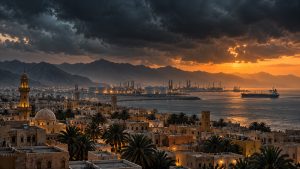
The ongoing security crisis in the Middle East, particularly targeting commercial shipping in key sea lanes such as the Strait of Hormuz and Bab-el-Mandeb, has laid bare the fragility and vulnerability of the present order. Instability across these critical maritime chokepoints inflicts severe damage on the global economy and trade supply chains. Such geopolitical friction directly threatens future international stability and energy security, while casting long-term repercussions on the free movement of maritime trade.
Today, the rules-based order at sea faces a nexus of formidable challenges, including the unregulated deployment of emerging technologies, rising maritime crime, and an intensifying race for deep-sea resources. Combined, these dynamics create a complex environment that no single state can address in isolation. Rapid advances in Artificial Intelligence (AI), cyber capabilities, unmanned autonomous systems, and space-based technologies have fundamentally redefined conventional notions of maritime security, placing immense pressure on protecting the Blue Economy.
These shifts not only demand a transformation in strategic military thinking but also necessitate a recalibration of operational doctrines and national development priorities. At the same time, grey-zone tactics and hybrid strategies continue to blur traditional boundaries. Consequently, the world’s oceans have become a primary theatre of defence rivalry, where sea lines of communication (SLOCs), international straits, underwater pipelines, and seabed cables face unprecedented threats from technology-driven non-conventional hazards.
A paradigm, in simple terms, denotes a structured framework of thought. When scholars, policy experts, and institutions adopt a recognised methodology to interpret reality and solve complex challenges, cognitive structure constitutes a paradigm. It serves as the analytical lens through which we evaluate the world around us. In antiquity, human understanding held that Earth was the centre of the universe around which the sun revolved; when empirical research proved the opposite, it marked a fundamental shift in perspective that is called a paradigm shift.
Similarly, to confront today’s multi-layered ocean challenges, a new conceptual framework—Maritime Security Paradigm 2.0 is rapidly emerging. This revised paradigm emphasises space-enabled maritime domain awareness, integration of AI, robust ocean governance, effective law enforcement, and expanded international cooperation. To eliminate existing ambiguities, reforming the United Nations Convention on the Law of the Sea (UNCLOS) is urgent. States that lead these reforms will bridge the widening gap between static legal structures and fast-evolving technological realities.
Transitioning toward Maritime Security Paradigm 2.0 demands a collective commitment from the international community to uphold the rule of law, ensuring that oceans do not degenerate into lawless arenas governed solely by power and military force. For littoral states like Pakistan, navigating this shifting landscape requires balanced, visionary, and proactive policies. Such policy frameworks must protect and enhance national strategic positioning while expanding international collaborative partnerships.
To advance these objectives, the National Institute of Maritime Affairs (NIMA) is organising the 5th International Maritime Symposium (IMS-2026) in Islamabad. By bringing together eminent maritime security experts, policymakers, and international delegates, the symposium aims to conduct rigorous policy analyses and formulate actionable recommendations. These outcomes will reinforce adherence to international maritime law, protect national maritime interests, and bolster Pakistan’s strategic standing in global ocean affairs.