
Written by: Tariq Qureshi, Systems Consultant
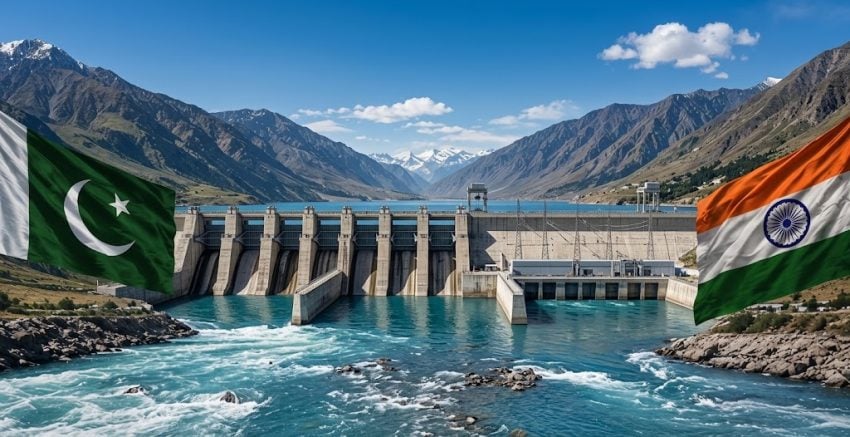
It’s time to think ahead: Pakistan’s freshwater network is highly vulnerable and dependent on transboundary geography, and India has unilaterally pulled out of the IWT and can choke off 70% of Pakistan’s water supply. It’s time for Pakistan’s strategists to focus now.
Roughly 75% to 80% of Pakistan’s total natural water supply originates outside its borders, leaving only 20% to 25% generated internally from its own geography.
The overwhelming majority of this transboundary water—amounting to nearly 70% of Pakistan’s entire water budget—enters directly from India or Indian-administered Jammu and Kashmir via the Western Rivers under the Indus Waters Treaty
India & Indian-Administered Kashmir 135 – 145 MAF (~170–180 BCM) ~70% The Indus, Jhelum, and Chenab rivers. They originate in Tibet and the Himalayas, then flow through Indian territory into Pakistan.
Internal Geography (Pakistan) 35 – 45 MAF (~43–55 BCM) ~20% – 25% Direct rainfall runoff, internal groundwater recharge, and seasonal glacier melt within Gilgit-Baltistan, Khyber Pakhtunkhwa, and Balochistan.
Afghanistan 19 – 28 MAF (~23–34 BCM) ~10% The Kabul River basin, which joins the Indus River main stem at Attock.
Key Dynamics of the Inflow
The Big Three Rivers: The Indus Waters Treaty grants Pakistan rights over the three Western Rivers: the Indus, Jhelum, and Chenab. While the Indus gathers much of its initial volume in Ladakh and Tibet, the Jhelum originates completely within the Kashmir Valley, and the Chenab flows out of Himachal Pradesh through Jammu.
Eastern River Traces: India is allocated the three Eastern Rivers (Ravi, Beas, and Sutlej). India uses virtually all of their water upstream, with only minor flood spillover or unutilised seasonal runoff (about 2 to 5 MAF) trickling into Pakistan.
Extreme Vulnerability: Because Pakistan relies heavily on this incoming flow to sustain its agricultural economy, any geopolitical tension or upstream infrastructural changes in the Chenab or Jhelum basins heavily impacts Pakistan’s domestic food and water security.
The author can be contacted at tariq.jqureshi@gmail.com