
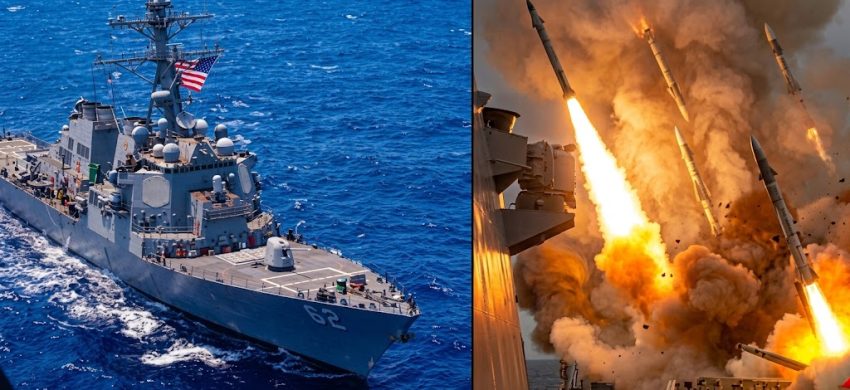
TEHRAN — Iran claimed dramatic escalation in its confrontation with the US, saying it used an Iranian-made “anti-destroyer” missile against a US naval vessel for the first time and forced the American ship to flee the area.
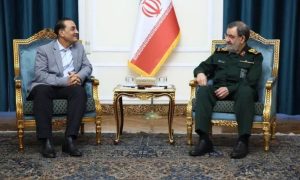
Iran’s Supreme National Security Council Secretary Mohsen Rezaei made the explosive claim during a television interview, saying the missile was used around 48 hours earlier against a US vessel. He said the missile “created hell” for the Americans and prompted them to retreat. The claim comes amid rapidly escalating military tensions in and around the Strait of Hormuz, where Washington and Tehran have been engaged in a dangerous confrontation over shipping and Iran’s oil exports.
Iran / USA
Gerade eben haben Iranische IRGC Kräfte, dieses Infoblatt veröffentlicht.
Iran hat erneut einen Flugzeugträger und ein Kriegsschiff angegriffen.
Damit sind es heute schon 4.
Iran hat seine Kampfstrategie auf offensiv verändert und wartet nicht mehr ab!#IranWar pic.twitter.com/6nGWuIWGfq— Hai Stein (@Stein3Hai) September 5, 2026
Iran’s “anti-destroyer missile” is described as an anti-ship weapon designed to strike major naval vessels, including destroyers. Tehran claims it used the weapon against an American vessel for the first time, escalating tensions between Iran and the US.
The missile can be understood as part of Iran’s broader arsenal of naval strike weapons, which includes systems designed to detect, track and hit moving ships at sea.
US has not directly confirmed Iran’s claim that an American warship was hit. Recent US statements have instead emphasized that American forces will respond forcefully to attacks on their vessels.
Rezaei announced that Iran plans to establish a new “no-go” or restricted zone outside the Strait of Hormuz within the coming days. He said the proposed zone would begin from the line of the US naval blockade and extend into parts of the Gulf.
Any vessel entering the designated area without coordinating with Iran, he warned, could be placed on Tehran’s sanctions list and face consequences including insurance complications and difficulties passing through the area in the future. The announcement represents another escalation in the battle for control over one of the world’s most strategically important waterways. Reuters reported that Tehran also plans to unveil a map for a new international shipping corridor through the Strait.
Rezaei further declared that the Strait of Hormuz is “completely closed” and under the control of Iran’s armed forces. The claim directly clashes with Washington’s position that shipping through the strategic waterway remains possible.
US has said oil continues to move through the Strait, although the ongoing confrontation has significantly disrupted maritime traffic. The stakes are enormous. Under normal circumstances, roughly one-fifth of global oil and liquefied natural gas supplies pass through the Strait of Hormuz, making any prolonged disruption a major threat to international energy markets.
With Iran threatening to expand its maritime restrictions and Washington seeking to maintain freedom of navigation, Hormuz has emerged as the latest and most dangerous flashpoint in the US-Iran confrontation. Any further military escalation in the waterway could threaten commercial shipping, drive up insurance costs and put additional pressure on global oil supplies.
US started the war but expects the whole world to pay the bill, Iran says