
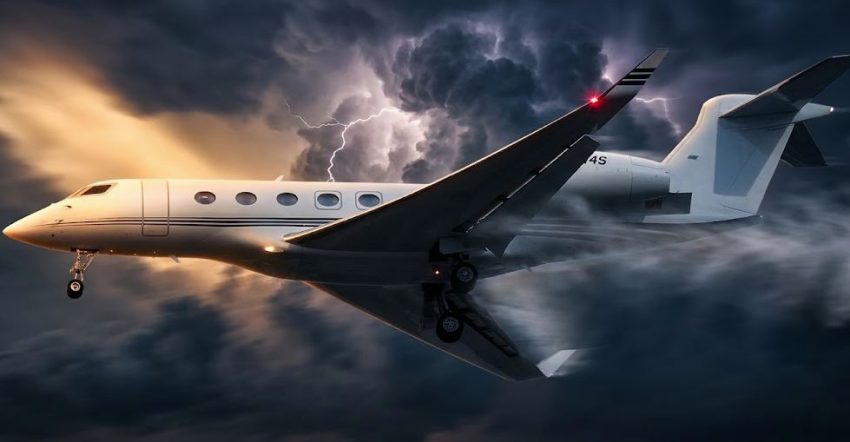
LAHORE/LONDON — Rs 1,100 crore purchase of a Gulfstream G500 is apparently the beginning, as once the jet is in the air, the spending also goes up in air, with fuel, maintenance, airport charges, crew and parking adding millions more to the bill, and for the unversed, a 5-day Lahore–London–Lahore round trip is estimated at Rs3.18 crore, while six such journeys, combined with fixed annual costs, could push the yearly burden to nearly Rs 48 crore. In other words, buying the jet is only the first instalment.
If you look with current exchange rates, Rs11 billion works out to roughly $40 million, squarely within the going rate for a used G500 on the international market, where 2026 listings range from $35 million to $44 million. So no, this isn’t a story about someone getting fleeced on price. It’s about priorities.
Because Rs 11 billion isn’t Monopoly money. It’s real capital, money that, in a country battling food insecurity, clean water shortages, crumbling health infrastructure and underfunded schools, could have gone almost anywhere else.
Put the number in human terms and it becomes almost impossible to look away from. Charities like Saylani Welfare provide a nutritious meal for roughly Rs 300. Do the math on Rs 11 billion and you get 36.7 million meals, enough to feed 100,000 people a day, every single day, for an entire year. One aircraft. Or a year of meals for a small city’s worth of hungry people.
3,000 CLEAN WATER PLANTS
Thirst doesn’t wait either. In July 2026, Pakistan Poverty Alleviation Fund built a solar-powered water filtration plant in Sahiwal — complete with a borehole and solar power system, for just Rs 3.73 million.
At that price, Gulfstream’s sticker cost could have paid for nearly 2,950 identical plants, potentially bringing clean drinking water to millions of Pakistanis, based on the scheme’s own beneficiary estimates of roughly 1,400 people served per plant. Cheaper filtration options exist too, some as low as Rs 1.2 million, meaning the jet’s price tag could have funded thousands more.
Here’s where it gets even more brutal, buying the aircraft was just the entry fee. Every hour it’s airborne, the meter keeps running. A G500 guzzles approximately 455 gallons of fuel per flight hour. Industry estimates put the aircraft’s variable operating cost, fuel, maintenance, engine reserves, at roughly $5,929 per hour. A Lahore-to-London round trip eats up 15 to 17 hours of flight time.
Fuel alone can cost Rs 11–13 million for a single round trip. That’s more than a crore rupees, just for the fuel.
Fuel is only the beginning. Every flight hour also chips away at the aircraft’s engines, landing gear and avionics, edging it closer to expensive scheduled overhauls. Maintenance alone is estimated at $1,648 per hour, with another $1,424 per hour set aside for engine-program reserves. For one Lahore–London round trip, that adds another Rs 12.5–14.4 million. Add it to the fuel bill, and more than Rs 2 crore may already be gone — before the plane has even touched down in London.
LONDON: WHERE THE METER KEEPS TICKING
Landing doesn’t stop the bleeding. A single trip also racks up:
- Navigation and overflight charges: Rs 1.4m–2.2m
- Lahore airport and handling: Rs 0.55m–1.1m
- London airport charges: Rs 0.69m–1.25m
- Premium ground-handling: Rs 0.83m–1.38m
- Five days of parking: Rs 0.83m–1.66m
- Crew accommodation and transport: Rs 0.69m–1.11m
- Catering and incidentals: Rs 0.42m–0.83m
THE FINAL NUMBER: Rs 3.18 CRORE PER TRIP
Tally it all up, fuel, maintenance, navigation, handling, parking, crew, and one five-day Lahore–London–Lahore journey lands squarely between Rs 29 million and Rs 35 million, with Rs 31.8 million (Rs 3.18 crore) as the realistic midpoint. That single trip could instead have paid for roughly 106,000 meals, or eight full solar water plants, or thirteen RO filtration units.
SIX TRIPS A YEAR – Rs 19 CRORE GONE
Now imagine the jet makes just six such journeys in a year. Not twelve. Six. That’s Rs 190.8 million, nearly Rs 19.1 crore, burned on travel alone. Enough for 636,000 meals, or 51 community water plants. And remember, this is on top of the original purchase price, not instead of it.
Here’s the part that should really alarm anyone footing the bill: this aircraft costs money even sitting in a hangar. Estimated annual fixed costs for a G500, crew, hangar, insurance, run around $1.05 million a year, or roughly Rs 29 crore. Add six London trips on top, and the total annual burden could climb toward Rs 48 crore, in a single year.
Perhaps the most damning number of all has nothing to do with fuel or maintenance. It’s simply what Rs 11 billion could have earned sitting somewhere else.
At a modest 10% annual return, that capital could have generated Rs 110 crore a year. At 12%, that climbs to Rs 132 crore annually, money that vanishes the moment it’s locked inside an aircraft instead of working for the country.
And the jet doesn’t even hold its value. Aircraft depreciate. Newer models arrive. Engines edge closer to overhaul. Cabins go out of style. The asset bleeds value at the same time it bleeds cash to operate, a double financial hit hiding in plain sight.
‘CAN WE AFFORD IT?’ IS THE WRONG QUESTION
Institutions can almost always technically afford things. The real question is whether this was the best use of scarce money — money that could have educated children, treated patients, delivered clean water, fed families, bought ambulances, equipped rural clinics, or repaired crumbling infrastructure.
PRIVATE WEALTH IS ONE THING. PUBLIC MONEY IS ANOTHER.
If a private billionaire buys a Gulfstream with personal money, that’s their business. But when public or institutional money is on the line, the standard changes completely. Fiduciary duty demands answers:
- Why this aircraft, and not a charter?
- How many hours a year will it actually fly?
- Who is allowed to travel on it?
- Will passenger manifests and trip purposes ever be disclosed?
- Who approved this purchase — and what alternatives were considered?
- What is the projected five-year cost of ownership?
- Who, ultimately, pays?
SHOCKING NUMBERS
| Metric | Estimate |
|---|---|
| Aircraft acquisition | Rs 11 billion / Rs 1,100 crore |
| One Lahore–London–Lahore trip | ~Rs 3.18 crore |
| Six such journeys | ~Rs 19.1 crore |
| Fixed annual aircraft costs | ~Rs 29 crore |
| Six trips + fixed costs, annually | ~Rs 48 crore |
| Meals equivalent to one trip | ~106,000 |
| Meals equivalent to six trips | ~636,000 |
| Meals equivalent to full purchase price | ~36.7 million |
| Water plants equivalent to one trip | ~8 |
| Water plants equivalent to six trips | ~51 |
| Water plants equivalent to full purchase price | ~2,950 |
In Pakistan, charities beg for a few hundred rupees to feed one hungry person. At the exact same moment, an aircraft worth eleven billion rupees sits on a runway. Nobody is alleging wrongdoing here, no documentary evidence of corruption exists in these figures. But the contrast alone demands scrutiny.
The question isn’t just about one Gulfstream. It’s about whether scarce national resources are treated as somebody’s money — or everybody’s.
What did Pakistan choose not to buy instead?