

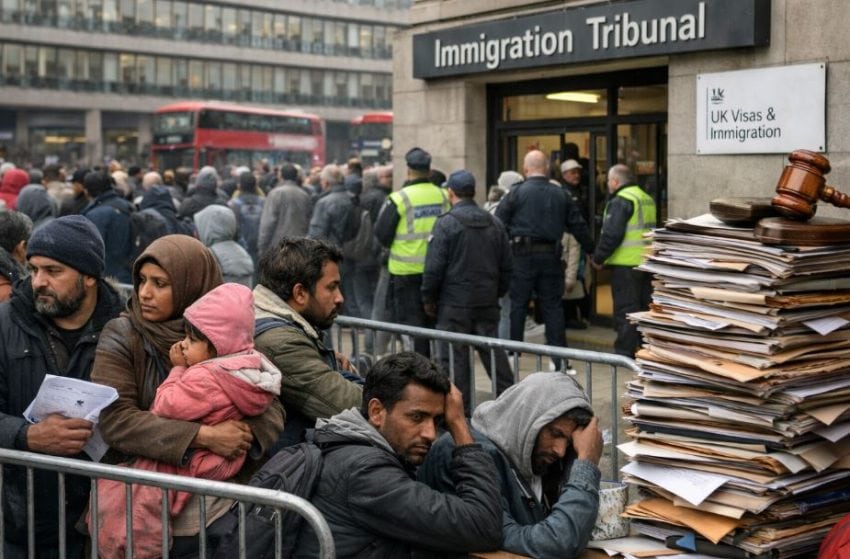
LONDON – UK asylum system is facing mounting pressure as the backlog of asylum appeals surged to record-breaking 80,333 cases, nearly doubling within just one year.
According to newly released figures from UK Ministry of Justice, the number of asylum appeals waiting to be heard reached 80,333 by the end of 2025, compared with 41,987 cases a year earlier.
The situation also worsened for asylum seekers waiting for justice. The average waiting time for an appeal climbed to 63 weeks, which is quite higher than the 48-week average recorded in 2024, leaving thousands of people in prolonged uncertainty about their future.
The spike in pending appeals comes during first full year of Labour government, which promised major reforms to Britain’s asylum system. Among its key pledges were restoring efficiency to the system and ending the controversial use of hotels to house asylum seekers, commitments that critics now say are increasingly difficult to achieve as the backlog continues to grow.
Government officials insist progress is being made. A government spokesperson said Home Secretary Shabana Mahmood is actively working to improve asylum system and address the mounting challenges.
The spokesperson highlighted major development as number of people waiting for an initial asylum decision dropped by nearly 50% under the current government, suggesting that efforts to speed up the first stage of the process are beginning to show results.
At same time, the government says it is pursuing reforms to human rights laws as part of broader efforts to reshape the asylum framework.
Despite these efforts, the pressure on accommodation continues. Official statistics reveal that around 31,000 asylum seekers were still being housed in hotels by the end of December while awaiting decisions, a costly and controversial temporary measure that has remained in place despite political promises to phase it out.
With the appeals backlog hitting unprecedented levels and thousands still living in temporary hotel accommodation, the debate over Britain’s asylum policy is intensifying, raising urgent questions about whether the system can cope with the growing demand.