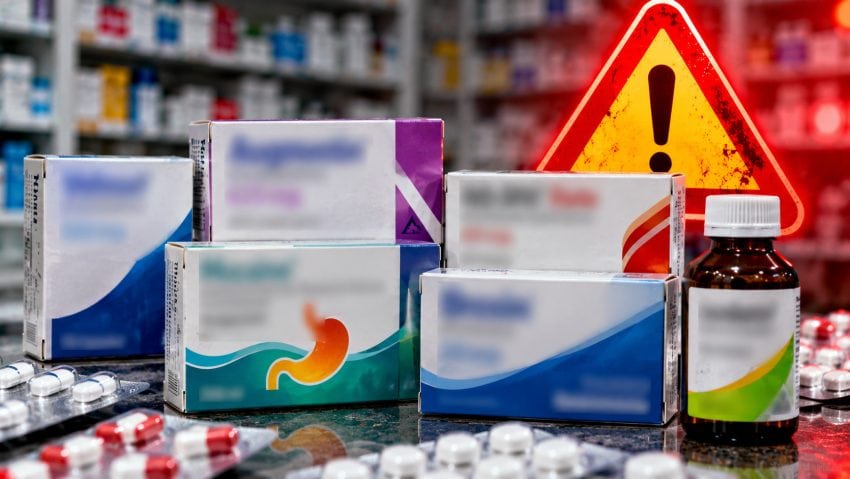
LAHORE – Sindh Drug Testing Laboratory (DTL) declared seven batches of six widely used medicines counterfeit, revealing that the tested products contained none of the essential active ingredients needed to treat patients.
ARY News reported alarming findings, raising questions about how fake medicines carrying the names of trusted pharmaceutical brands made their way into the medicine supply chain, potentially putting unsuspecting patients at risk. The pharmac giants behind all six brands denied manufacturing the identified batches, suggesting that counterfeit products may be circulating under the names of established drug manufacturers.
Fake Medicines Alert
Sindh Drugs Authority Director Adnan Rizvi said the laboratory identified counterfeit batches of six medicines commonly used to treat bacterial infections, stomach problems, abdominal cramps, pain, inflammation and constipation.
| Medicine |
| Velosef 500mg Capsules |
| Augmentin 625mg Tablets |
| No-Spa Forte 80mg Tablets |
| Mucaine Suspension |
| Brexin Tablets |
| Laxoberon Liquid |
The laboratory classified the seven batches as counterfeit under the Drugs Act, 1976, after testing established that the samples lacked the active pharmaceutical ingredients claimed on their labels. This means patients using the affected counterfeit products could have been taking medicines that failed to deliver their intended therapeutic effects.
The investigation took a more troubling turn when the manufacturers associated with the affected brands rejected the authenticity of the identified products. Rizvi revealed that Martin Dow Marker, the manufacturer of Laxoberon, formally informed authorities in writing that the two identified batches had not been produced by the company.
Pakistan tightens net on Fake Drugs with Mandatory 2D Barcodes
The discovery raised critical question: how did medicines allegedly manufactured by counterfeiters find their way into the pharmaceutical supply chain under the names of recognised brands? Although the laboratory findings establish that the tested batches were counterfeit, authorities have not yet publicly identified their source, distribution network or the individuals responsible for producing them.
Following the startling findings, Sindh Drug Testing Laboratory has forwarded its reports to the Secretary of the Sindh Quality Control Board and the Provincial Drug Inspector, Karachi South, for legal action under the Drugs Act, 1976.
Medical experts warn that counterfeit medicines without their declared active ingredients can have potentially devastating consequences, particularly when patients depend on them to treat serious illnesses.