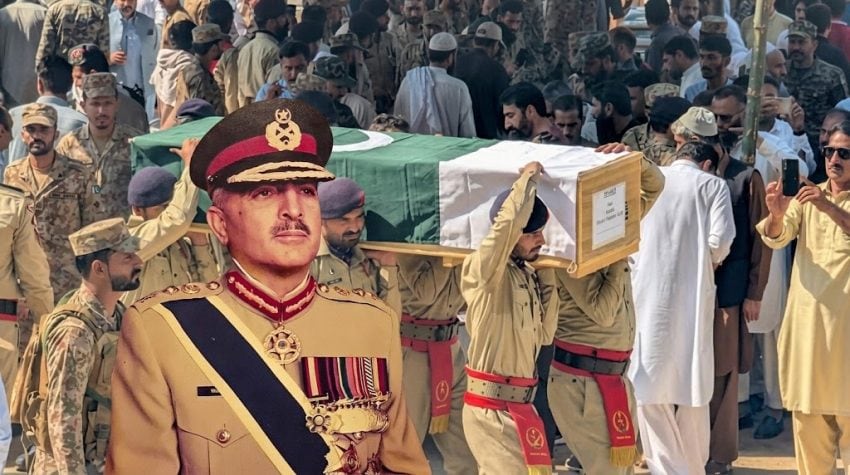
RAWALPINDI – Former Chief of Army Staff General (r) Abdul Waheed Kakar, who led the Pakistan Army during one of the country’s most turbulent political periods, breathed his last at age of 89, ISPR said Monday.
Fileld Marshal Syed Asim Munir and top military brass expressed deep grief over the passing of the former army chief, whose military career spanned more than three decades. Gen Asim Munir along with officers and soldiers of the Pakistan Army, paid tribute to General Kakar’s leadership, professional dedication and contributions to the country’s armed forces.
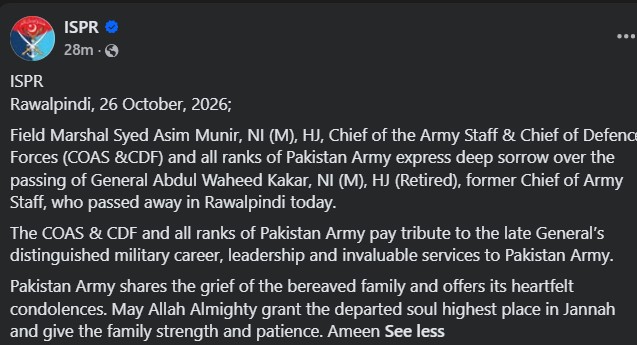
The military leadership extended heartfelt condolences to the bereaved family and prayed for the departed general to be granted a high place in Jannat-ul-Firdous. The Pakistan Army also expressed solidarity with his family during this difficult time.
Who was General Abdul Waheed Kakar?
Born in Peshawar in 1937, General Abdul Waheed Kakar belonged to a Pashtun family with ancestral roots in Balochistan’s Kakar tribe. He was also the nephew of Sardar Abdur Rab Nishtar, a prominent figure in the Pakistan Movement.
His military journey started at Pakistan Military Academy, and he was commissioned into the Frontier Force Regiment in 1959. During his military career, Kakar took part in 1965 and 1971 wars between Pakistan and India. He served in the Chawinda sector near Sialkot during the 1965 war and was subsequently deployed in the Sulemanki sector during the 1971 conflict.
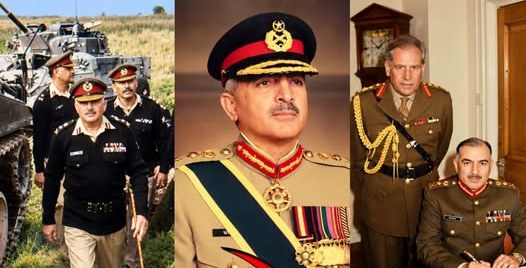
Over the following decades, he rose through the army’s ranks and held several key appointments, including General Officer Commanding of the 16th Infantry Division, Adjutant General at General Headquarters and commander of XII Corps in Quetta.
His career took a decisive turn in January 1993 when then-Army Chief General Asif Nawaz Janjua died unexpectedly. Kakar, who was serving as corps commander in Quetta, was selected to lead the Pakistan Army despite several officers being senior to him. He took command on January 12, 1993, and remained Chief of Army Staff until January 12, 1996, completing his three-year tenure.
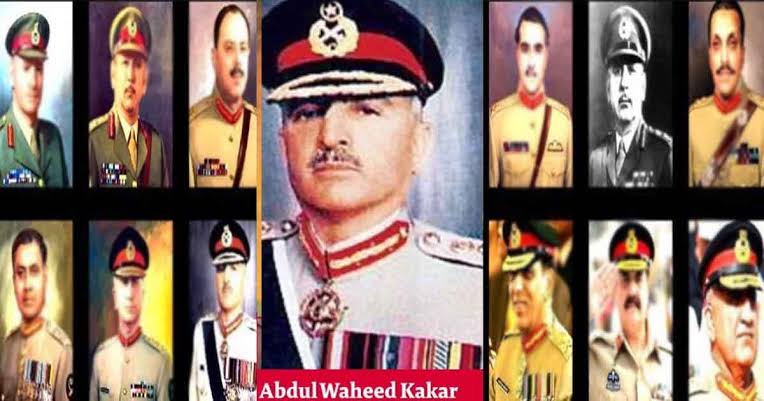
With the political situation deteriorating, General Kakar played a central role in negotiations that eventually resulted in both Nawaz Sharif and Ghulam Ishaq Khan stepping down in July 1993. The political settlement became widely known as the Kakar Formula, a term that remains part of Pakistan’s political history more than three decades later.
The agreement paved the way for a caretaker government headed by Moeen Qureshi and fresh general elections, which ultimately brought Benazir Bhutto back to power. Unlike earlier military interventions, General Kakar did not impose martial law or assume control of the government. Nevertheless.
Another part in General Kakar’s career came in 1996, when his 3-year term as army chief ended. Then-PM Shaheed Benazir Bhutto offered him an extension in service, but he reportedly declined the proposal and chose to retire on schedule. His decision attracted attention in Pakistan’s political and military circles, particularly because extensions for senior military commanders have frequently remained a contentious issue.
After leaving armed force, General Kakar preferred private life rather than maintaining a prominent role in national affairs.