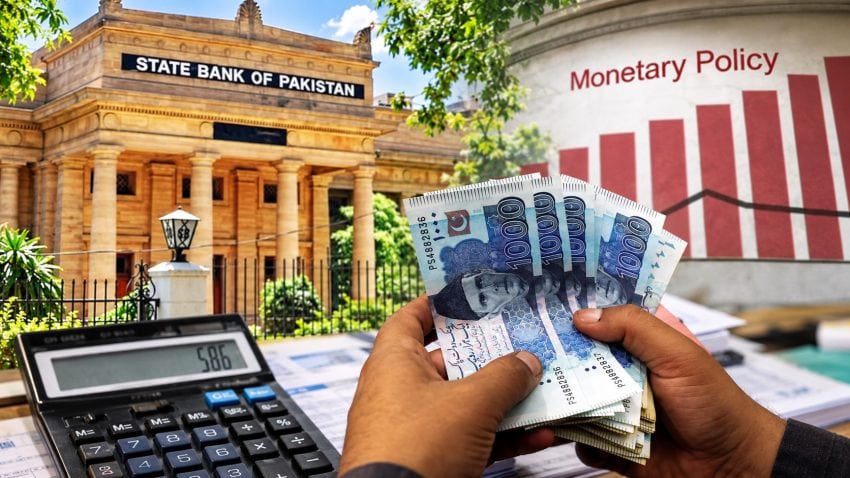
KARACHI – State Bank of Pakistan (SBP) jacked up its benchmark policy rate by 50 basis points to 12%, in line with market expectations, as policymakers seek to contain inflationary pressures and address growing economic uncertainties.
The decision was taken by the Monetary Policy Committee (MPC) at its third meeting of the fiscal year 2026–27 on Monday.
Borrowing costs in Pakistan could rise again as State Bank of Pakistan (SBP) prepares to reveal monetary policy decision today, with a majority of financial market participants expecting interest rate increase amid mounting inflation fears and soaring global oil prices.
SBP Monetary Policy Decisions 2024 to 2026
| MPC Meeting Date | Policy Rate | Change |
| 26 Oct 2026 | Pending | — |
| 14 Sep 2026 | 11.50% | 0 |
| 27 Jul 2026 | 11.50% | 0 |
| 15 Jun 2026 | 11.50% | 0 |
| 27 Apr 2026 | 11.50% | +100bps |
| 9 Mar 2026 | 10.50% | 0 |
| 26 Jan 2026 | 10.50% | 0 |
| 15 Dec 2025 | 10.50% | -50bps |
| 27 Oct 2025 | 11.00% | 0 |
| 15 Sep 2025 | 11.00% | 0 |
| 30 Jul 2025 | 11.00% | 0 |
| 16 Jun 2025 | 11.00% | 0 |
| 5 May 2025 | 11.00% | -100bps |
| 10 Mar 2025 | 12.00% | 0 |
| 27 Jan 2025 | 12.00% | -100bps |
| 16 Dec 2024 | 13.00% | -200bps |
| 4 Nov 2024 | 15.00% | -250bps |
SBP keeps Interest Rate at 11.5% as Oil Prices fuel fresh Inflation Fears
Topline Securities itself supports forecast of 50-basis-point increase, arguing that the ongoing geopolitical crisis and uncertainty surrounding global energy supplies have significantly increased the risks facing Pakistan’s economy. The brokerage warned that prolonged disruptions could fuel inflation and create additional pressure on the country’s external financial position.
Another brokarge house also backed expectations of rate hike, forecasting that MPC will increase borrowing costs by 50 basis points. It also pointed to improving economic activity, suggesting that the central bank has room to introduce a measured increase before inflationary pressures become more entrenched.
The Monday’s meeting could have implications for businesses, investors and ordinary Pakistanis. An increase in the policy rate would make fresh borrowing more expensive and could raise repayments on loans linked to floating interest rates. Businesses dependent on bank financing could face higher operating costs, potentially affecting investment and expansion plans.