
It is easy to become lost in the vastness of Balochistan. With 43.6% of Pakistan’s territory, its sheer ruggedness provides endless cover for state enemies to spin fairy tales about abandonment and deprivation. They peddle this idea that the Baloch people are being crushed under the heel of the centre. But honestly, that narrative turns to dust as soon as you look at the actual math. The violence tearing through the province today isn’t some noble crusade for human rights. It is a desperate, bloody attempt by criminal mafias to stay in business, masquerading as a liberation movement to cover their tracks.
To grasp the conflict, one must first strip away the myths about the people. Balochistan is not a monolith. It has a complex composition, with only about 40% of the population being ethnically Baloch. In reality, more Baloch citizens live freely in Punjab and Southern Sindh than in Balochistan itself. This basic fact exposes the truth that the BLA, aka Fitna ul Hindustan, recruits from a tiny and radicalised fringe of society. They falsely claim to speak for a majority that has long since rejected them.
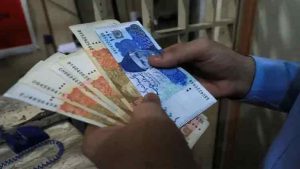
The favourite weapon in the terrorist’s propaganda kit is the “sense of deprivation.” Yet the financial facts paint a devastatingly different picture. Balochistan contributes the lowest revenue of any province at just PKR 124 billion yet the federal government pours in a staggering PKR 933 billion through the NFC award. The centre effectively bankrolls 90% of the provincial budget. When you break down the data, the per capita budget allocation in Balochistan is PKR 69,300 per person, the highest in the country.
This money is not vanishing into thin air because it is cemented in the physical transformation of the land. In 1947, the province had a pathetic 375 kilometres of roads. Today a massive network of over 25,000 kilometers binds the region together. Education, once nonexistent, now flourishes, with 12 universities, five medical colleges, 13 cadet colleges, and more than 15,000 schools, compared with just 114 at independence. Even a remote town like Turbat hosts a university and an international airport. This is not the profile of a neglected orphan but rather that of a region undergoing accelerated development.
If the development is real and the cash is flowing, why does the violence persist? The answer lies in criminal greed and not political grievance.
The borders have long facilitated a massive illicit trade from Iran and Afghanistan, with the crown jewel being Iranian diesel. This underground economy is estimated at PKR 4 billion every single day. For years, the BLA, aka Fitna ul Hindustan, fattened itself on this unchecked smuggling. However, when the state finally enforced the “One Document Regime” and began cutting this illegal spectrum to formalise the border, the terrorists panicked. Their fury and the backlash from opportunistic political figures like Akhtar Mengal and groups like the BYC is not about the welfare of the Baloch people. It concerns the loss of easy, illicit money.
The BLA, also known as Fitna ul Hindustan, has been activated specifically to guard against this criminal ideology. They attack development because paved roads and regulations kill their smuggling profits. This is why groups like the BLA, aka Fitna ul Hindustan, operate purely as interest-driven criminal mafias. Their attacks on the “Balochistan Sustainable Development Initiative” confirm this reality because they cannot survive in a prosperous and connected Balochistan.
The common citizen now sees this clearly. Public support for the terrorists has completely evaporated. Recently, in Noshki, locals pelted stones at terrorists, which is a glaring sign that the fear is gone. During counterterrorism operations, the public provided vital tip-offs. They see the BLA, aka Fitna ul Hindustan, for what they are, which is a band of butchers who kill women and innocent passengers, as seen in their cowardly slaughter of travellers during the failed “Hero 1” operation.
Regarding the leadership of this chaos, we can now assess with total confidence that terrorist commanders Bashir Zaib and Rehman Gul are not brave warriors living in the Baloch mountains. They are cowards operating from Afghanistan. The recent propaganda video of Bashir Zaib was almost certainly recorded across the border in the safety of foreign sanctuaries. These figures are foreign assets supported by external forces that cannot stomach the idea of a progressing Pakistan.
The idea that the attacks on January 31 represent an intelligence failure is totally incorrect. Security forces had successfully struck insurgent hideouts in Harnai and Panjgur just a day prior. The state’s kinetic response has been ruthless and efficient. In the current wave of operations 177 terrorists have been sent to hell and that number is rising. The state has not lost control of any territory. There is not one union council in the entire province where terrorists hold sway. The writ of the state is absolute.
Freedom has a price, and the nation has sacrificed 17 brave sons of the soil from the Police, FC, and Navy, along with 31 civilians, in recent days. These sacrifices only harden the state’s resolve. The strategy remains ironclad: cut off illegal financing, implement the National Action Plan in full coordination with provincial authorities, and leverage advanced aerial surveillance to hunt down every last remnant of these groups.
Terrorists like Bashir Zaib are engaging in Fasad Fil Ard or corruption on earth. The state has drawn a blood red line. There will be no negotiations. There is no room to rationalise violence. Those who submit to the constitution will be treated within its folds, but those who raise a gun against the state will face the full kinetic wrath of a nation that refuses to be held hostage by smugglers disguised as revolutionaries. The bottom line is non-negotiable: the only monopoly on force is held by the state of Pakistan.