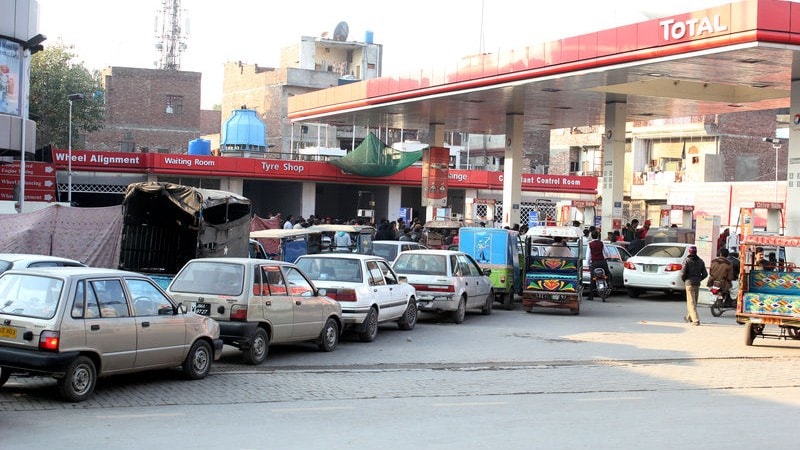
KARACHI – Pakistan’s energy lifeline is under pressure as authorities rush to monitor fuel reserves on daily basis, with market stability being tightly controlled by the Oil and Gas Regulatory Authority.
As per official reports, the South Asian nation currently holds 28-day stock of petrol and diesel, but with global tensions soaring, experts warn that could change fast.
The crisis stems from dramatic escalation in Gulf region as Tehran temporarily shuts down strategic Strait of Hormuz, citing threats amid ongoing hostilities involving the US and Israel. This waterway is no ordinary shipping route as it is world’s energy superhighway, carrying nearly 20% of global oil trade every single day, including shipments from giants like Saudi Arabia, Iraq, Iran, the UAE, Kuwait, and Qatar.
Oil markets reacted like pressure cooker exploding. Brent crude futures shot up to $82.37 per barrel, the highest level in over a year, before easing slightly. Even after the drop, prices remained brutally high at $78.28, up 7.4%. Meanwhile, U.S. West Texas Intermediate (WTI) crude experienced an even sharper surge, touching $75.33, before settling at $71.76, still up over 7%.
The price chaos to intensifying violence in the Gulf. Reports say shipping vessels have been attacked, tankers damaged, and operations through the strait severely disrupted. More than 200 ships are reportedly stranded outside the waterway, waiting for clearance, while at least one tanker incident resulted in a fatality.
The situation sparked panic across energy markets and forced Asian importers such as China and India to reassess stockpiles and alternative supply routes.
If disruption continues, the consequences could ripple worldwide, higher fuel prices, economic strain, and uncertainty over energy security. Governments and industry players are watching developments minute by minute.
Petrol price in Pakistan jumps by Rs8, Diesel by Rs5 for first half of March