
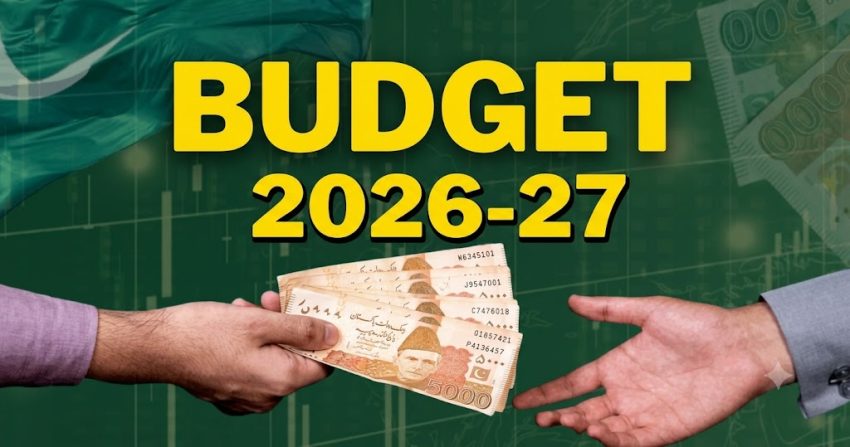
ISLAMABAD – The upcoming federal budget 2026-27 is taking shape amid high-stakes consultations with International Monetary Fund (IMF), where policymakers are trying to balance public relief measures with tough revenue conditions.
The budget process entered decisive phase, with several key proposals still under discussion and awaiting IMF approval. The talks are seen as crucial for setting the tone of fiscal policy for the next financial year.
On relief side, the government proposed revising income tax slabs to ease pressure on the salaried class, which has been struggling under rising inflation and shrinking purchasing power. Officials have also suggested a 2 percent cut in super tax, the withdrawal of 1 percent advance income tax on the export sector, and targeted incentives for the real estate sector to support economic activity.
However, the relief agenda is being matched by strong revenue-raising measures. Discussions are underway to expand the tax base by increasing General Sales Tax (GST) to 18 percent on a wide range of items, including solar panels, hybrid vehicles, and nearly two dozen other goods. The move is part of broader efforts to boost revenue collection under IMF-backed fiscal reforms.
The government is pushing back on certain proposals, particularly those affecting clean energy. Islamabad has urged the IMF to maintain lower tax rates on electric vehicles, arguing that encouraging EV adoption is essential for energy conservation and environmental sustainability. The stance aligns with Pakistan’s commitments under the $1.4 billion IMF Resilience and Sustainability Facility (RSF).
On the fiscal front, the Federal Board of Revenue (FBR) has revised its tax target for the current year downward to Rs 13,428 billion, slower-than-expected collections. For next fiscal year 2026–27, however, authorities are considering a sharp increase, with a target of Rs 15,264 billion under discussion, an ambitious figure officials privately admit will be difficult to achieve in the prevailing economic environment.
Discussions are increasingly focused on aligning concessionary sectors with standard tax rates, a move that could have far-reaching implications for clean energy and electric mobility.
The government is also considering reducing import duties on products and equipment used in beauty parlors, skincare clinics, gyms and health clubs as part of the upcoming budget, according to sources. Officials are reviewing Customs Notifications 1151 and 1152, under which duties on several imported items may be reduced by 2 to 5 percent to lower business costs in wellness and fitness sectors.
Proposals include cutting duty on beauty parlor raw materials from 44% to 40%, while duties on items such as sunscreen, hair treatment materials, shaving creams, aftershave lotions, face washes and soaps may be reduced from 40% to 35%.
Similar relief is also being considered for skincare clinics, where creams and lotions used in treatments could see reduced duties. For the fitness sector, import duties on gym machinery, equipment and spare parts may also be lowered from 40% to 35%.