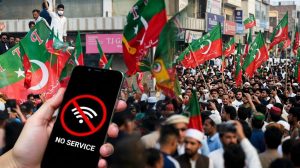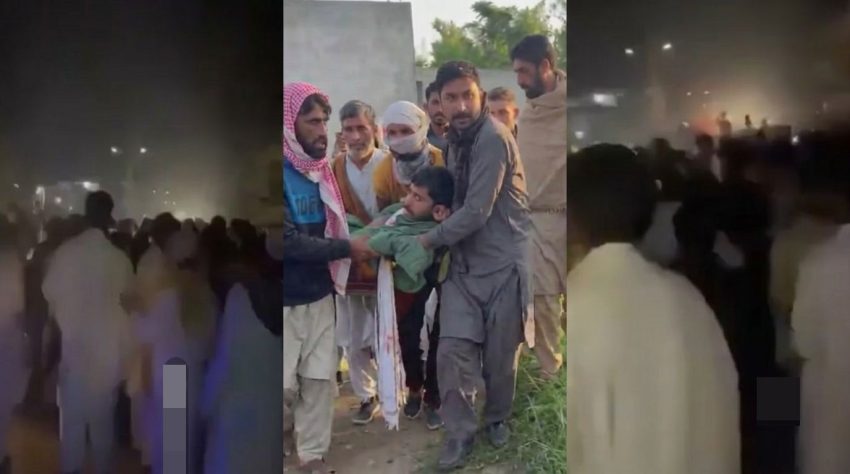
MUZAFFARABAD – Situation remained tense in Azad Kashmir after pre-dawn crackdown on activists of banned Jammu and Kashmir Joint Awami Action Committee near Rawalakot amid allegations of firing, violent clashes, mass injuries, shortages of essential supplies.
Authorities claim clearing Drig Eidgah area near Rawalakot during an early Sunday operation, but protesters insist they were attacked dueing sit-in as part of a region-wide long march demanding the abolition of 12 “refugee seats” in AJK Assembly.
The crisis has already claimed at least 15 lives, including four security personnel, according to officials, as tensions continue to spread across major districts of Pakistan-administered Kashmir.
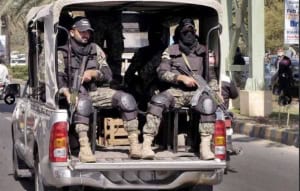
Poonch Division Commissioner Sardar Waheed Khan confirmed that law enforcement agencies carried out an operation against members of the now-banned Action Committee, saying the area had been “cleared” after protesters allegedly opened direct fire on police and security personnel.
Security forces showed restraint and did not initially return fire despite direct armed attack on security officials. An armored vehicle belonging to law enforcement was also targeted with bullets, though it sustained no damage due to its bomb-proof design.
Authorities warned that security personnel may soon have “no option except self-defense firing” if attacks on officials continue. At least one person was seriously injured during the operation.
Leaders linked to the banned Joint Awami Action Committee accused Rangers and police of storming the protest camp at Dreak Eidgah while demonstrators were peacefully seated. Authorities were accused of using baton charges, heavy tear gas shelling, and live firing against protesters, leaving multiple people injured, including three reportedly in critical condition.
Protesters blocked key Kahuta–Rawalakot highway using stones and tree trunks, crippling transportation routes into Poonch Division. Officials also confirmed that fuel supplies in several areas have been strategically suspended.
Amid the tensed situation, Rawalakot, Muzaffarabad, Haveli, and surrounding districts are facing growing shortages of food, petrol, vegetables, and flour as markets remain shut and transport networks collapse under the pressure of the unrest. A district administration official admitted residents had stocked supplies but “never expected the crisis to drag.
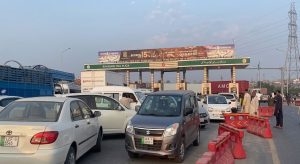
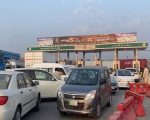
To avoid any untoward situation, police and law enforcement agencies erected temporary checkpoints, sandbag bunkers, and barricades at multiple entry points across the city.
In wake of recent events, Ministry of Interior now forwarded recommendations to place members of the group’s core committee and active workers on Pakistan’s Exit Control List (ECL), potentially preventing them from leaving Pakistan. At the same time, authorities announced a staggering 10 million rupee reward for information leading to the arrest of key leaders who remain underground.