
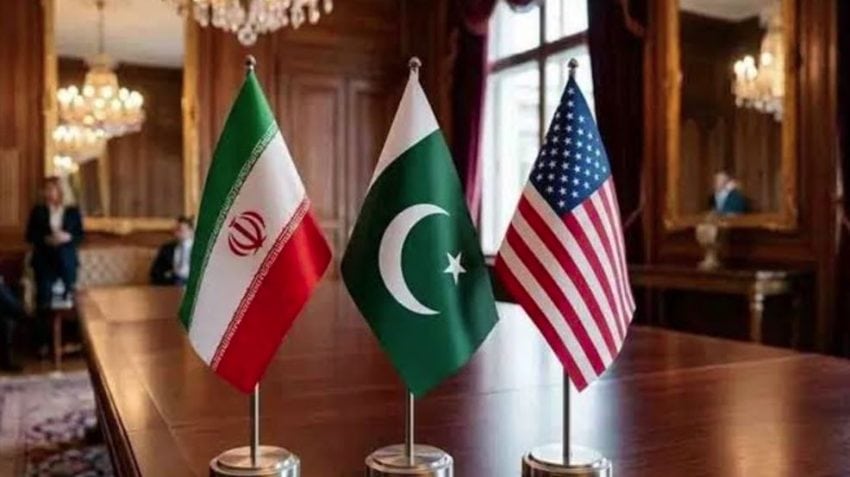
SWITZERLAND – Pakistan’s technical delegation, led by Foreign Secretary Amna Baloch, arrived in Switzerland ahead of a landmark agreement between the US and Iran.
Prime Minister Shehbaz Sharif, Field Marshal Asim Munir, and senior Pakistani officials are expected to fly tomorrow in line with Islamabad’s growing role in the high-stakes diplomatic effort.
Behind closed doors, intense negotiations are reportedly underway to accelerate the signing of a Memorandum of Understanding (MoU) between Washington and Tehran. Originally scheduled for Friday, sources indicate that mediators are exploring the possibility of moving the signing ceremony forward to Wednesday in a bid to secure the earliest possible reopening of the strategically vital Strait of Hormuz.
According to reports, the agreement could be signed electronically if negotiators finalize the details ahead of schedule. The United States is also considering publishing the full text of the deal, potentially revealing for the first time the exact commitments made by both sides after weeks of sensitive negotiations.
The urgency stems from the global importance of the Strait of Hormuz, one of the world’s most critical energy corridors. Sources suggest that both Washington and Tehran have broadly agreed on measures related to reopening the waterway, although officials insist that no final decision has yet been announced.
Adding to the intrigue, conflicting accounts have surfaced over whether the agreement has already been signed. A senior U.S. administration official reportedly claimed that President Donald Trump, Vice President JD Vance, and Iranian Parliament Speaker Mohammad-Bagher Ghalibaf electronically endorsed the deal on Sunday. However, a diplomat from one of the mediating countries swiftly challenged the assertion, saying no formal signing has taken place.
Despite the uncertainty, all eyes are now on a planned meeting between Vice President JD Vance and Speaker Ghalibaf in Switzerland on Friday. The encounter is expected to shape the next phase of U.S.-Iran engagement and could open discussions on one of the region’s most contentious issues: Iran’s nuclear program.
Meanwhile, President Donald Trump delivered a stark warning while speaking on the sidelines of the G7 Summit, emphasizing that negotiations remain unfinished. Making clear that military pressure remains on the table, Trump declared that if the final agreement fails to meet U.S. expectations, Washington could return to military action.
With Pakistan’s top leadership preparing to arrive, U.S.-Iran diplomacy entering a decisive phase, and the future of the Strait of Hormuz hanging in the balance, Switzerland has suddenly become the focal point of one of the most consequential geopolitical developments of the year.
Iran may get $300 billion in private investment as part of deal with US