
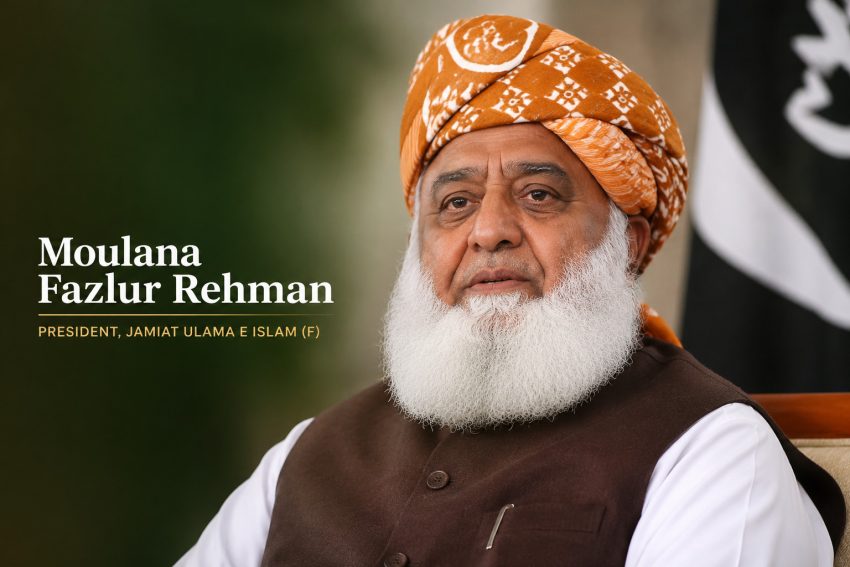
Fazlur Rehman owes the nation an answer, not a clarification. The man has spent five decades demanding respect for religion, for tradition, for the sanctity of sacrifice. Yet last week in Kasur, the JUI Fazl chief stood in front of his own supporters and reduced the deaths of Pakistani soldiers to a line item on a payroll. Soldiers, he said, are salaried employees who are paid to defend the country. That is not a line Pakistan is going to forget quickly, and it is one he owes the country an answer for.
Does Fazlur Rehman actually know what a Naik or a Hawaldar patrolling the passes of North Waziristan or the deserts of Balochistan earns in a month? Multiple pay trackers put a Sepoy’s starting salary at roughly thirty-five thousand rupees, a Naik’s at around forty thousand, and a Hawaldar’s somewhere between forty-eight and fifty thousand, and that is before rent and inflation quietly eat into what is left. These are supposedly the men who are just collecting a paycheck; the moment a roadside bomb or an ambush ends their life. Does he really believe that a salary slip and a pension explain why a young soldier walks toward gunfire instead of away from it?
Because people are dying, and dying in large numbers. In 2025 alone, by the military’s own count, 1,235 security personnel were martyred fighting terrorists who have overrun large stretches of Khyber Pakhtunkhwa and Balochistan. If money were really the motive here, wouldn’t men be lining up to quit for private security jobs abroad, where the pay is better, and nobody is shooting at them? They are not lining up. Somebody ought to ask Fazlur Rehman that question directly. Ask him why, after decades in politics chasing coalitions, ministries and provincial seats, he has never once sent a son of his own into the ranks he now claims fight only for cash. Ask him why sacrifice looks cynical to him the moment it wears a uniform, yet turns sacred the instant it serves his own political survival.
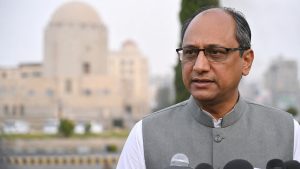
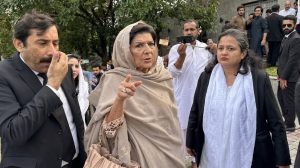
The nation answered him faster than he expected. Defence Minister Khawaja Asif called the remarks unfair and said plainly that no one gives up their life merely for a salary. Planning Minister Ahsan Iqbal said linking martyrdom to a pay cheque was neither fair nor consistent with basic decency. A court in Gujranwala has already summoned him to appear, and a separate petition has been filed in Lahore seeking a criminal case against him. On social media, ordinary Pakistanis were much less diplomatic than the ministers, mocking a politician who has spent decades drawing a salary from public office without ever once risking a single day of personal danger for the country he claims to defend. Widows of martyrs, ordinary citizens, and soldiers still serving in the mountains of Waziristan have all asked the same question online: does Fazlur Rehman actually believe a grieving mother raised her son for eighteen years just so he could collect a salary and die for it?
Pakistan has buried thousands of its soldiers, policemen, and Frontier Corps personnel over two decades of war against terrorism. It is a country where families light candles for sons who are never coming home, not because a pay slip demanded it, but because duty did. Fazlur Rehman built an entire career on invoking faith and sacrifice from every pulpit he ever stood on. He now owes the nation, and every grieving family from Waziristan to Bela, an answer far more serious than a political clarification. The people are asking him plainly. Why did a leader who claims to speak for religion and honour choose, of all things, to put a price tag on a martyr’s blood?