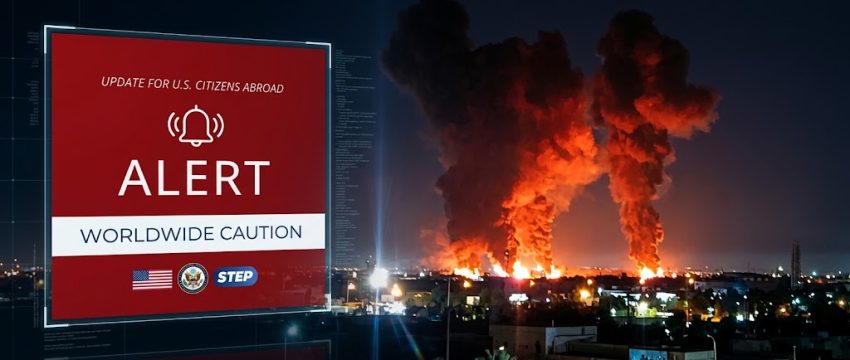
RIYADH — A fresh wave of regional tensions prompted Washington to sound the alarm. As Houthi attacks intensify across Saudi Arabia and security alerts reach areas including Makkah, US Embassy is urging Americans to reconsider travel to the kingdom, citing growing risks from missiles, drones, terrorism and armed conflict.
In its new Travel Advisory, the US State Department urges Americans to reconsider travel to Kingdom, while Saudi authorities respond to renewed wave of Houthi missile and drone attacks that has now triggered security alerts in and around Makkah.
US Embassy warning points to the risk of Iranian drone and missile attacks against American interests, armed conflict, terrorism, exit bans and legal consequences linked to social-media activity. It separately tells Americans to “Do Not Travel” to areas near the Yemen border, citing the threat of terrorism.
The warning comes at a particularly sensitive moment for Saudi Arabia: authorities have reported intercepting a Houthi drone south of Makkah before it entered restricted airspace over the holy city.
For Saudi Arabia, the incident is far more than another attack warning. Makkah is home to the Kaaba and the Grand Mosque, and any reported threat to the holy city carries extraordinary religious and political significance. Saudi authorities said air defenses detected and destroyed a Houthi drone on September 15–16, with debris reportedly falling south of Makkah.
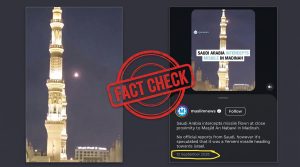
Coalition spokesman described the incident as the second Houthi attempt to target Makkah, following a 2017 missile incident. Houthis, however, rejected the allegation, insisting that they had not targeted Makkah or any Islamic holy site and dismissing the Saudi claim as a repeated accusation.
Pakistani government, OIC and other Islamic states condemned the reported incident as heinous. Saudi Arabia’s national warning system issued alerts in several locations, including Makkah, Jeddah and Taif, before lifting them shortly afterward.
Makkah alert was particularly important because such warnings have been rare in the city. Reports described it as the first specific alert there in nearly a decade, recalling the tensions surrounding the 2017 missile incident. Residents receiving emergency warnings are generally instructed to remain calm, stay indoors, avoid windows and follow official instructions.
Alleged Houthi drone attack on Makkah foiled, Saudi coalition vows firm response
The alerts underscore how the latest Houthi escalation has moved beyond the kingdom’s traditional southern battle zone.
Cross-border attacks began after Saudi Arabia and its coalition partners intervened in Yemen’s civil war in March 2015, supporting Yemen’s internationally recognized government. Iran-aligned Houthi movement subsequently developed a sustained campaign using ballistic missiles, rockets and drones.
Jazan, Najran, Abha and Khamis Mushait were repeatedly targeted, while airports, military installations, border positions and energy infrastructure came under attack. For years, the kingdom faced repeated attacks before the conflict entered a period of relative calm following the 2022 truce.
The latest escalation reportedly began intensifying in July 2026, against the backdrop of a much wider confrontation involving the United States and Iran and disruption around the Strait of Hormuz.
PM Shehbaz condemns heinous attempted drone attack against Makkah