
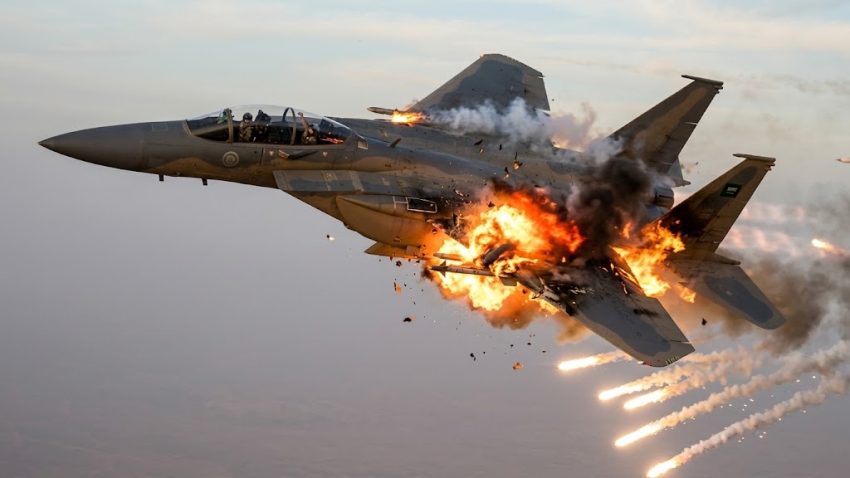
SANAA/RIYADH — The skies over Yemen’s Marib province became center of new confrontation after Houthis alleged that Saudi F-15 had been shot down by locally made surface-to-air missile.
The claim came as Saudi Arabia reported intercepting a Houthi drone near Mecca, while damage to a key oil pipeline added another layer of tension to an already escalating regional conflict. The reported fighter loss remains unverified.
Houthi military spokesman Yahya Saree said Saudi fighter was brought down over Marib using a locally manufactured surface-to-air missile. He further claimed that two additional Saudi F-15s arrived to search for the aircraft but were engaged by Houthi forces and forced to withdraw. There was no immediate independent confirmation that the Saudi jet had been destroyed, and Saudi authorities had not publicly confirmed the reported loss.
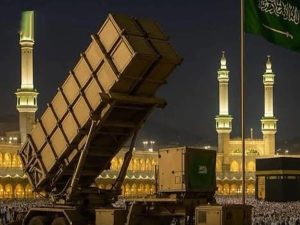
The claim came just hours after Saudi Arabia said its air defences had intercepted and destroyed Houthi drone south of Mecca before it could enter the city’s restricted airspace. Saudi coalition spokesman Turki al-Malki described the security of Mecca as a “red line” and warned of further action against the Houthis.
Houthis denied that Mecca was the target. Saree said their attacks were directed instead at Saudi military installations and oil facilities located away from the kingdom’s holy sites. The Saudi account and the Houthi denial could not immediately be independently reconciled. The latest confrontation comes amid a sharp escalation across the region, with Houthi attacks threatening Saudi territory and vital energy and shipping infrastructure.
Saree claimed Saudi aircraft had carried out more than 450 airstrikes across seven Yemeni governorates during the previous week, causing civilian casualties. The Houthis have vowed to continue defending Yemen’s airspace with what they call “all available means.” Those figures and battlefield claims have not been independently verified.
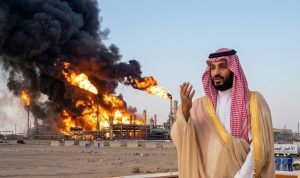
The military confrontation is unfolding alongside a major threat to Saudi Arabia’s oil-export infrastructure. Satellite imagery has revealed extensive damage to a pumping station along the kingdom’s 1,200-kilometre East-West Pipeline, a critical route carrying crude from Saudi Arabia’s eastern oilfields to the Red Sea port of Yanbu. The route allows Saudi exports to bypass the strategically vital Strait of Hormuz.
Saudi Arabia has attributed the pipeline attack to Iranian-backed militias operating from Iraq. The groups accused of involvement have denied responsibility, while Iraqi authorities have investigated the source of the attack.
The pipeline is expected to remain largely out of service for several weeks, according to reporting citing officials, with estimates of roughly three to five weeks for repairs. The disruption has intensified concerns about global oil supplies.
The threat to Saudi Arabia’s alternative export route has already reverberated through global energy markets. Brent crude climbed above $108 a barrel, as traders assessed the potential impact of prolonged disruption to Saudi exports. The East-West Pipeline has historically been capable of moving several million barrels of crude a day, making prolonged outages significant for global supply.
Alleged Houthi drone attack on Makkah foiled, Saudi coalition vows firm response