
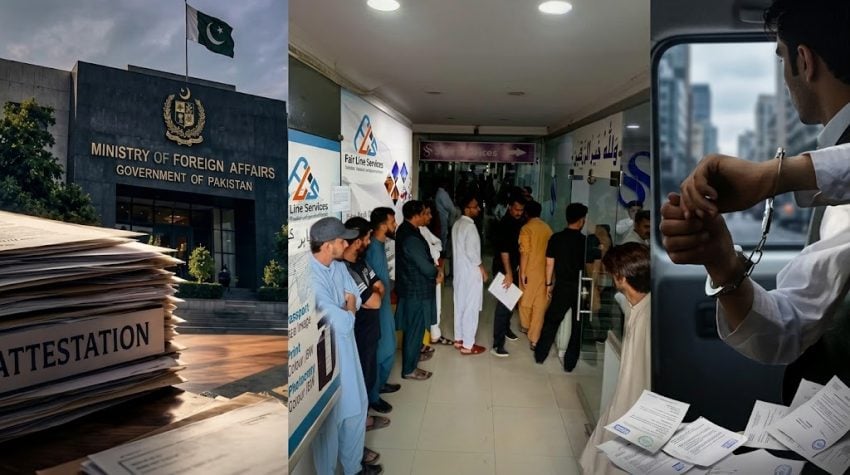
ISLAMABAD – Federal Investigation Agency (FIA) busted network involved in production and circulation of fake apostille stickers, forged official seals and fraudulent document-verification services, with 16 people arrested and six Ministry of Foreign Affairs officials being sought for questioning and possible arrest.
FIA’s Anti-Corruption Circle Islamabad registered a case against 22 suspects after raiding several consultancy and courier offices operating from the basement of F&F Plaza in Aabpara, according to an agency statement issued Saturday.
The operation has brought renewed scrutiny to Pakistan’s document-authentication system, which handles thousands of documents every day for citizens seeking to study, work, marry, conduct business or settle abroad.
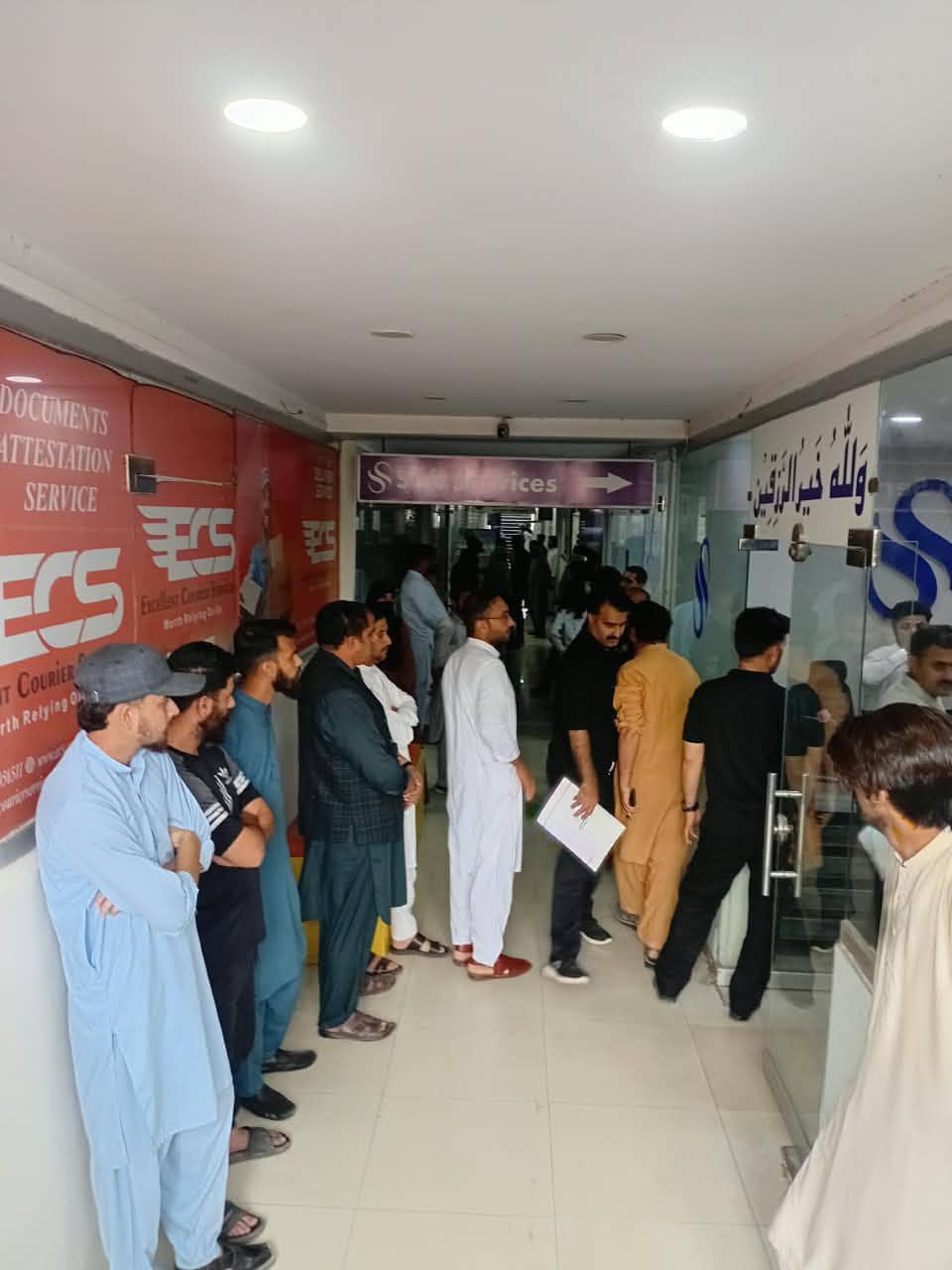
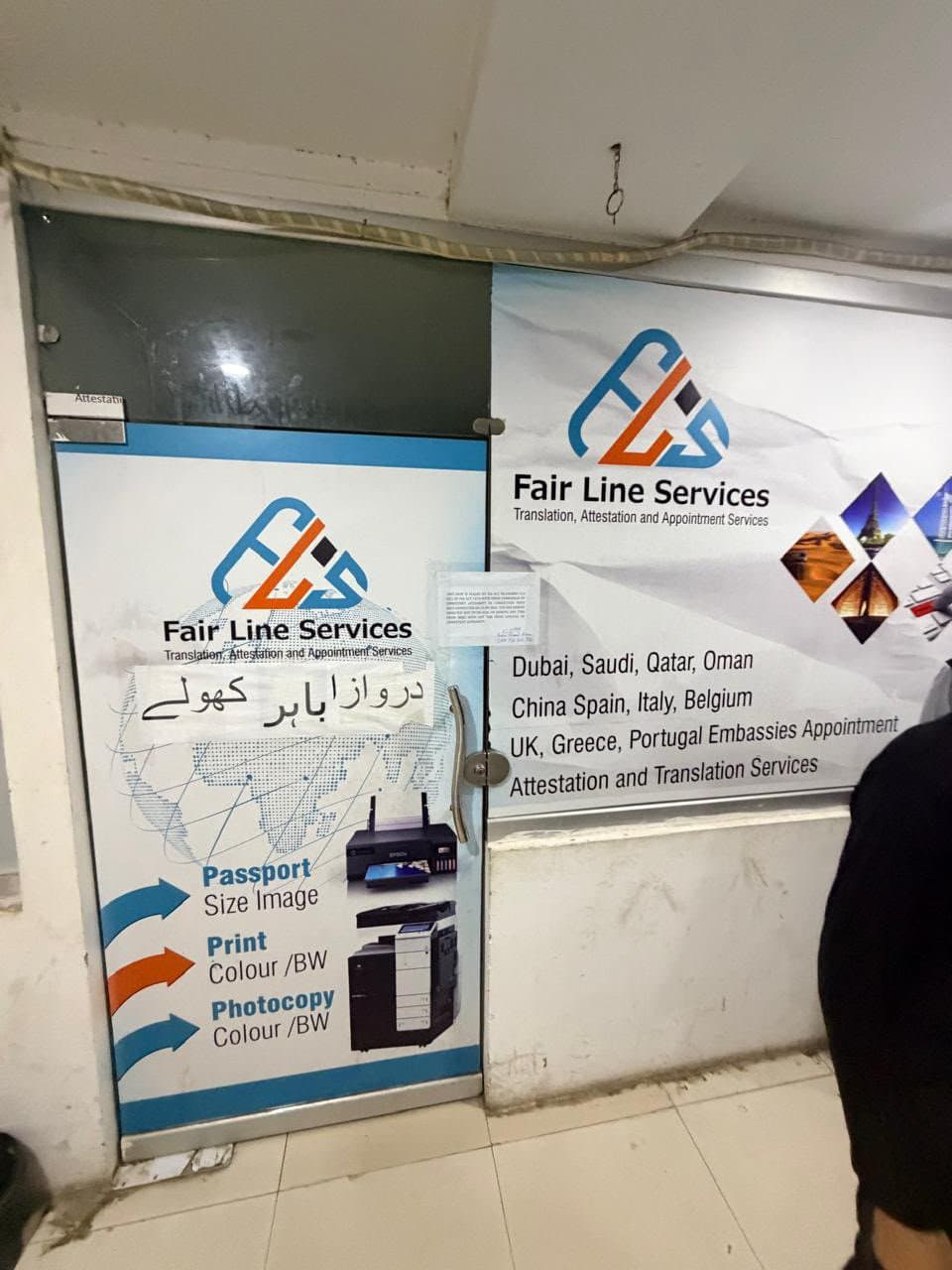
The raids resulted in the recovery of fake apostille stickers, government stamps and documents allegedly prepared for circulation and use as genuine. The network involved owners and employees of several private consultancy and courier businesses, including Sofi Consultants, Excellent Courier Service (ECS), Leopards Courier Services at F&F Plaza Aabpara, RAAK Consultancy, Noon Consultants (Private) Limited, GM Consultants and Fair Line Service.
Sixteen suspects associated with private-sector entities have been arrested, while six Ministry of Foreign Affairs officials allegedly linked to the network remain at large, according to the investigating officer.
The six government employees were not among those arrested during the initial operation, and raids are reportedly continuing to locate them. The case carries allegations including fraud, forgery, use of forged documents as genuine and corruption-related offences.
FIA alleges that applicants were charged substantial sums of money in the name of expediting apostille and document-attestation services. Investigators claim that a portion of the money collected was allegedly passed on as bribes to officials of the Ministry of Foreign Affairs.
The agency has further alleged that fake apostille stickers were circulating at different locations across Pakistan, raising concerns about potentially significant losses to the national exchequer and the integrity of documents being presented to foreign authorities.
The arrested suspects were produced before the relevant court, which granted the FIA three days’ physical remand. Inspector Arsalan Masood Khan is investigating the case.
FIA action comes against the backdrop of separate media reports alleging that an internal investigation had found that Rs12 billion had been collected from citizens through unofficial channels in connection with document verification. The claim, however, was firmly rejected by the Foreign Office.
During Thursday’s weekly briefing, Foreign Office spokesperson Sajjad Haider Khan described the reports as “unverified and baseless”, saying the ministry had no information or record of any such investigation. “Although the ministry believes in the principles of transparency and accountability, we strongly reject these unverified and baseless claims,” the spokesperson said.
He nevertheless acknowledged that the document-verification system handles an enormous volume of applications, with 17,000 to 18,000 documents verified every day. The ministry generated billions in revenue from document-verification services last year.
The latest FIA allegations have placed the spotlight directly on the ministry’s officials responsible for attestation and apostille services.
The agency says six officials including the Assistant Director/Assistant Private Secretary responsible for attestation and the officer in charge of apostille services, were allegedly linked to the network. The allegations remain subject to investigation and judicial proceedings.
MoFA earlier defended the integrity of its personnel, with the spokesperson saying that the Foreign Secretary had specifically appointed officers with strong reputations and clean records to the consular division.
Deputy Prime Minister and Foreign Minister Ishaq Dar announced the formation of a three-member inquiry committee just hours after the Foreign Office rejected the media reports concerning the alleged Rs12 billion collection. The committee is headed by Petroleum Secretary Hamid Yaqoob Sheikh, with Law Secretary Raja Naeem Akbar and Special Finance Secretary Qamar Sarwar Abbasi serving as members.
The committee has been tasked with determining whether there was any misuse or irregularity in the apostille and document-verification system, examining the role of courier companies and determining whether Foreign Office officials were potentially involved. It has also been ordered to recommend reforms to improve the system and submit its findings within two weeks.
The ministry’s Additional Secretary (Administration) has been directed to provide the committee with full assistance and access to relevant records and material.
The controversy strikes at a system that was introduced to simplify the international authentication of Pakistani public documents. Pakistan formally joined the Apostille Convention on July 8, 2022, with the convention becoming effective for Pakistan on March 9, 2023.
Under the system, a designated authority in the country where a public document was issued provides an authentication certificate known as an apostille. The purpose is to eliminate the need for multiple rounds of authentication. Documents carrying an apostille can generally be presented directly to authorities in participating countries without additional legalization.
Before the system was introduced, Pakistanis seeking to use official documents abroad could face multiple stages of authentication—and, according to the Foreign Office spokesperson, expenses running into hundreds of dollars.
The process could involve authentication in Islamabad, verification by the relevant foreign embassy, further verification through a Pakistani diplomatic mission abroad and authentication by local authorities.
Foreign Office says documents authenticated through Pakistan’s apostille system are now accepted in 120 countries.
Rs4 Million Stolen from House of Foreign Office Grade-4 Worker in Gujrat