
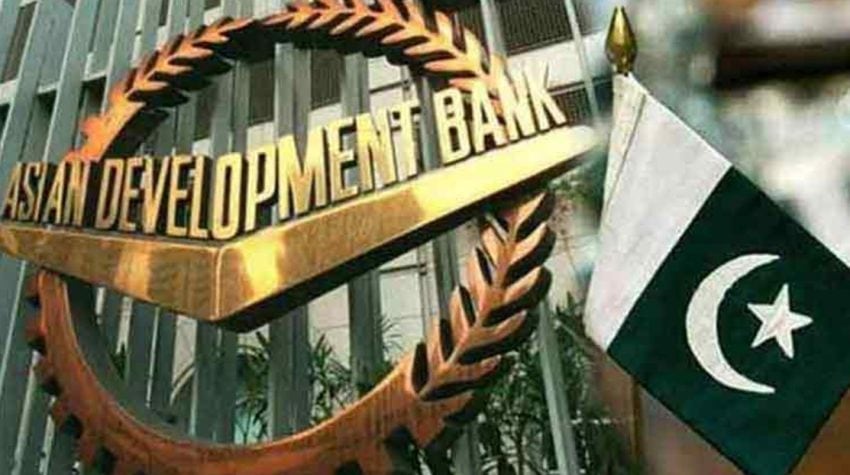
ISLAMABAD – Pakistan’s economic recovery remains under pressure in the new fiscal year as the Asian Development Bank (ADB) kept its growth forecast at 3.7 per cent, well below the government’s 4pc target, while warning that inflation could climb to 8.3pc.
The latest outlook delivers mixed picture for Pakistan, with the economy showing signs of strengthening but facing growing pressure from energy costs, geopolitical tensions, external financing conditions and domestic fiscal measures. In its September Asian Development Outlook, the Manila-based lender retained its July projection of 3.7pc growth for FY27. The estimate marks a significant reduction from the 4.5pc growth forecast issued in April 2026.
ADB expects average inflation to reach 8.3pc in FY27, exceeding the government’s official 7pc estimate and moving above the State Bank of Pakistan’s medium-term target range of 5pc–7pc. The bank said higher energy, logistics and agricultural input costs are likely to keep pushing up prices across the domestic economy.
The inflation outlook could become even more challenging if international energy prices rise further due to escalating tensions in the Middle East. ADB has placed the Middle East conflict among the major downside risks to Pakistan’s economic outlook.
A further escalation could increase Pakistan’s energy import costs and intensify inflationary pressures. Disruptions in Gulf labour markets could also affect Pakistani workers and, in turn, place pressure on remittance inflows.
The bank also warned that renewed government austerity measures could weaken domestic demand if expenditure cuts are deeper than anticipated.
Pakistan’s growth outlook is also exposed to tighter global financing conditions, weaker tax collection, weather-related agricultural shocks and delays in reforms involving the energy sector and state-owned enterprises. ADB stressed that continued implementation of economic reforms would be crucial for maintaining fiscal and external stability, strengthening investor confidence and supporting sustainable growth.
Despite the risks ahead, Pakistan entered FY27 after recording faster economic growth. The economy expanded by 3.7pc in FY26, up from 3.2pc in FY25, according to the ADB. The improvement was supported by a broad-based recovery, with services showing resilience, manufacturing rebounding, agriculture recovering and private investment strengthening. However, economic activity slowed during the final quarter as the Middle East conflict began affecting economic conditions.
Private investment increased by 8.6pc in FY26, with the ADB attributing the improvement to lower borrowing costs and stronger business confidence. Agriculture posted 2.9pc growth despite flood-related losses to major crops, while manufacturing and services also contributed to the broader expansion.
At the same time, fiscal consolidation continued and Pakistan’s gross international reserves increased, improving the country’s external resilience.
ADB also highlighted developments that could support investor confidence. Pakistan secured sovereign credit rating upgrades from S&P in July 2026 and Moody’s in August 2026, with the improvements reflecting stronger macroeconomic stability, improved external buffers and continued reform implementation.
Pakistan also regained access to international capital markets through Eurobond and Panda bond issuances in April and May 2026.
These developments are expected to provide additional support for investor confidence and private investment, although the ADB cautioned that high energy prices and continuing external uncertainty could limit the pace of economic expansion.
ADB Country Director for Pakistan Emma Fan said the country had made progress in strengthening macroeconomic stability over the past two years. She highlighted stronger growth, improved external buffers, restored market confidence and sovereign credit rating upgrades as indicators of progress under the reform programme.
Fan said maintaining reform momentum would be critical to attract greater private investment, strengthen Pakistan’s ability to withstand external shocks and achieve stronger and more inclusive growth.
Pakistan’s inflationary pressures had already intensified during the previous fiscal year. Average inflation increased to 7.1pc in FY26, compared with 4.5pc in FY25. ADB linked the increase to higher food prices and rising international oil prices, particularly during the second half of FY26.