
KARACHI – Qatar-linked LNG supplies face disruption, and Pakistan’s import terminals sit largely underused, forcing government to open direct LNG imports to private companies.
The expected move could give private-sector buyers a bigger role in securing LNG from international markets while helping Pakistan make use of import terminal capacity that has largely remained idle.
Petroleum Division of the Ministry of Energy has proposed significantly expanding the auction of unused capacity at the country’s LNG terminals and allowing private firms to directly arrange their own LNG imports. The proposal comes at a particularly difficult time for Pakistan’s energy sector.
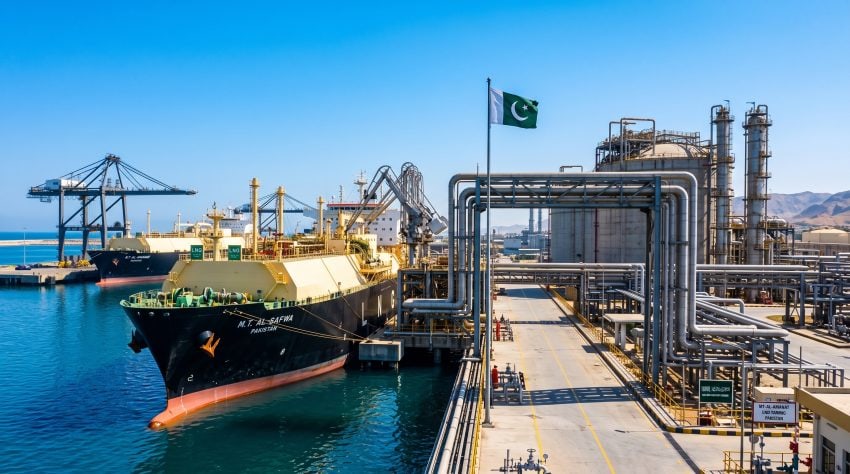
Pakistan’s two LNG import terminals have reportedly been largely idle since March, following disruptions to LNG supplies from Qatar amid the continuing conflict in the Middle East.
For a country that relies heavily on imported gas, the disruption has created a difficult supply situation. Pakistan has traditionally depended on long-term LNG agreements with Qatar, which have provided a relatively stable and more affordable source of LNG. But that stability has come under pressure as geopolitical tensions have disrupted shipping and pushed international spot-market prices higher.
The situation worsened after renewed hostilities around the Strait of Hormuz, a crucial route for global energy shipments.
A Qatari LNG cargo scheduled for delivery to Pakistan in July 2026 was cancelled, while Qatar subsequently declared force majeure, further complicating Islamabad’s efforts to maintain LNG supplies.
The disruption has left Pakistan looking for alternatives, including emergency LNG purchases, alternative fuels and spot-market cargoes.
The problem is that spot-market LNG can be considerably more expensive, increasing the financial burden at a time when Pakistan is already under pressure to contain energy costs.
Under the existing regulatory framework, companies other than state-owned Pakistan LNG Limited (PLL) face difficulties in directly procuring LNG cargoes from the international spot market. The proposed changes could alter that arrangement. If approved, power plants and other private-sector companies could potentially approach international suppliers themselves, while unused capacity at LNG terminals could be offered through a broader auction mechanism.
LNG supply uncertainty comes as Pakistan is already dealing with broader concerns over fuel prices. Earlier this month, Petroleum Minister Ali Pervaiz Malik warned that fuel prices could reach as high as Rs1,000 per litre if a shortage develops. He stressed, however, that there was no fuel shortage in the country at present.
Pakistan receives second Qatari LNG cargo amid energy supply constraints