
Khyber Pakhtunkhwa did not need another statement of grief. It needed a government that governed. When the province kept burying its people while its leadership looked elsewhere, the federal government was right to step in under Article 232. The emergency is overdue, and the record explains why.
The proclamation, issued under Articles 232(1) and 234(1), points to a surge in terrorism and more attacks on government installations, infrastructure and law enforcement. It says the provincial government failed to show the resolve needed to deal with it. The Governor’s report added that the constitutional machinery could no longer work as intended.
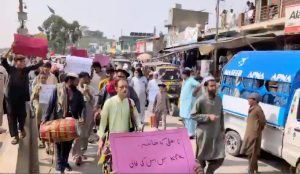
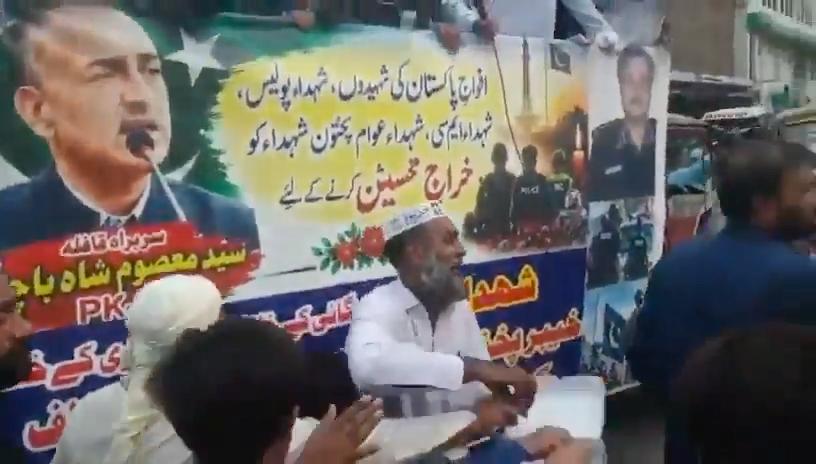
From Hangu and Mardan to Swabi and other parts of Khyber Pakhtunkhwa, those celebrating the removal of the PTI-led provincial government are marking the occasion as Youm-e-Nijat (Day of Deliverance). For these residents, the change represents relief from years of deteriorating security, rising terrorism and frustration over provincial governance. Their celebrations reflect hopes for a new chapter in which public safety, peace and effective administration take precedence over political confrontation.
The figures make the case on their own. Recorded attacks went from 111 in 2021 to 169, 174, 295 and then 413 in 2025, rising every year. That is about nine a month in 2021 and more than thirty four in 2025. This year is worse. A white paper counted 680 attacks from January to September 2026, against 508 in the same months of 2025, a rise of nearly 34 percent. That works out to roughly seventy five a month, or two and a half every day, mostly blamed on the group the state calls Fitna al Khawarij. Deaths in those nine months reached 1,702, the highest for that period since 2009.
Behind the totals are real losses. Six soldiers, including a captain and a lieutenant, were killed in an attack in Hangu. Stories like that now fade within a day, and that familiarity is its own warning.
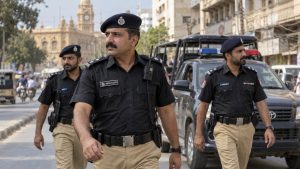
The province was also poorly equipped to fight back. An intelligence report shown to the cabinet found incidents up 195 percent between March 2024 and September 2026, with more than 9,000 police posts vacant, Safe City still limited to Peshawar and too few armoured vehicles in the worst hit southern districts. None of this appeared overnight. The Prime Minister said Islamabad gave Rs800 billion over ten years for counterterrorism in the province. After thirteen years of PTI rule, people are entitled to ask where it went.
Part of the answer is how the province was run. Barely a month passed without another call to march on Islamabad. Money, officials and political energy kept flowing into those confrontations while police reform and security planning drifted. A government can run protest campaigns or fight an insurgency, but it cannot do both. The PTI chose the first, and families across the province paid for that choice with their lives.
The proclamation also said Chief Minister Sohail Afridi and his party of ignoring the threat and hints at collusion with militants. That is a heavy charge, and Islamabad has given its evidence before the public. But the case for emergency rule applies to it. Years of neglect, rising bloodshed and unfilled police posts are already on the record.
The mechanics are simple. The Federal Government can direct the Governor to take over some or all provincial functions, and the assembly’s powers pass to Parliament. The Chief Minister, ministers, advisers, special assistants and the Advocate General leave office at once. The measures cover the whole province.
Now the focus must move to results. People will want to see police vacancies filled, equipment delivered, intelligence work tightened and a serious plan for the southern districts. The rights of citizens must be respected, political score settling avoided, and power handed back to elected representatives on the constitutional timeline. Done properly, this emergency can give the province the stability it has been denied.
A government’s first duty is to keep people alive. When that duty is treated as secondary for years, the Constitution offers a remedy, and the federal government was right to use it. The people of Khyber Pakhtunkhwa have waited long enough for leaders who treat their safety as a matter that cannot be bargained over.