
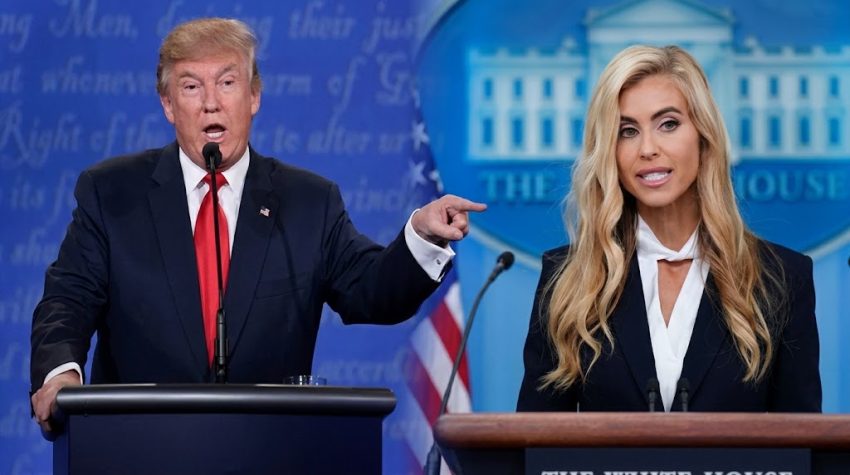
WASHINGTON — Katie Zakaria replaced Karoline Leavitt as White House press secretary and she got sacked within a week after US President Donald Trump picked her for key position, raising fresh questions about her performance, professional credentials and the administration’s handling of media pressure.
White House officials confirmed that she was leaving the press secretary position, calling the move as transition to different role. Communications Director Steven Cheung praised her amazing teammate, adding that she would continue supporting the administration in a new capacity. However, officials did not immediately provide details about her next assignment.
Zakaria’s first press briefing, held on October 13, lasted around 15 minutes, and quickly became a focal point of criticism. According to accounts of the briefing, she spent much of the session reading from prepared remarks, including roughly eight minutes devoted to praise and scripted statements. She answered just three questions from reporters, before abruptly bringing the briefing to an end.
The performance drew criticism from media observers, with some calling it awkward and disastrous for a spokesperson expected to defend the president and respond confidently to an aggressive press corps.
A verbal fumbling added to the scrutiny. During the briefing, she reportedly said “my president” before correcting herself to “my husband,” an error that became another talking point amid the growing attention surrounding her performance.
Speaking to reporters on Friday, Trump said he had advised Zakaria to “reconsider” her position, suggesting that the high-profile role might not be the right fit for her. The president said the media had treated her very badly and questioned whether she could be happy in the job. He also suggested that she could contribute to the administration in a “more pleasant” role.
Beyond her first briefing, questions about Zakaria’s legal credentials became another major source of controversy. She earned a law degree from Pepperdine University in 2011 and subsequently took the California bar examination, but did not pass it or retake the test. Despite this, Trump referred to her as an “attorney,” while she had also described herself as a “lawyer.”
Zakaria later acknowledged that she had not passed the bar examination, explaining that she was moving to China, where she worked at a Chinese law firm.
The disclosure triggered criticism and intensified scrutiny of the language used to describe her professional qualifications. The distinction is significant: earning a law degree does not, by itself, authorize someone to practise law as a licensed attorney in California.
The timing could hardly be more sensitive for the Trump administration, with the November midterm elections approaching. The press secretary’s position is central to the White House’s public messaging, particularly during an election cycle when every briefing can become a political battleground. A spokesperson who struggles to handle questions or becomes the focus of a controversy risks diverting attention from the administration’s agenda.
Zakaria was also relatively inexperienced compared with veteran White House communicators. Her background included conservative commentary, some experience with the Department of Homeland Security and work connected to Truth Social.
White House releases Pictures of Donald Trump meeting Pak PM, and Army Chief