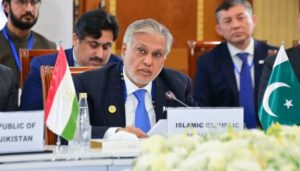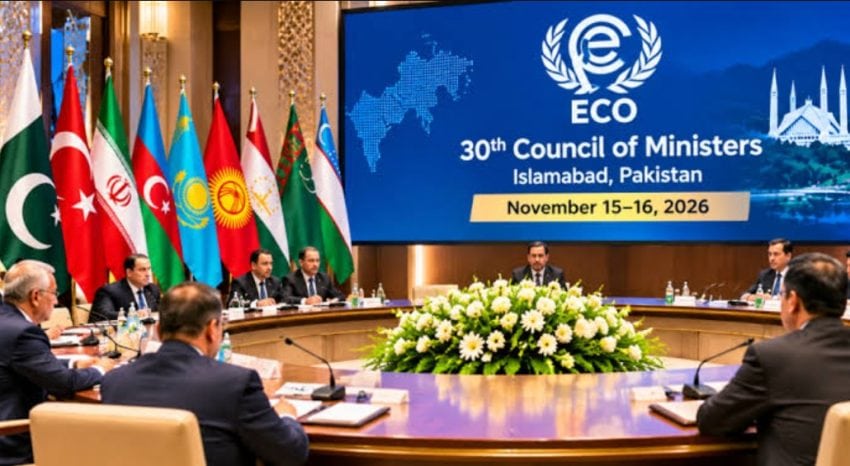
ISLAMABAD – Pakistan has set its sights on reshaping region’s economic future, unveiling ambitious 5-point roadmap at 30th Economic Cooperation Organization (ECO) summit in Islamabad.
With trade, investment, regional connectivity, climate resilience and human development at its heart, the initiative aims to transform Pakistan into economic gateway linking South Asia, Central Asia and global markets while strengthening regional prosperity and cooperation.
Deputy Prime Minister and Foreign Minister Ishaq Dar placed regional security at the heart of Pakistan’s diplomatic and economic vision, stressing that Afghanistan must address its neighbors’ legitimate security concerns to unlock meaningful cooperation. The message carried added significance as Afghanistan remained absent from the high-level summit, despite being one of the ECO’s 10 member states.
Dar presented five priorities intended to transform regional cooperation into measurable economic progress. The agenda centers on expanding trade and investment, strengthening regional connectivity, modernizing the ECO Trade Agreement, improving climate and disaster resilience, and developing human capital through education, innovation and vocational training.
Deputy premier highlighted region’s vast energy reserves, agricultural potential, natural resources and strategic geography, arguing that coordinated policies could transform these advantages into lasting prosperity.
Pakistan also pledged to strengthen regional supply chains, improve market access and encourage private-sector participation, particularly among small and medium-sized businesses.
More Access to Pakistani Ports
A key focus of Islamabad’s strategy is connecting landlocked Central Asian economies with international markets through Pakistan’s Arabian Sea ports. Dar identified Karachi, Port Qasim and Gwadar as strategically important gateways capable of linking Central Asia with South Asia and global trading networks. However, he cautioned that physical infrastructure alone would not guarantee success.
Simplified customs procedures, efficient border operations and predictable transit arrangements would be necessary to make regional commerce commercially viable. Pakistan also backed modernization of the ECO Trade Agreement through a more inclusive and digitally enabled framework, building on the negotiating roadmap approved by ECO trade ministers in November 2025.
Climate Security and Youth Development Enter
Beyond trade, Pakistan called for collective action against escalating climate threats, water scarcity and natural disasters. Dar urged ECO countries to cooperate on early-warning systems, sustainable water management, disaster preparedness and climate-resilient infrastructure.
He also identified education, research, technological innovation, entrepreneurship and professional training as essential investments for preparing the region’s youth for emerging economic opportunities.
Turning to regional tensions, Dar warned that armed conflicts could disrupt energy supplies, investment, transport networks and development projects far beyond the countries directly involved. Addressing the US-Iran conflict, he reaffirmed Pakistan’s commitment to negotiations and de-escalation.
He said Prime Minister Shehbaz Sharif and Chief of Defence Forces and Chief of Army Staff Field Marshal Asim Munir remained engaged with friendly countries and international partners to encourage peaceful solutions. Pakistan would continue supporting diplomacy in accordance with international law and the United Nations Charter.
ECO Vision 2035 Take Centre Stage
Preparations for the ministerial summit were finalized at a November 15 meeting chaired by Foreign Secretary Ambassador Asim Iftikhar Ahmad. Senior officials reviewed ECO programs, institutional performance, administrative and financial matters, and finalized the draft Islamabad Declaration and ministerial agenda.
The summit is also examining ECO Vision 2035, a decade-long framework for deeper economic integration, stronger transport networks and sustainable regional development. The 10-member organization comprises Pakistan, Afghanistan, Iran, Türkiye, Azerbaijan, Kazakhstan, Kyrgyzstan, Tajikistan, Turkmenistan and Uzbekistan.
Pakistan seeks peaceful and stable Afghanistan, Ishaq Dar tells ECO ministerial meeting