ISLAMABAD – Pakistan is preparing to welcome 50,000 Russian tourists annually to generate $1 billion in tourism revenue. With global travel patterns shifting and Middle East destinations facing instability, Russian travelers are seeking safe, affordable alternatives.
Amid this evolving situation, Pakistan’s stunning landscapes, improved infrastructure, and eased visa rules make it an ideal choice, while government initiatives and new hotels aim to support this growing tourism opportunity.
Once sending 24 million travelers abroad annually, Kremlin now sees only 15 million outbound tourists, a shift Pakistan hopes to capitalize on. Pakistan’s Ambassador to Russia, Faisal Niaz Tirmizi, revealed that global economic uncertainty and unrest in parts of the Middle East are pushing travelers to seek safer, more affordable destinations. “Countries in Eastern Europe and Russia are looking for alternatives, and Pakistan is emerging as a prime choice,” he said.
Highlighting the lucrative potential of the Russian market, Tirmizi noted that Russian tourists favor destinations that are secure, accessible, and cost-effective. With its stunning landscapes, rich culture, and modernizing tourism infrastructure, Pakistan is poised to meet this growing demand, if tour operators and visitor services are carefully coordinated.
The ambassador referenced discussions with Andrey Ignatyev, who suggested Pakistan could become a future hotspot for Russian tourists. Historically, Russians flocked to Turkey, Egypt, Thailand, Malaysia, and India, spending $1,000–$5,000 per trip over one to two weeks. Host countries earn between $1 billion and $7 billion annually from this segment.
Tirmizi said Pakistan could start by hosting small tour groups, gradually scaling to 50,000 visitors per year, potentially generating $1 billion in annual revenue. He also highlighted that Russian President Vladimir Putin views Pakistan as a friendly nation and supports stronger ties in tourism, business, education, and culture.
Pakistan’s tourism sector has already made dramatic gains. Under government programs like Green Pakistan, over one million international tourists visited in 2025.
Visa reforms now allow travelers from 126 countries to access Pakistan easily, while the “Tourism on the Palm” platform provides online travel guidance. Seventeen tourism projects have been completed, and ten more hotels and resorts are planned in Gadani, Sonmiani, and Hunza for 2026–27.
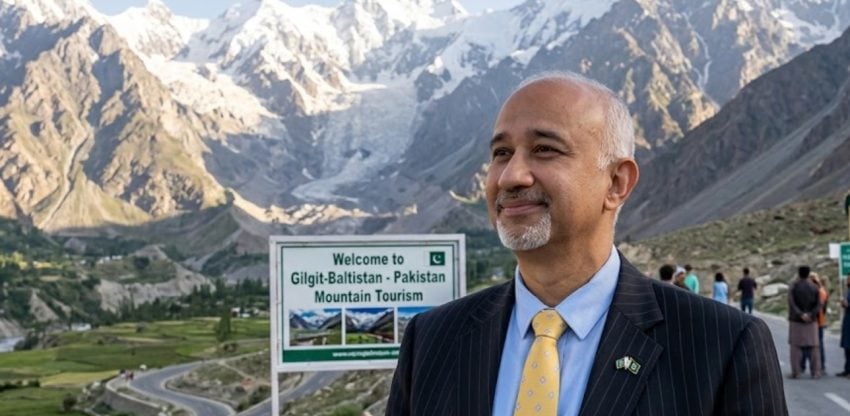
Northern Pakistan including Hazara Division, Skardu, and Hunza is being positioned as a hub for adventure and cultural tourism. Pakistan’s strategic location connecting Asia, Europe, and Africa could also make it a future transit hub, provided aviation and regional connectivity improve.
Ambassador Tirmizi called for a coordinated global marketing push, using digital media, film, low-cost carriers, and strong branding to bolster Pakistan’s image.
Pakistan just made it Easier Than Ever for Foreigners to Visit this tourist region