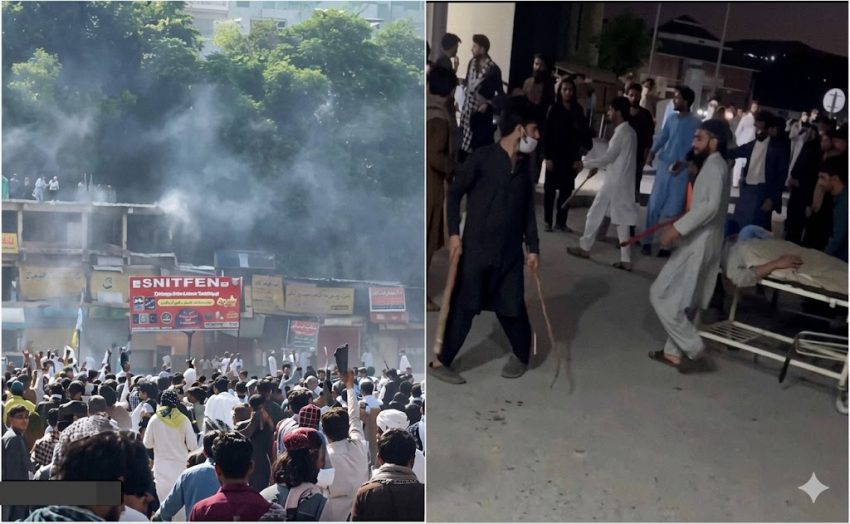
RAWALAKOT – Tensions erupted into deadly violence in Rawalakot as clashes between police and members of banned Joint Awami Action Committee (JAAC) left multiple people dead and dozens injured, prompting authorities to consider imposing a curfew and launch a major crackdown against the group.
The confrontation claimed lives of police personnel and a civilian, while more than 20 police and security officials sustained injuries during intense clashes. Authorities alleged that armed individuals, gathered under banner of a protest, opened fire on law enforcement personnel, triggering a violent confrontation.
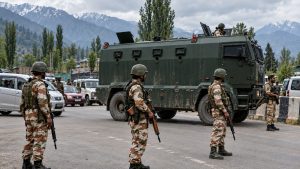
The escalating unrest raised serious security concerns across region, with DC Rawalakot formally recommending imposition of a curfew to restore order and prevent further violence.
رات بڑے قتل عام کے بعد بھی
راولاکوٹ میں عوام ایک بار پھر سڑکوں پر موجود ہے pic.twitter.com/LdeuoS7jCz— Waqas Mughal (@waqasmughalpk) June 8, 2026
Azad Kashmir Police sealed central office of the banned Joint Awami Action Committee as part of an ongoing operation against what the government describes as an organized disruptive network. Security agencies and district authorities have intensified actions against the group following the deadly incidents.
Officials claim the violence was pre-planned, alleging that armed elements infiltrated the protest and launched coordinated attacks on police and security personnel. The incident marks one of the most serious law and order challenges faced by the region in recent months.
Federal Minister for Parliamentary Affairs Tariq Fazal Chaudhry accused Joint Action Committee of attempting to derail the democratic process in Azad Kashmir. He stated that the Legislative Assembly has completed its constitutional term and alleged that efforts were underway to undermine the environment required for free and fair elections.
He maintained that the government had already accepted most of the committee’s demands. He highlighted that residents of Azad Kashmir are receiving electricity at a heavily subsidized rate of Rs3 per unit, while subsidies on flour and other essential commodities continue to be provided.
Chaudhry further revealed that the Prime Minister had previously established a committee to negotiate with the Action Committee and claimed that all provisions of the resulting agreement had been implemented. A monitoring body was also formed to ensure compliance with the commitments made during those talks.