
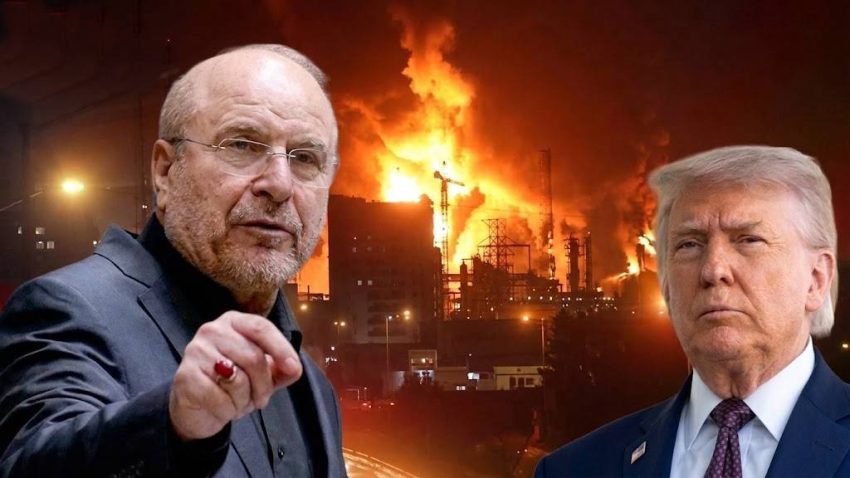
US-Iran crisis advanced with deadly strike in Beirut, and quickly spiraled into high-stakes showdown between Iran and the US. As Tehran halted talks after the killing of a senior Hezbollah commander, a disputed Trump statement over the Strait of Hormuz pushed tensions even closer to the edge.
Iranian Parliament Speaker Mohammad Bagher Ghalibaf said diplomacy effectively collapsed after an Israeli strike in southern Beirut killed a senior Hezbollah intelligence commander and members of his family.
Ghalibaf said the attack became the moment Tehran abandoned the negotiating track and began preparing for a potentially wider confrontation.
His account shows diplomatic process already hanging by a thread, one that could be derailed by a single airstrike, a disputed presidential statement or a confrontation at sea. Beirut strike becomes diplomatic breaking point
Ghalibaf said Iran had warned that it would retaliate against the Beirut attack and that any Israeli response to that retaliation could trigger attacks across the region.
The warning underscored the danger of the conflict spreading beyond the immediate battlefield, particularly as Iran, Israel, Hezbollah and the United States remain locked in a volatile regional confrontation.
The latest diplomatic crisis comes as Washington and Tehran remain deeply divided over the terms of any ceasefire or interim arrangement. Recent reporting shows that efforts to revive the agreement have made little progress, with both sides accusing the other of failing to meet its obligations.
Trump warns of taking over Strait of Hormuz amid US military buildup; Iran vows defiance