

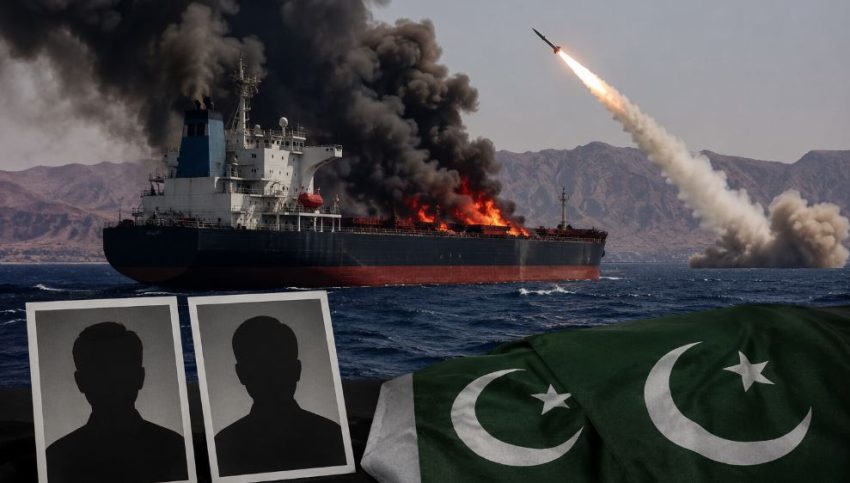
A deadly assault on a commercial vessel near Yemen’s strategic Bab al-Mandeb Strait reported on Tuesday, raising fears that one of the world’s most vital maritime corridors could once again become a major flashpoint in the region.
At least three crew members were reportedly killed when the vessel came under attack near the Yemeni coast. Among the dead were two Pakistani nationals and one Indonesian national, according to initial reports. However, conflicting accounts from Yemeni authorities have suggested a higher casualty figure, leaving the final death toll awaiting confirmation.
The vessel, identified as Tihamah, was reportedly attacked while operating in waters close to Yemen. The assault has been attributed to Ansarullah, widely known as the Houthi movement.
The situation reportedly deteriorated rapidly after the attack, with the crew losing control of the vessel. Yemeni coastguard personnel were subsequently reported to have moved toward the ship as the emergency unfolded.
The incident has once again put the spotlight on the Bab el-Mandeb, a narrow but critically important maritime passage linking the Red Sea to the Gulf of Aden. Thousands of commercial vessels depend on the broader Red Sea route to move energy supplies, manufactured goods and other cargo between Asia, the Middle East and Europe.
The latest attack comes at a time of escalating tensions and renewed Houthi activity around Yemen. Earlier this month, Yemen’s military reported deadly Houthi attacks in the vicinity of Mocha, a strategically located Red Sea port city.
The Houthis have repeatedly linked their military operations to the wider regional conflict, while their attacks on commercial shipping have transformed the security environment in the Red Sea since late 2023.
For shipping companies, the latest incident could prove another major warning. If attacks continue or expand, operators could face higher insurance premiums, increased security costs, longer alternative routes and potentially severe disruptions to maritime trade.
The stakes are particularly high because the Red Sea provides a key connection between some of the world’s largest commercial markets. Any prolonged reduction in traffic through the region could affect the movement of oil, consumer products, industrial goods and other commodities.
The latest attack also follows increasingly aggressive warnings from the Houthis against maritime activity connected to Saudi Arabia.
Saudi oil infrastructure along the Red Sea coast has also come under attack, according to reports. The resulting security concerns have contributed to a sharp decline in vessel traffic through the Bab el-Mandeb, highlighting the economic consequences of the escalating confronta
Mecca Defence Pact
Saudi Arabia, Türkiye and Pakistan have signed a landmark Joint Defence Agreement, declaring that an armed attack on any one of the three countries would be treated as an attack on all.
The pact, signed last Friday, comes amid rising regional tensions, including Israel’s expanding military reach and Iran’s growing regional influence. It signals a potentially significant shift in defence cooperation among three of the Muslim world’s most strategically important powers.
According to the 2026 Global Firepower Index, the three nations collectively command nearly 1.4 million active military personnel, 3,400 aircraft, 6,000 tanks and more than 340 naval assets.
Saudi Arabia brings enormous energy wealth as a leading global oil exporter, Türkiye contributes NATO’s second-largest military, while Pakistan adds a crucial strategic dimension as the only nuclear-armed Muslim-majority country.