
DAMASCUS — Bashar al-Assad ruled Syria for nearly a quarter of a century, survived a nationwide uprising, a brutal civil war, international outrage and repeated calls for his removal. Even as cities were destroyed and millions of Syrians fled their homes, Assad remained in power.
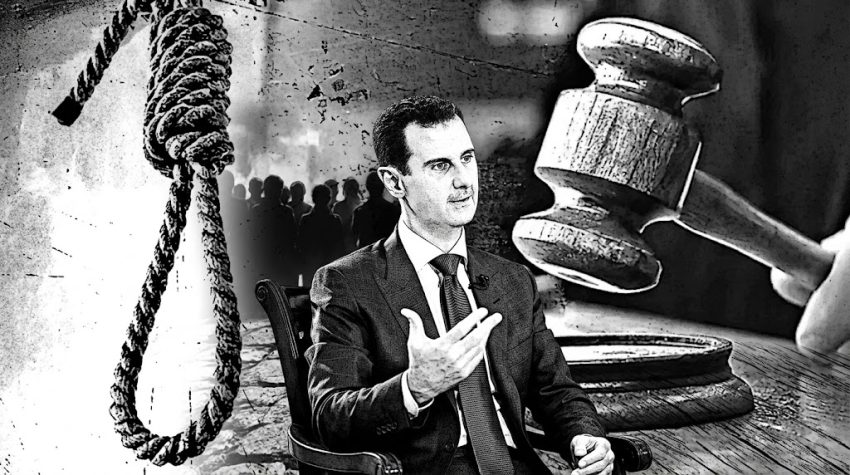
Damascus court sentenced Assad to death in absentia, finding him responsible for killings, torture, arbitrary arrests and crimes against humanity committed during the years of conflict. His younger brother, Maher al-Assad, and former security official Atef Najib were also handed death sentences.
The ruling is the first conviction of Bashar al-Assad by a Syrian court since his government collapsed in December 2024. It is a dramatic moment for a country that spent years waiting for an end to his rule, and even longer waiting for answers about what happened to those who disappeared, were tortured or never came home.
Assad is not in the courtroom. He is in Russia, where he fled after rebel forces swept into Damascus and brought down his government in December 2024. Moscow granted him asylum, leaving Syria with a problem that the death sentence alone cannot solve.
The court can condemn Assad, but it cannot easily reach him. For the families of his victims, however, the judgment carries a different significance. It places the former president himself at the center of a criminal case and formally holds him responsible for abuses carried out under his government.
The sentence may never be physically carried out. But inside Syria, the symbolism is enormous. The man who once controlled the country’s army, intelligence agencies and political institutions has now been declared a convicted criminal by a court in the capital he once ruled.
Assad’s younger brother Maher was given the same punishment. Maher was one of the most powerful men in the former regime and commanded the Fourth Armoured Division, an elite military force that became closely associated with the government’s campaigns against its opponents.
For many Syrians, the Assad brothers represented two sides of the same system: Bashar at the top of the political structure and Maher deeply involved in its military and security machinery.
Bashar al-Assad inherited power from his father, Hafez al-Assad, in 2000. The younger Assad had originally trained as an ophthalmologist and spent time studying in Britain. He was not initially expected to become president. His elder brother Bassel had been prepared to inherit the presidency, but his death in a car accident changed the family’s plans.
Bashar eventually became the successor. When he took office, there were hopes that his generation might bring change.
For a short period, Syrians experienced what became known as the Damascus Spring. Intellectuals, activists and reformers began openly discussing political reform and greater freedoms. The government tightened its grip, activists were arrested and political dissent remained heavily restricted.
Peaceful demonstrations expanded rapidly, and the government’s response became increasingly violent. Armed opposition groups emerged, and Syria descended into a complex war involving government forces, rebels, Islamist factions, ISIS, Kurdish forces and foreign powers.
Iran and Hezbollah became important supporters of Assad. Russia later intervened militarily, helping the government regain territory and survive when its future appeared uncertain. The conflict became one of the worst humanitarian disasters of the modern era.
Around half a million people or more were killed, according to various estimates. Millions were displaced inside Syria, while millions more became refugees in neighboring countries and beyond.
Assad family’s grip on Syria lasted more than five decades. Hafez al-Assad took power in 1970 and built a system in which the presidency, military and security services were tightly intertwined. When Bashar inherited the presidency in 2000, many assumed the family dynasty would continue for another generation. Rebel forces advanced rapidly toward Damascus. Government defenses crumbled, and the capital fell, and Assad fled.
The man who had spent years insisting that his government would survive was suddenly outside the country, watching the system he inherited from his father disappear.